No Overtaking Sign
No Overtaking Sign: Why It Matters and How to Obey It
If you’ve been preparing for your driving test, or if you’ve been behind the wheel for years, you’ll know that road signs aren’t just colourful symbols — they’re the language of the road. Among the most important of these is the No Overtaking sign. Recognising it, respecting it, and knowing why it’s there can make the difference between a safe journey and a dangerous mistake.
What Does the No Overtaking Sign Look Like?
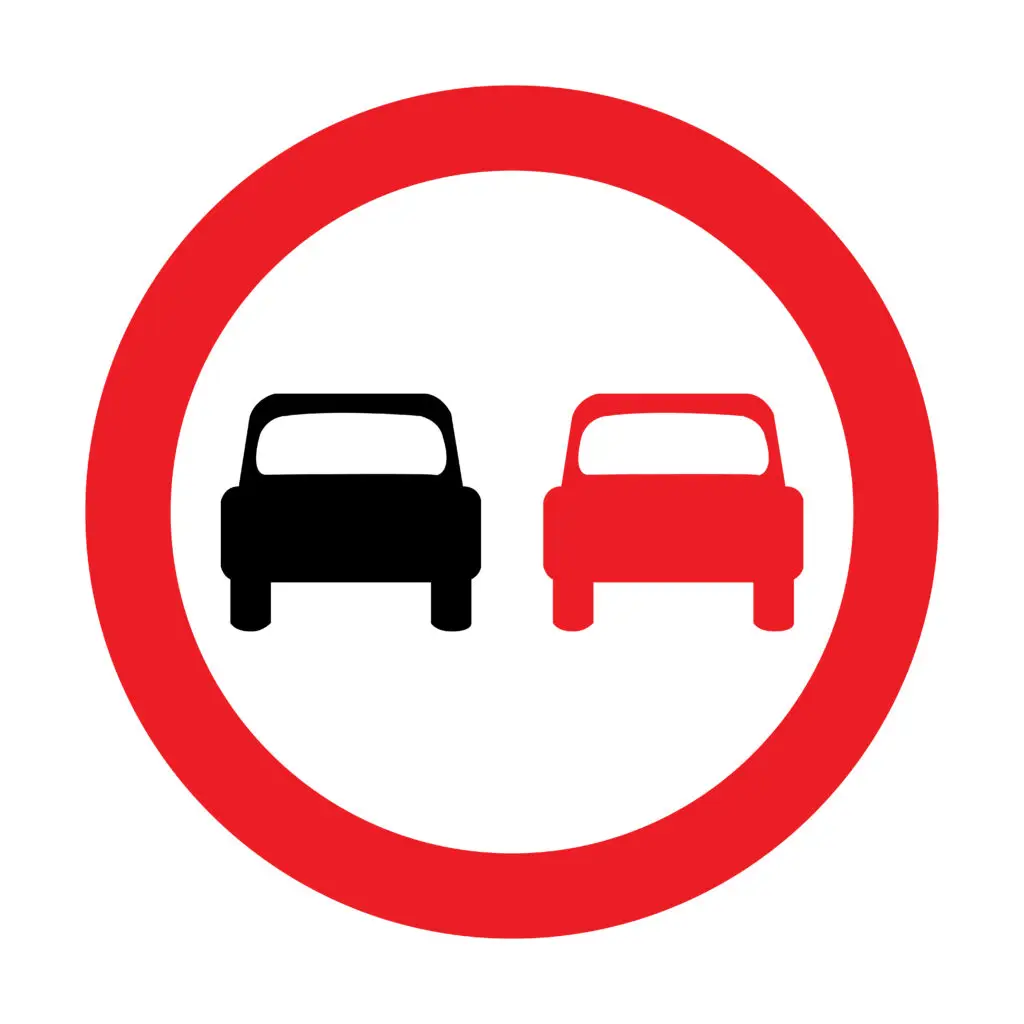
The No Overtaking sign is a red circle with two cars inside:
- A black car on the left.
- A red car on the right.
The red car symbolises a vehicle trying to overtake — and the circle tells you this manoeuvre is prohibited.
Like all circular red signs, it’s a regulatory sign: it gives an instruction you must follow, not just a suggestion.
Why Is Overtaking Banned Here?
On first glance, you might think the road ahead looks safe enough. But road planners put these signs in for good reason. Typical locations include:
- Blind bends or crests of a hill where oncoming traffic cannot be seen.
- Narrow stretches of road where two vehicles couldn’t safely pass side by side.
- Busy or hazardous areas where overtaking would cause confusion or conflict.
The key principle is safety. Overtaking involves moving onto the other side of the road — a manoeuvre only safe when visibility and space are absolutely clear. Where there’s any doubt, the No Overtaking sign removes the guesswork.
What Happens If You Ignore It?
If you overtake where a No Overtaking sign is displayed, you’re breaking the law. Possible consequences include:
- Penalty points on your licence.
- A fine.
- In the most serious cases, a charge of careless or dangerous driving.
Beyond the penalties, the real risk is far greater — putting yourself, your passengers, and others in danger.
When Does the Restriction End?
The No Overtaking restriction remains in force until you reach either:
- A sign cancelling it (a black diagonal line across the same red car/black car symbol).
- The end of the specific road layout where overtaking was unsafe.
Never assume the restriction has ended without a clear sign.
Tips for Learners and Experienced Drivers
- Respect the sign: Treat it as an absolute rule, not a challenge.
- Plan ahead: If you’re behind a slow-moving vehicle, be patient until it’s safe and legal to pass.
- Use it as a cue: Even if you weren’t planning to overtake, the sign reminds you the road ahead is riskier than it looks.
A Tradition of Safety
The UK’s motoring system is built on a heritage of clear, common-sense rules. The No Overtaking sign is part of that tradition — a simple, effective way of protecting lives on challenging stretches of road. By respecting it, you’re not just following the law; you’re upholding the values of safety, patience, and discipline that have long been the hallmarks of responsible driving.
When you see the No Overtaking sign, don’t second-guess it. Trust the system, hold back, and wait until it’s safe. The sign isn’t there to slow you down — it’s there to keep you alive.