You must not use your vehicle's horn between 11.30 pm and 7 am in a built-up area or when you're stationary, unless a moving vehicle poses a danger. Its function is to alert other road users to your presence.
There are three basic types of traffic sign: those that warn, those that inform and those that give orders. Generally, triangular signs warn, rectangular signs give information or directions and circular signs give orders. An exception is the eight-sided 'stop' sign.

Road signs in the shape of a circle give orders. Those with a red circle are mostly prohibitive. The ‘stop’ sign is octagonal to give it greater prominence. Signs giving orders must always be obeyed.

Signs in the shape of a circle give orders. A sign with a red circle means that you’re not allowed to do something. Study Know Your Traffic Signs to make sure that you understand what the different traffic signs mean.
 Tap to reveal
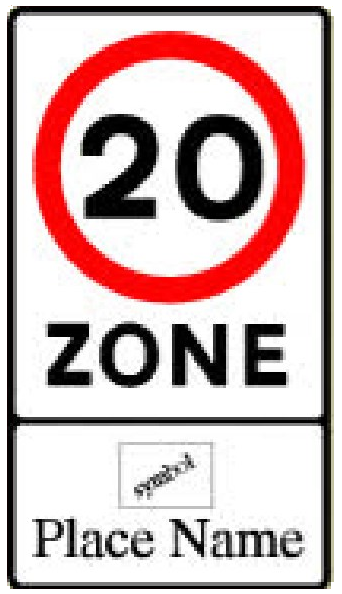
If you’re in a place where there are likely to be pedestrians (for example, outside a school, near a park, in a residential area or in a shopping area), you should be cautious and keep your speed down. Many local authorities have taken steps to slow traffic down by creating traffic-calming measures such as road humps. They're there for a reason; slow down.
 Tap to reveal
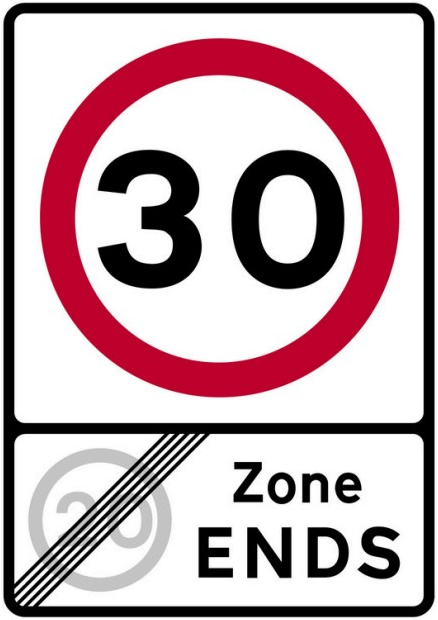
Where you see this sign, the 20 mph restriction ends and a 30 mph restriction starts. Check all around for possible hazards and only increase your speed if it’s safe to do so.
 Tap to reveal
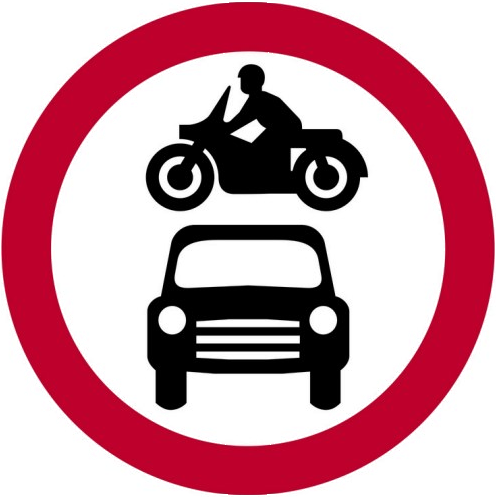
A sign will indicate which types of vehicles are prohibited from certain roads. Make sure that you know which signs apply to the vehicle you're using.
 Tap to reveal
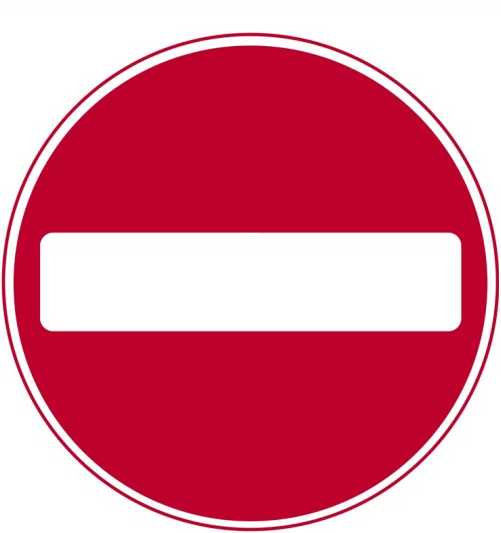
'No entry' signs are used in places such as one-way streets to prevent vehicles driving against the traffic. To ignore one would be dangerous, both for yourself and for other road users, as well as being against the law.
 Tap to reveal
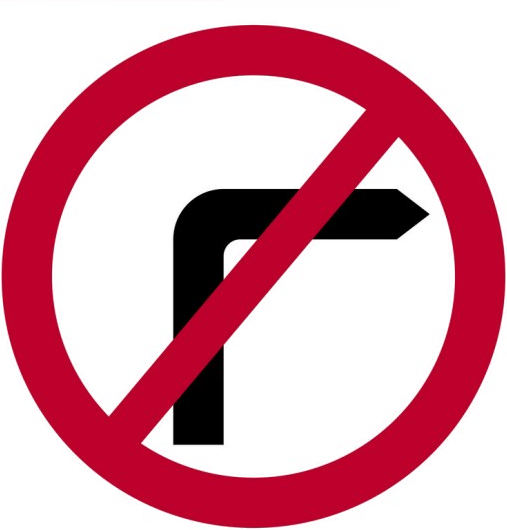
The 'no right turn' sign may be used to warn road users that there's a 'no entry' prohibition on a road to the right ahead.
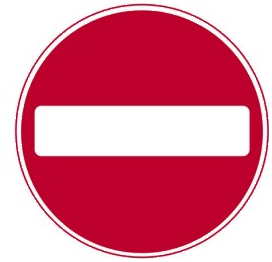
Look for and obey traffic signs. Disobeying or not seeing a sign could be dangerous. It may also be an offence for which you could be prosecuted.
 Tap to reveal
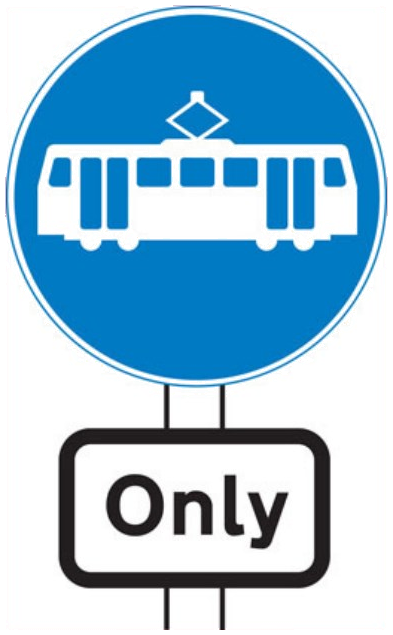
Avoid blocking tram routes. Trams are fixed on their route and cannot manoeuvre around other vehicles or pedestrians. Modern trams travel quickly and are quiet, so you might not hear them approaching.
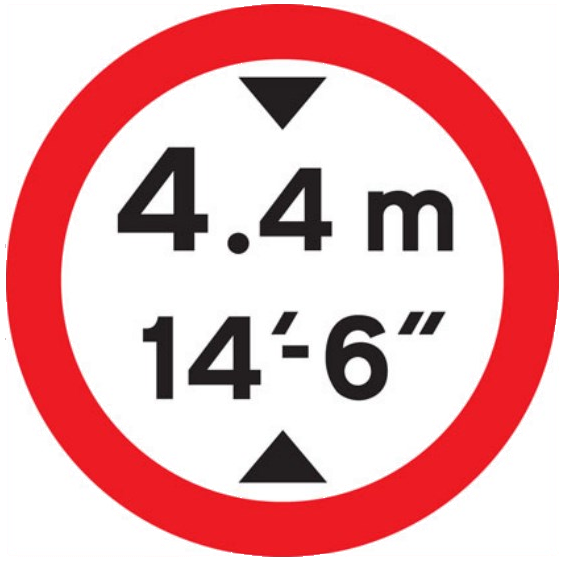 Which type of vehicle does this sign apply to?Tap to reveal
The triangular shapes above and below the dimensions indicate a height restriction that applies to the road ahead.
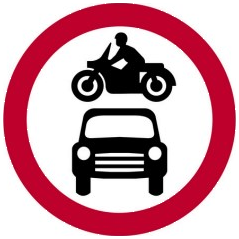
This sign is used to enable pedestrians to walk free from traffic. It's often found in shopping areas.
 Tap to reveal
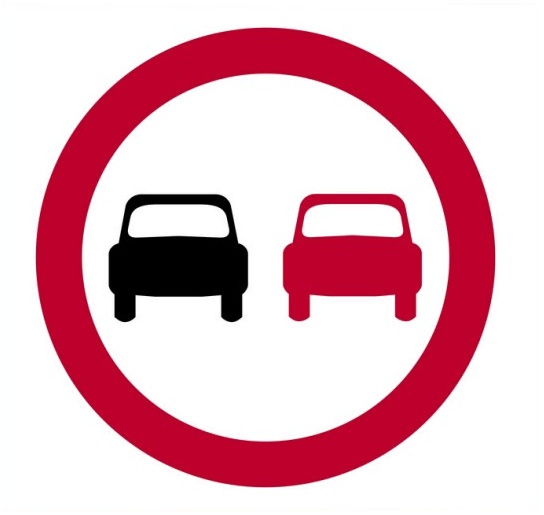
Road signs that prohibit overtaking are placed in locations where passing the vehicle in front is dangerous. If you see this sign, do not attempt to overtake. The sign is there for a reason; you must obey it.
 Tap to reveal
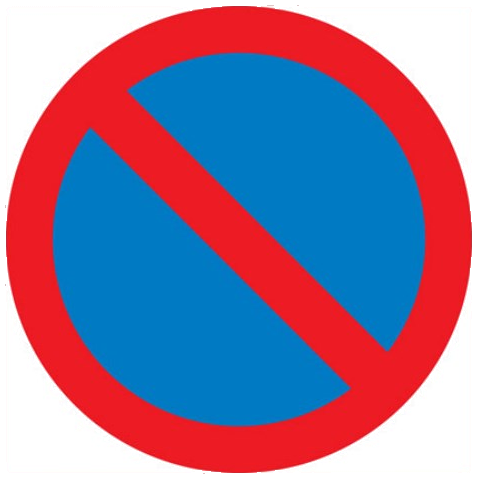
There'll be a plate or additional sign to tell you when the restrictions apply.
 Tap to reveal
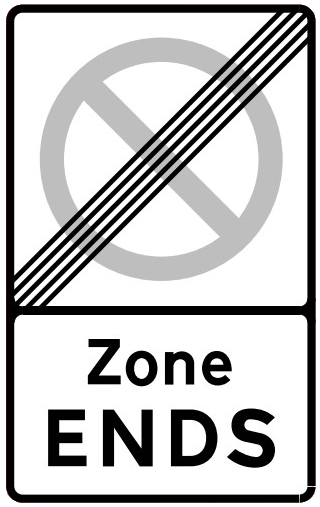
Even though you've left the restricted area, make sure that you park where you will not endanger other road users or cause an obstruction.
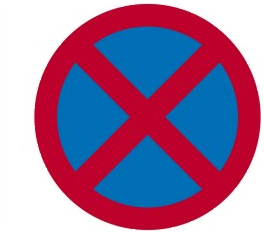
Stopping where this clearway restriction applies is likely to cause congestion. Allow the traffic to flow by obeying the signs.
 Tap to reveal
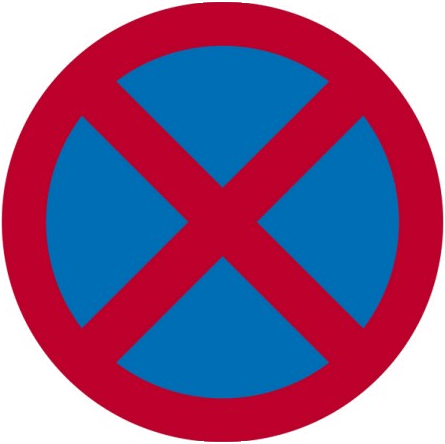
This is the sign for a clearway. Clearways are stretches of road where you’re not allowed to stop unless it’s an emergency.
Stopping where these restrictions apply may be dangerous and is likely to cause an obstruction. Restrictions might apply for several miles and this may be indicated on the sign.
 Tap to reveal
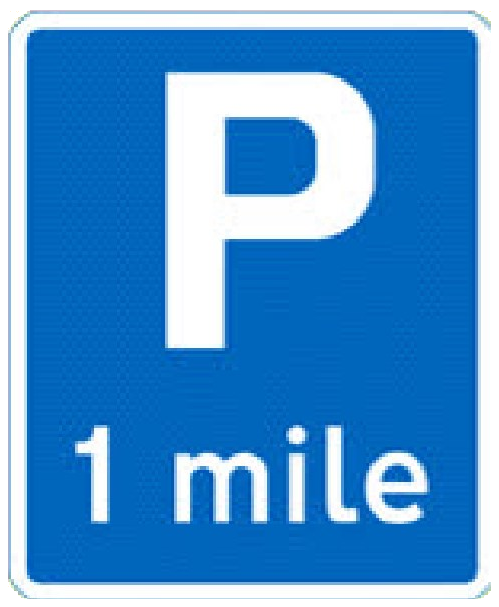
If you intend to stop and rest, this sign allows you time to reduce speed and pull over safely.
 Tap to reveal
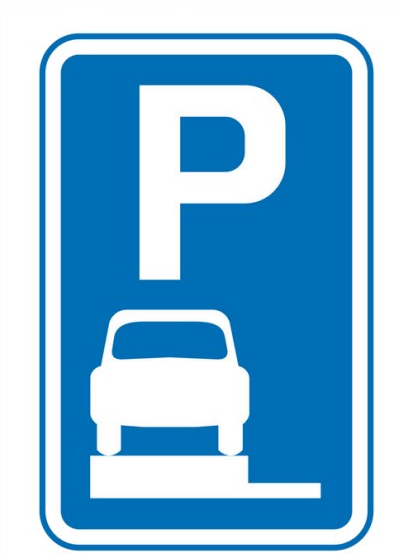
In order to keep roads free from parked cars, there are some areas where you're allowed to park on the verge. Only do this where you see the sign. Parking on verges or footways anywhere else could lead to a fine.
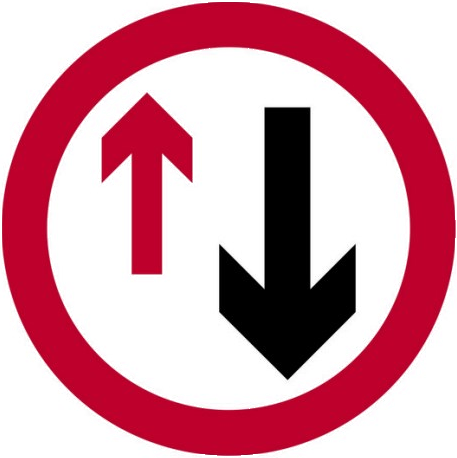 Tap to reveal
Priority signs are normally shown where the road is narrow and there’s not enough room for two vehicles to pass. Examples are narrow bridges, roadworks and where there's a width restriction.
Make sure you know who has priority; do not force your way through. Show courtesy and consideration to other road users.
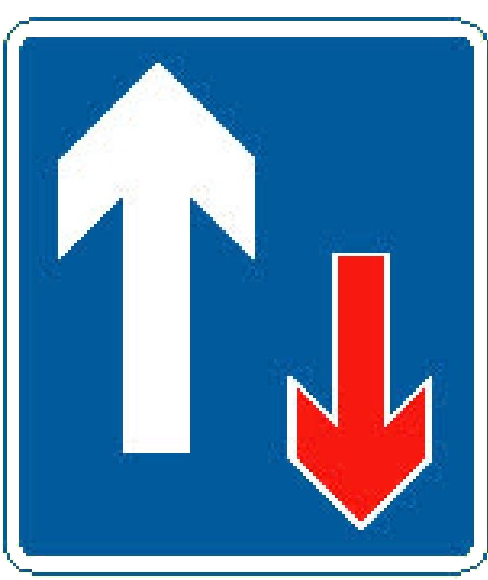 Tap to reveal
Do not force your way through. Show courtesy and consideration to other road users. Although you have priority, make sure oncoming traffic is going to give way before you continue.
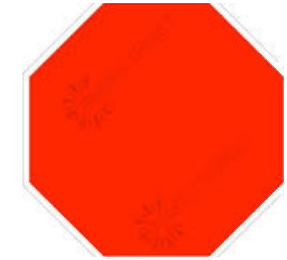
To make it easy to recognise, the ‘stop’ sign is the only sign of this shape. You must stop and take effective observation before proceeding.
 In winter, road signs can become covered by snow. What does this sign mean?Tap to reveal
The 'stop' sign is the only road sign that's octagonal. This is so that it can be recognised and obeyed even if it's obscured (for example, by snow).
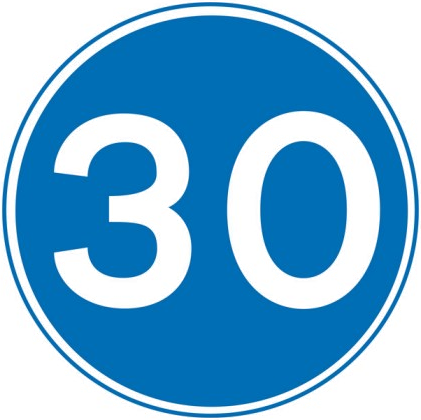 Tap to reveal
This sign is shown where slow-moving vehicles would impede the flow of traffic; for example, in tunnels. However, if you need to slow down or even stop to avoid an incident or potential collision, you should do so.
 Tap to reveal
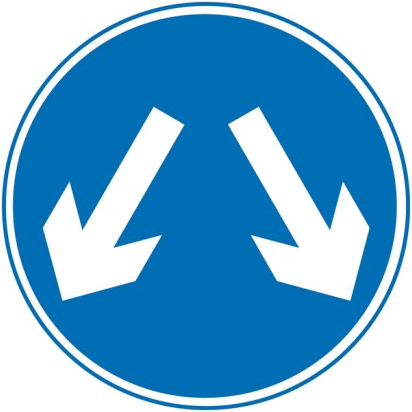
These signs are often seen in one-way streets that have more than one lane. When you see this sign, use the route that's the most convenient and does not require a late change of direction.
 Tap to reveal
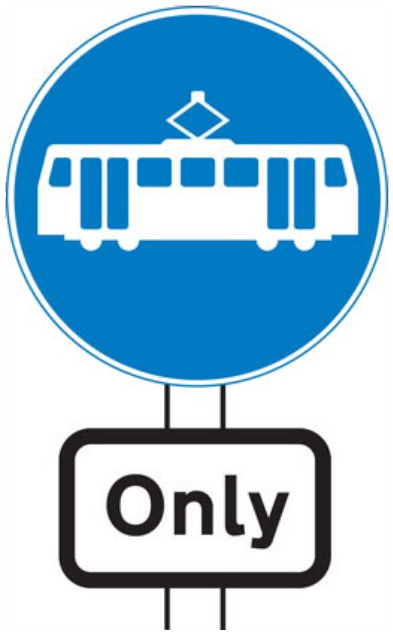
Take extra care when you encounter trams. Look out for road markings and signs that alert you to them. Modern trams are very quiet and you may not hear them approaching.
 What messages are given by circular traffic signs that have a blue background?Tap to reveal
Signs with blue circles generally give mandatory instruction. These are often found in urban areas and include signs for mini- roundabouts and directional arrows.
 Where would you see a contraflow bus lane?Tap to reveal
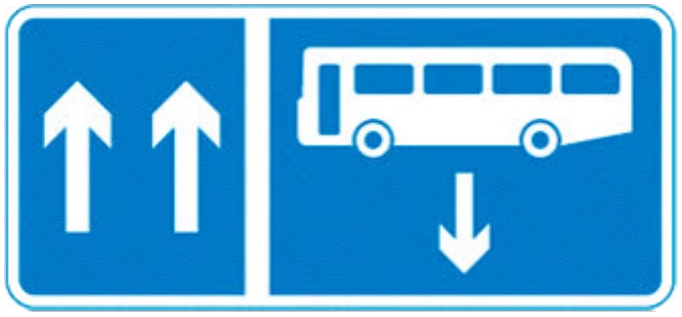
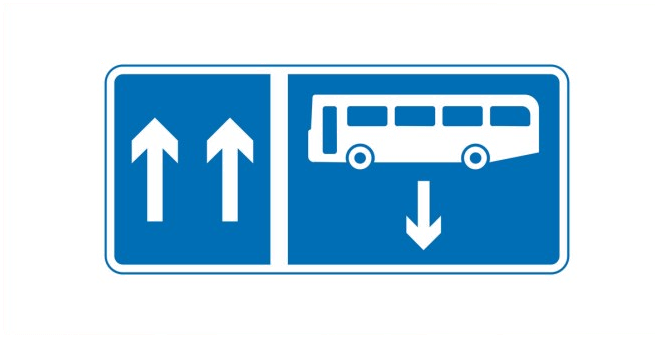
The traffic permitted to use a contraflow lane travels in the opposite direction to traffic in the other lanes on the road.
 Tap to reveal
There will also be markings on the road surface to indicate the bus lane. You must not use this lane for parking or overtaking.
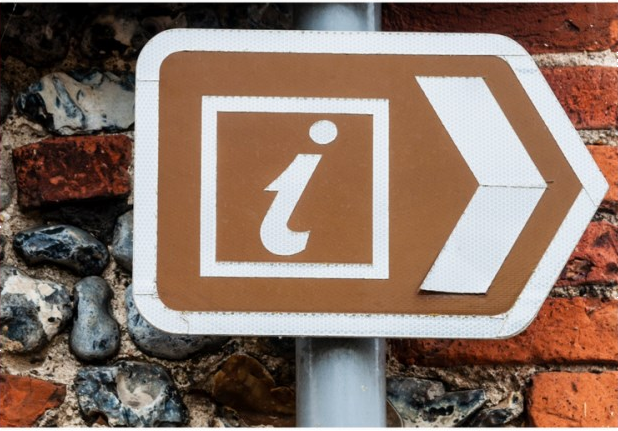 What does a sign with a brown background show?Tap to reveal
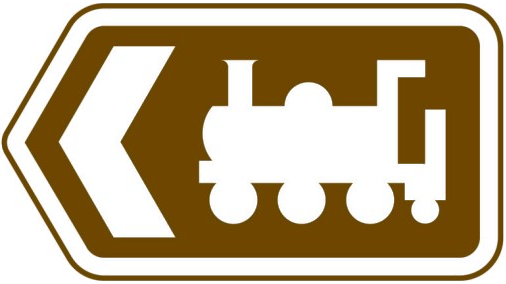
Signs with a brown background give directions to places of interest. They're often seen on a motorway, directing you along the easiest route to the attraction.
 Tap to reveal
These signs indicate places of interest and are designed to guide you by the easiest route. They're particularly useful when you're unfamiliar with the area.
 What's the purpose of triangular shaped signs?Tap to reveal
Triangular signs warn you of hazards ahead. Make sure you look at each sign that you pass on the road, so that you do not miss any vital instructions or information.
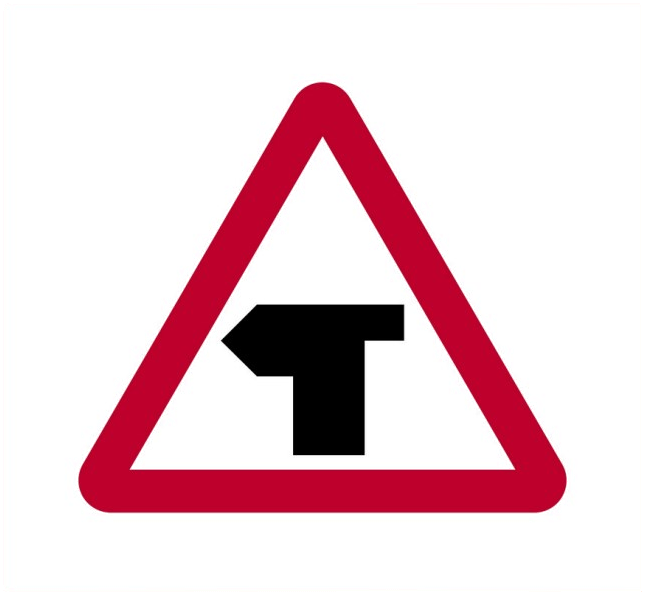 Tap to reveal
This type of sign warns you of hazards ahead. Make sure you look at each sign and road marking that you pass, so that you do not miss any vital instructions or information. This sign shows there's a T-junction with priority over vehicles from the right.
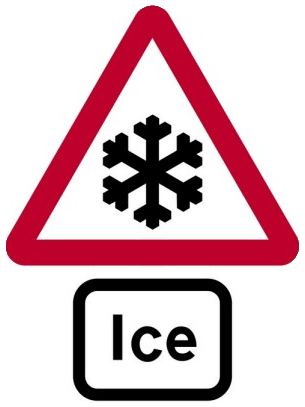 Tap to reveal
It will take up to 10 times longer to stop when it’s icy. Where there's a risk of icy conditions, you need to be aware of this and take extra care. If you think the road may be icy, do not brake or steer harshly, as your tyres could lose their grip on the road.
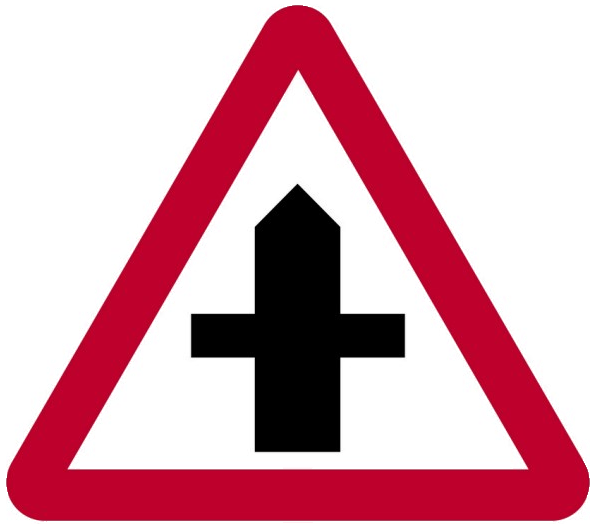 Tap to reveal
The priority through the junction is shown by the broader line. You need to be aware of the hazard posed by traffic crossing or pulling out onto a major road.
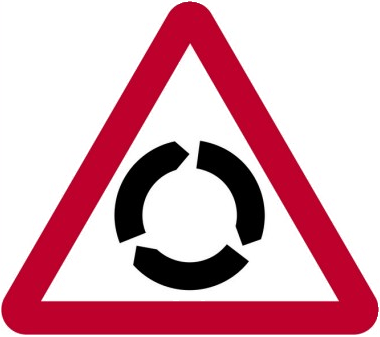 Tap to reveal
As you approach a roundabout, look well ahead and check all signs. Decide which exit you wish to take and move into the correct position as you approach the roundabout, signalling as required.
 What information would be shown in a triangular road sign?Tap to reveal
Warning signs are there to make you aware of potential hazards on the road ahead. Take note of the signs so you're prepared and can take whatever action is necessary.
 Tap to reveal
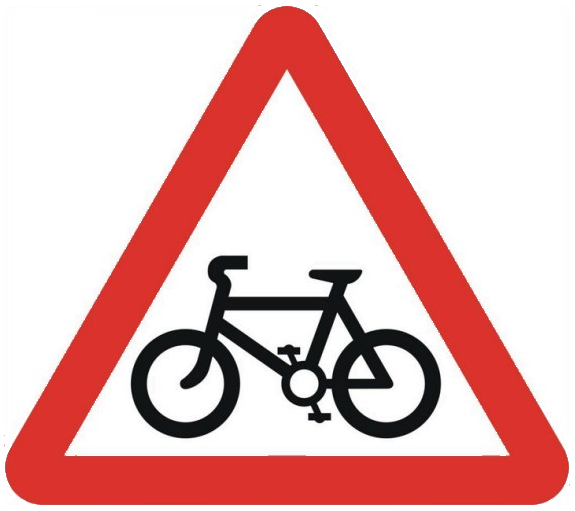
Where there's a cycle route ahead, a sign will show a bicycle in a red warning triangle. Watch out for children on bicycles and cyclists rejoining the main road.
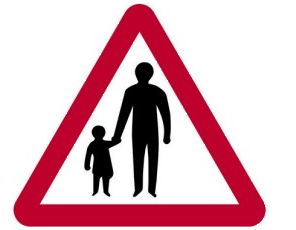
When you pass pedestrians in the road, leave plenty of room. You might have to use the right- hand side of the road, so look well ahead, as well as in your mirrors, before pulling out. Take great care if a bend in the road obscures your view ahead.
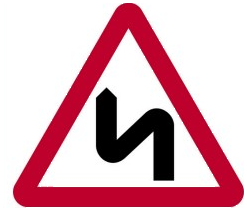
Triangular signs give you a warning of hazards ahead. They're there to give you time to prepare for the hazard; for example, by adjusting your speed.
 Tap to reveal
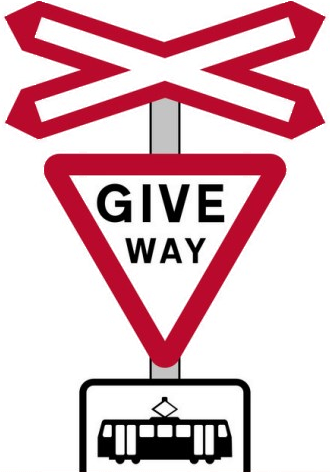
Obey the 'give way' signs. Trams are unable to steer around you if you misjudge when it's safe to enter the junction.
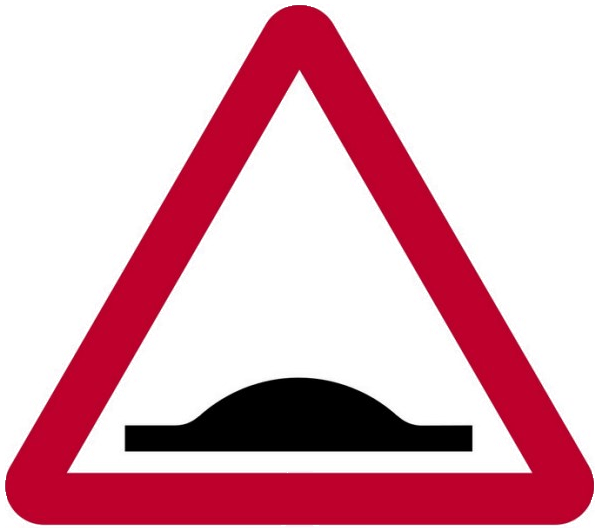 Tap to reveal
These humps have been put in place to slow the traffic down. They're usually found in residential areas. Slow down to an appropriate speed.
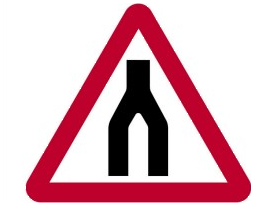
If you’re overtaking, make sure you move back safely into the left-hand lane before you reach the end of the dual carriageway.
 Tap to reveal
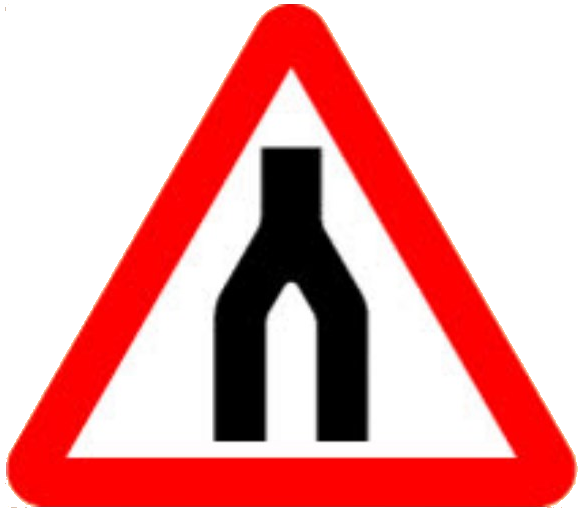
Do not wait until the last moment before moving into the left- hand lane. Plan ahead and do not rely on other traffic letting you in.
 Tap to reveal
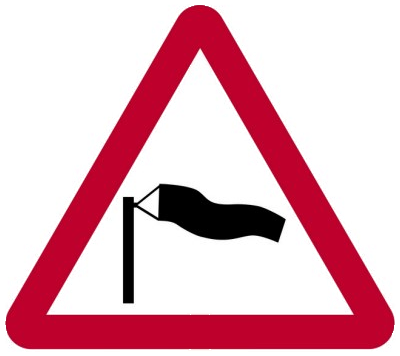
A warning sign with a picture of a windsock indicates that there may be strong side winds. This sign is often found on exposed roads.
 Tap to reveal
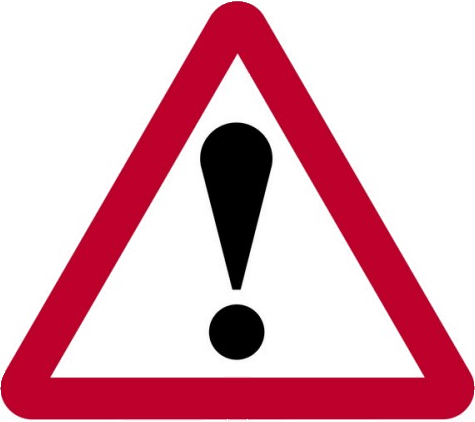
This sign is there to alert you to the likelihood of danger ahead. It may be accompanied by a plate indicating the type of hazard. Be ready to reduce your speed and take avoiding action.
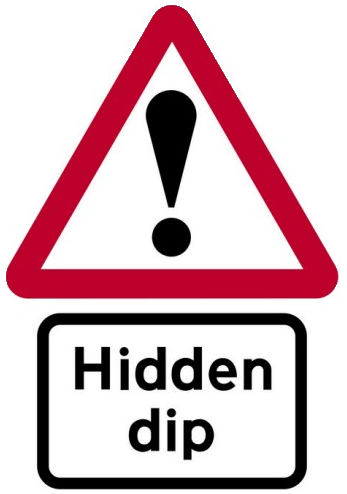 You're about to overtake. What should you do when you see this sign?Tap to reveal
You will not be able to see any hazards that might be hidden in the dip. As well as oncoming traffic, the dip may conceal • cyclists • horse riders • parked vehicles • pedestrians in the road.
 Tap to reveal
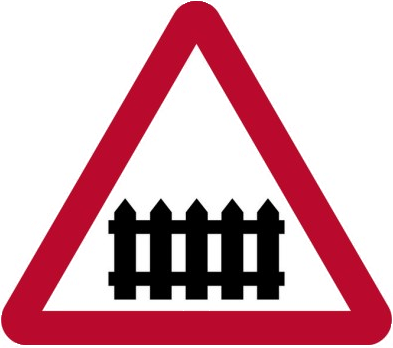
Some crossings have gates but no attendant or signals. You should stop, look both ways, listen and make sure that no train is approaching. If there's a telephone, contact the signal operator to make sure it's safe to cross.
 Tap to reveal
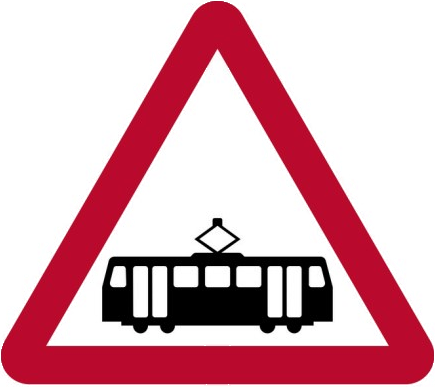
This sign tells you to beware of trams. If you do not usually drive in a town where there are trams, remember to look out for them at junctions and look for tram rails, signs and signals.
 Tap to reveal
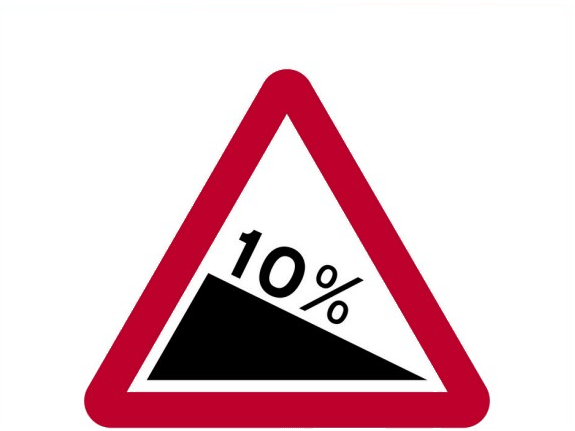
This sign gives you an early warning that the road ahead will slope downhill. Prepare to alter your speed and gear. Looking at the sign from left to right will show you whether the road slopes uphill or downhill.
 Tap to reveal
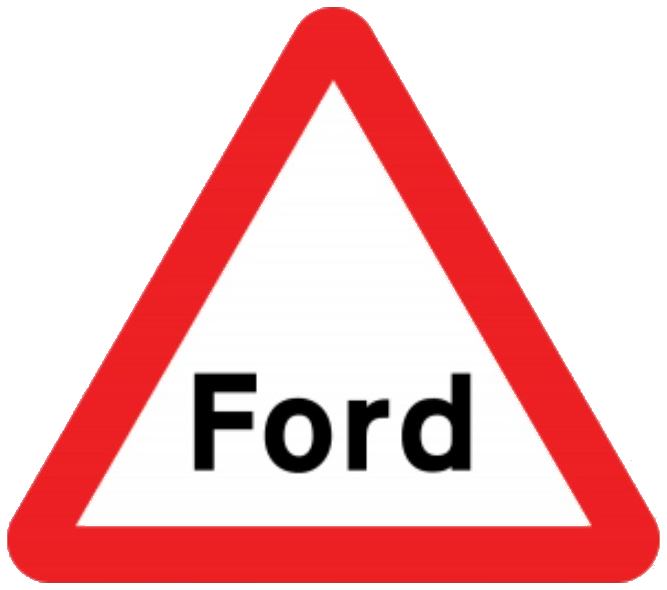
This sign is found where a shallow stream crosses the road. Heavy rainfall could increase the flow of water. If the water looks too deep or the stream has spread over a large distance, stop and find another route.
 Tap to reveal
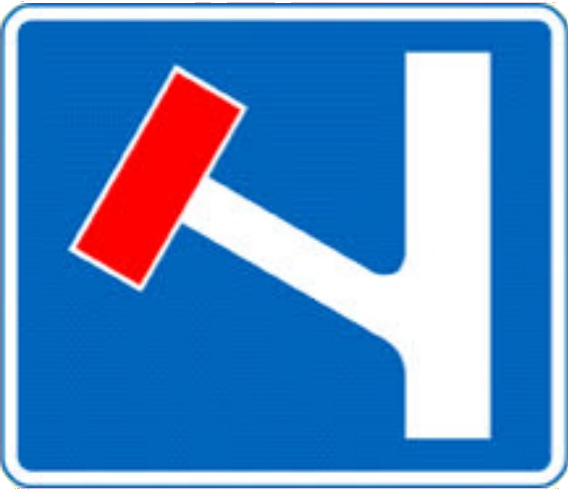
This sign shows you that you cannot get through to another route by turning left at the junction ahead.
 Tap to reveal
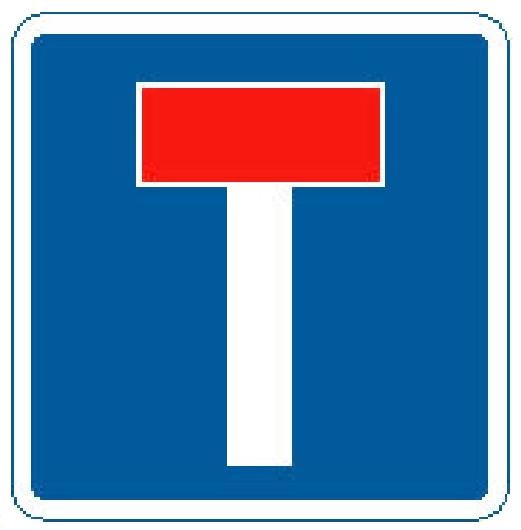
You will not be able to find a through route to another road. Use this road only for access.
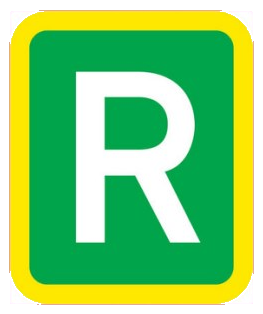
Ring roads are designed to relieve congestion in towns and city centres.
 Tap to reveal
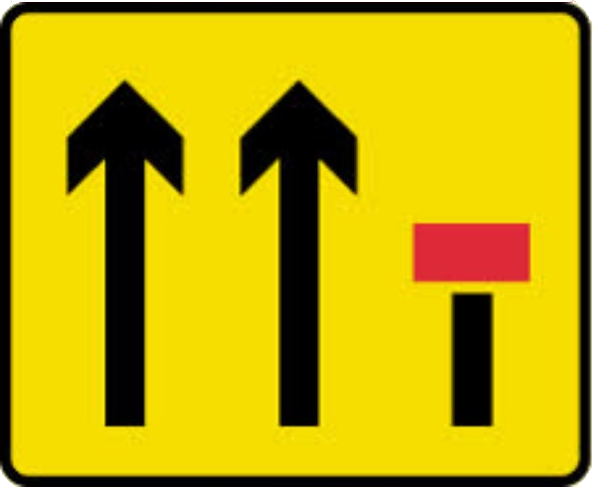
Yellow-and-black temporary signs may be used to inform you about roadworks or lane restrictions. Look well ahead. If you have to change lanes, do so in good time.
 Tap to reveal
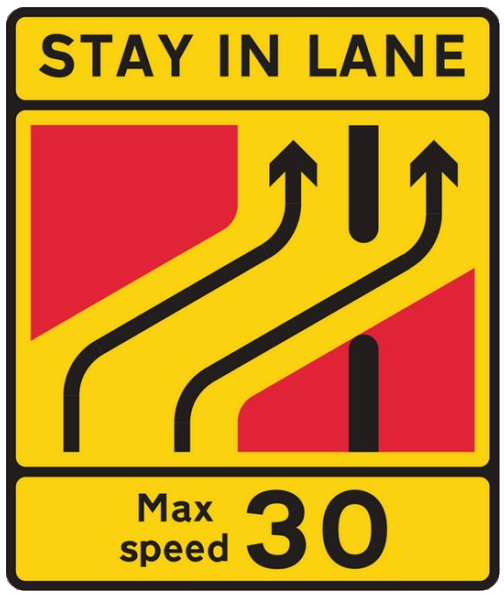
If you use the right-hand lane in a contraflow system, you’ll be travelling with no permanent barrier between you and the oncoming traffic. Observe speed limits and keep a good distance from the vehicle ahead.
 Tap to reveal
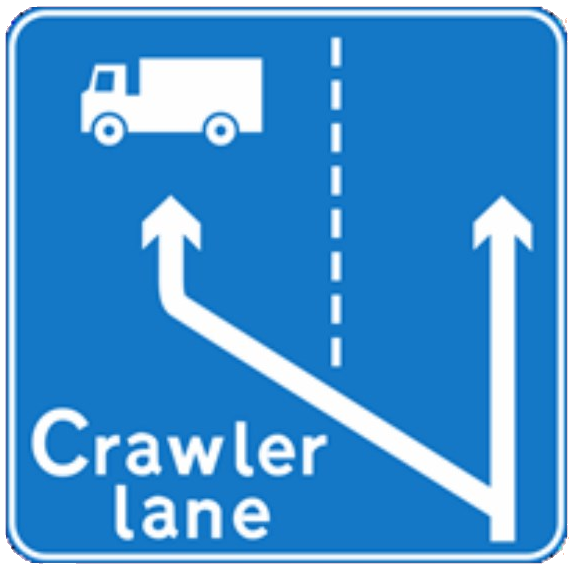
Where there's a long, steep, uphill gradient on a motorway, a crawler lane may be provided. This helps the traffic to flow by diverting the slower heavy vehicles into a dedicated lane on the left.
Whatever light is showing, you should know which light is going to appear next and be able to take appropriate action. For example, when amber is showing on its own, you’ll know that red will appear next. This should give you ample time to anticipate and respond safely.
When the amber light is showing on its own, the red light will follow next. The amber light means stop, unless you've already crossed the stop line or you're so close to it that stopping may cause a collision.
Free Theory Test Road Signs Practice – ensure that you review the latest updates on road signs and regulations as they can change over time. Familiarizing yourself with any new signs introduced in your area, or changes to existing signs, is essential for staying informed. Many local governments provide resources or updates online that can help you keep your knowledge current. Always check for any changes before taking your Theory Test so that you are not caught off guard by new information. Staying up-to-date will give you the best chance of success in the Theory Test Road Signs Practice and help you become a responsible driver.

Additionally, practicing with a variety of road signs can enhance your recognition skills, making it easier to respond appropriately while driving. Utilize online platforms and mobile applications that offer mock tests and quizzes to reinforce your understanding of road signs. Engaging in discussions with experienced drivers or instructors can also provide valuable insights and clarify any uncertainties regarding road signage and regulations. By actively participating in these learning opportunities, you will be better prepared for the Theory Test and improve your overall driving proficiency. Regularly reviewing the latest driving regulations will further solidify your knowledge and confidence. Consider forming a study group with peers who are also preparing for the test, as collaboration can lead to a deeper understanding of the material. Taking practice tests under timed conditions can help simulate the actual test environment, reducing anxiety on the day of the exam. Lastly, ensure that you have all necessary documents and identification ready prior to the test to avoid any last-minute issues.
Integrating Theory Test Road Signs Practice into your preparation is vital for success. Consistent practice will reinforce your understanding of how road signs function.
Theory Test Road Signs Practice
In conclusion, successfully passing the Theory Test not only requires knowledge of road signs but also the ability to apply that knowledge in real-world scenarios. Through comprehensive study, practice tests, and staying updated on road regulations, you can build a solid understanding of road signs. Remember, the more effort you put into your preparation, the more confident you will be during the test. Ultimately, a well-prepared driver is a safe driver, which benefits everyone on the road. Ensure your studies include the keyword seamlessly: Theory Test Road Signs Practice, as it encapsulates your preparation for the test.
Using Theory Test Road Signs Practice materials can significantly improve your confidence and readiness.
Understanding the Theory Test Road Signs Practice content will aid in recognizing signs while driving.
Incorporating Theory Test Road Signs Practice into flashcard sessions can enhance memory retention.
The Theory Test Road Signs Practice will help clarify the importance of different road signs.
Practicing with Theory Test Road Signs Practice is advisable for enhancing your test-taking skills.
Emphasizing the Theory Test Road Signs Practice will prepare you for the nuances of road safety.
Practice tests also frequently feature questions that require you to interpret road signs in context. For example, you might encounter a question asking what you should do when you see a particular road sign while driving. Understanding the situation that each sign indicates can be fundamental to answering these questions correctly. Therefore, supplementing your study with real-world driving practice, when possible, will help solidify your knowledge. This practical application reinforces what you’ve learned and prepares you to respond appropriately during your theory test.
In addition to studying road signs, it’s important to understand the scenarios in which these signs are used. For example, know when to yield to pedestrians at crosswalks, which is indicated by specific road signs. Practicing how to react in various driving situations, such as when you see a yield sign versus a stop sign, can be incredibly beneficial. Moreover, watching educational videos that demonstrate real-life driving scenarios can provide insight into the importance of these road signs in everyday driving. This will not only help you understand their significance but will also prepare you for any questions related to road signs on the theory test.
Another effective study method is to create flashcards featuring different road signs and their meanings. By repeatedly going through these flashcards, you can reinforce your memory and ensure that you can identify each sign quickly and accurately. You could also group signs by category to make your study sessions more organized. For instance, keep all warning signs together, and then separate them from regulatory signs. This technique helps to visualize and remember the unique characteristics of each sign type. Furthermore, consider studying in groups, where you can quiz each other on road signs and their meanings, making learning more interactive and enjoyable.
Understanding road signs is crucial for any driver, as they provide vital information about the rules of the road, potential hazards, and necessary actions for safe driving. Road signs can be categorized into various types, including regulatory signs, warning signs, and informational signs. Each category serves a specific purpose and is essential for maintaining road safety. For instance, regulatory signs, such as stop signs and speed limit signs, indicate the laws that drivers must follow. Warning signs, like those indicating sharp turns or pedestrian crossings, alert drivers to potential dangers ahead. Lastly, informational signs provide guidance, such as directions to nearby attractions or services. Knowing how to interpret these signs is key in preparing for your theory test.
To prepare effectively for the Theory Test, it’s advisable to practice with various resources that simulate real test conditions. One effective method is to use mock tests that include questions about different types of road signs. These tests not only help you become familiar with the signs but also improve your overall knowledge of road safety rules. For example, you can find practice materials online that present a series of questions related to road signs, accompanied by images to help you visualize them. Engaging with these practice tests regularly will enhance your confidence and increase your chances of passing the theory test on your first attempt.
Theory Test Road Signs Practice