Opening or Swing Bridge Ahead vs Quayside or River Bank – Understanding the Importance of Swing Bridge or Quayside
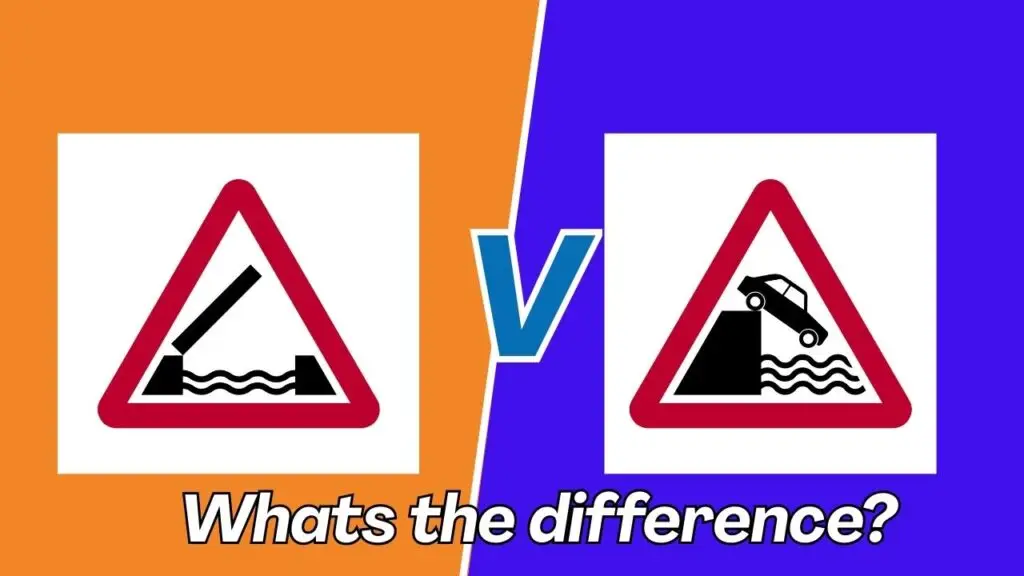
Water-related road signs are some of the most memorable in the Highway Code — but also some of the most confusing. Both the Opening or Swing Bridge Ahead sign and the Quayside or River Bank sign involve water hazards, yet they warn about very different dangers. Learners often mix them up in the theory test, so let’s set the record straight.
Both the swing bridge or quayside signs require different responses from drivers — one for potential movement and one for proximity to water.
When approaching areas with a swing bridge or quayside, it’s vital to understand the specific risks associated with each type of sign. The swing bridge or quayside signs alert drivers to potential hazards that require caution.
Opening or Swing Bridge Ahead
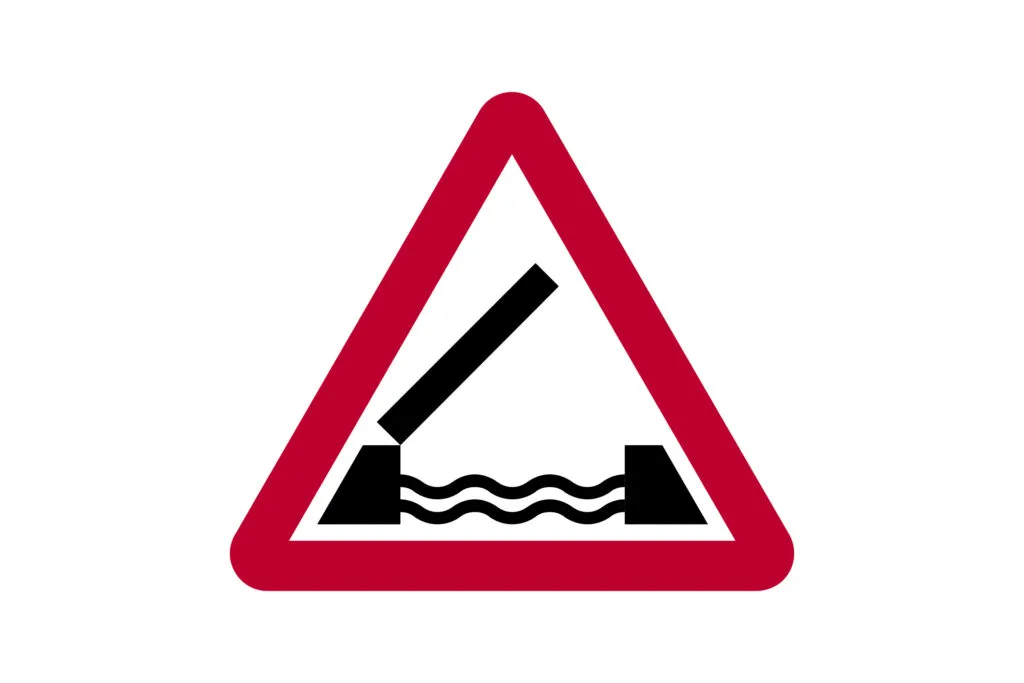
- Appearance: A white triangular sign with a red border, showing a bridge with one side raised as if it’s opening.
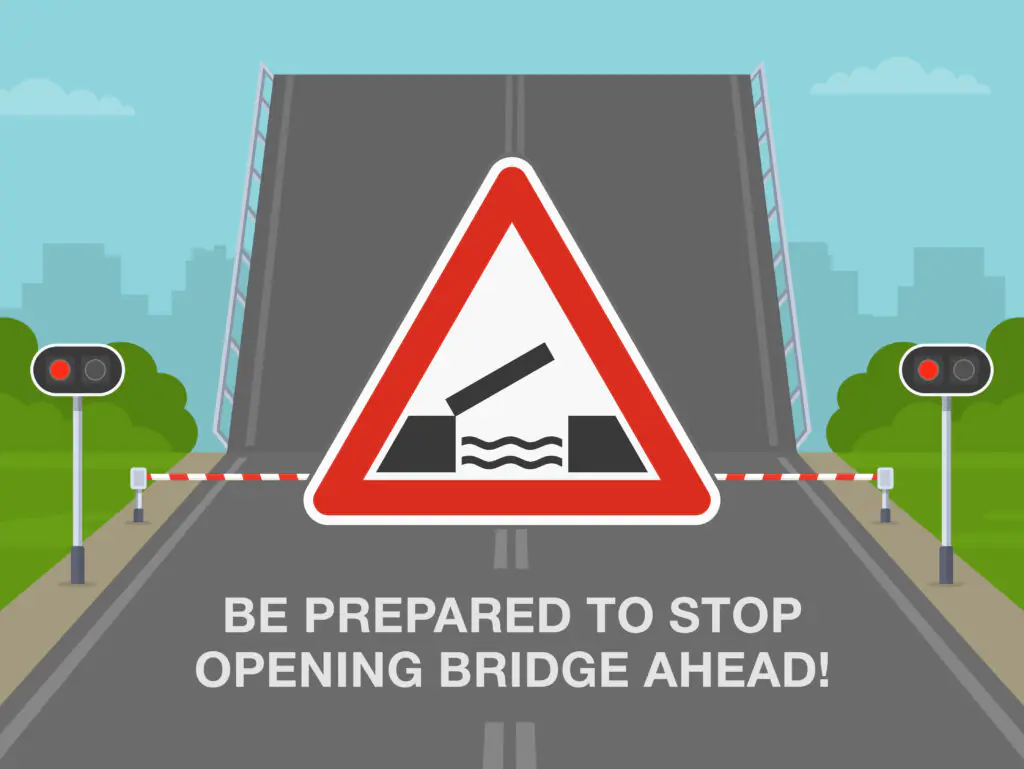
- Meaning: There’s an opening or swing bridge ahead that may be raised to let boats pass.
The distinction between swing bridge or quayside signs is critical for understanding hazards while driving.
- Why it matters:
- You may have to stop and wait if the bridge is open.
- Barriers, warning lights, or signals will normally control traffic.
- Approaching too quickly could leave you unable to stop safely.
- Where you’ll see it: Near rivers, canals, or coastal routes where road bridges also serve shipping traffic.
Memory tip: The “broken” bridge symbol means the road ahead might swing or lift open.
Quayside or River Bank
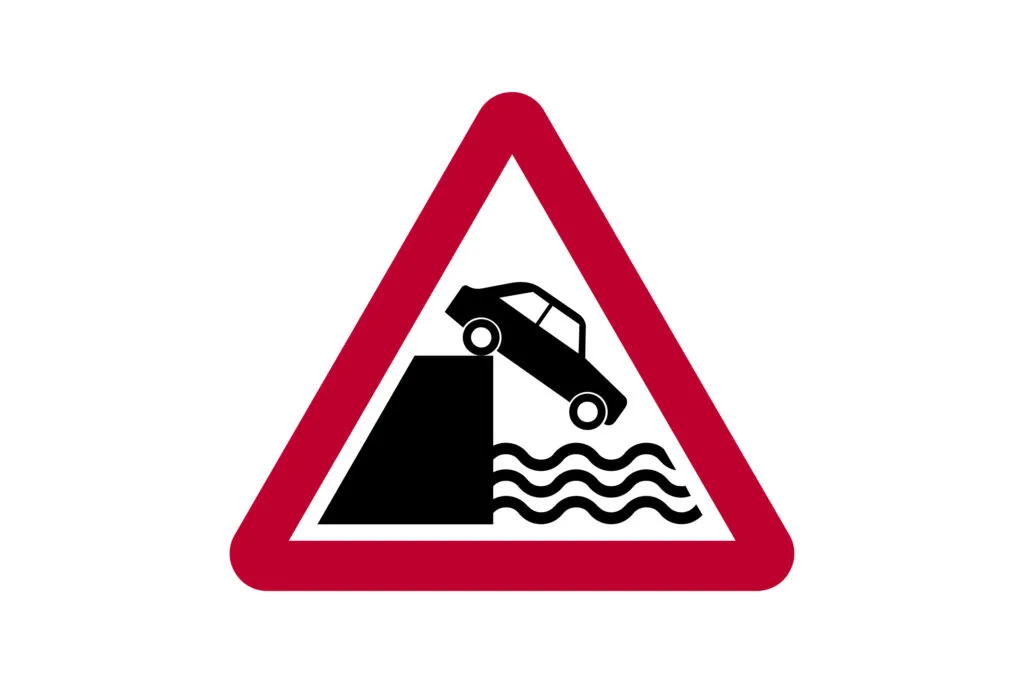
- Appearance: A white triangular sign with a red border, showing a car on the edge of water, with waves underneath.
- Meaning: The road runs directly alongside open water, such as a riverbank, dockside, or canal edge.
Pay attention to the swing bridge or quayside signs to avoid misjudgments that could lead to accidents.
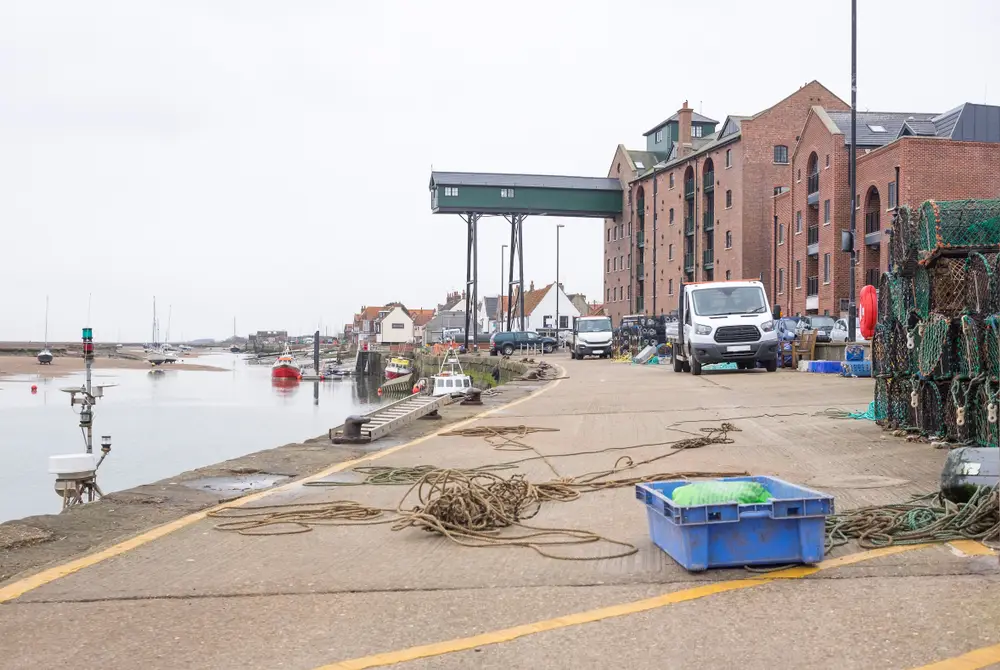
- Why it matters:
- There may be little or no barrier between the road and the water.
- The risk is especially high in poor visibility or icy conditions.
- A wrong turn could put your vehicle straight into the water.
- Where you’ll see it: At ports, ferry terminals, riverside roads, dockyards, or canals.
Memory tip: A car heading into waves = warning of a drop into water.
Driving near a swing bridge or quayside requires heightened awareness of your surroundings.
✅ The Key Difference
- Opening or Swing Bridge Ahead = The bridge itself moves. You may need to stop while it opens for river traffic.
- Quayside or River Bank = The road runs dangerously close to water. The hazard is always present.
Opening or Swing Bridge Ahead vs Quayside or River Bank
These two signs both shout “water hazard,” but in completely different ways. For your theory test — and for your real driving — remember this simple rule:
- If the bridge is lifting up, it’s an Opening or Swing Bridge warning.
- If the car looks like it’s falling in, it’s a Quayside or River Bank warning.
Learn to spot the difference, and you’ll avoid one of the Highway Code’s trickiest mix-ups.
What does the memory tip about a car heading into waves mean in relation to the water hazard sign?
The memory tip, which depicts a car heading into waves, serves as a warning that the road runs directly alongside water and there is a risk of the vehicle falling into water if not cautious, especially in poor visibility or icy conditions.
What should I do if I see the ‘Opening or Swing Bridge Ahead’ sign while driving?
If you see the ‘Opening or Swing Bridge Ahead’ sign, slow down and be prepared to stop if necessary, as barriers, lights, or signals will likely control traffic and the bridge may be raised to allow boats to pass, requiring you to wait.
While navigating routes marked by swing bridge or quayside, always prioritise safety and awareness.
Why is it important to distinguish between these signs during driving?
Distinguishing these signs is crucial because they indicate different dangers; one requires caution for a moving bridge that may open, while the other warns you about the risk of driving directly into water, demanding different levels of caution and action.
How can I tell if I am approaching a swing bridge or one of the water hazard signs?
You can identify a swing bridge sign by a white triangle with a red border showing a bridge with one side raised, indicating it may open. The water hazard signs show a car near water with waves underneath, warning you of the road running close to water.
What is the difference between the ‘Opening or Swing Bridge Ahead’ sign and the ‘Quayside or River Bank’ sign?
The ‘Opening or Swing Bridge Ahead’ sign warns of a bridge that may open or swing to let boats pass, indicating the bridge itself moves. The ‘Quayside or River Bank’ sign indicates the road runs directly alongside water, where the hazard is always present due to the proximity to water and the lack of barriers.
BACK TO CONFUSING ROAD SIGNSHome – Theory Test Practice 2026Home – Theory Test Practice 2026Theory Test Flash cards – Alertness
When you encounter a swing bridge or quayside, remember to keep a safe distance from the edge of the water to ensure safety.
Understanding the swing bridge or quayside signs is essential for avoiding dangerous situations that may arise along these routes.
Be aware of the swing bridge or quayside signs as they indicate areas where additional caution is needed.
Students often learn about swing bridge or quayside signs in their driving courses to prepare for real-world situations.
Identifying whether you are near a swing bridge or quayside can help in making quick decisions while driving.
Recognising the swing bridge or quayside signal can save lives by ensuring proper precautions are taken.
Be mindful of the swing bridge or quayside signs, especially in adverse weather conditions.
Combining knowledge of the swing bridge or quayside signs with practical experience is key to safe navigation.