2 way traffic crosses 1 way road sign
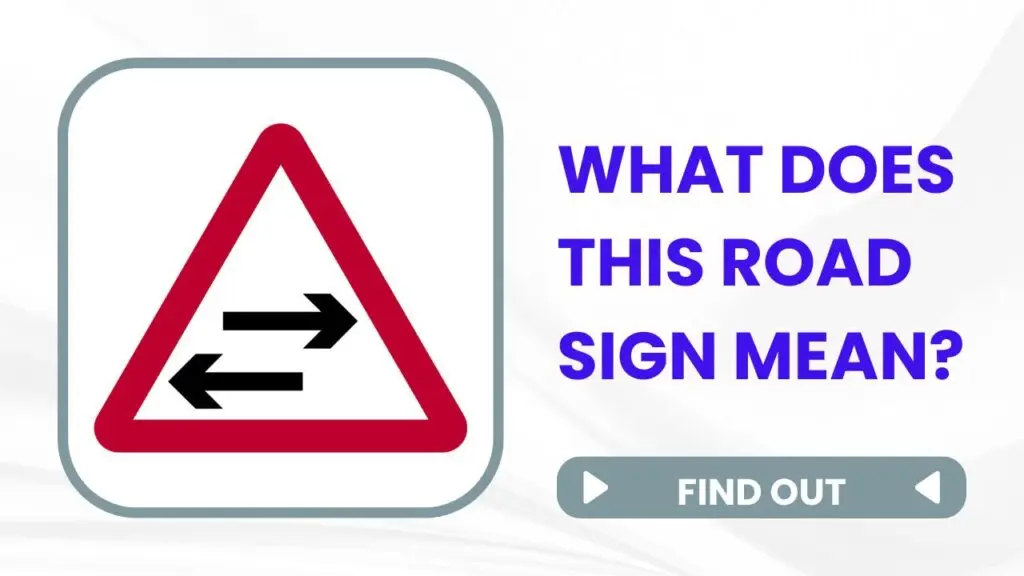
What it means
The 2 way traffic crosses 1 way road sign indicates that vehicles from both directions must be cautious when approaching a one-way road.
2 WAY TRAFFIC CROSSES 1 WAY ROAD It warns drivers that they are travelling on a one-way road, but they’re about to meet or cross a road where the traffic flows in both directions.
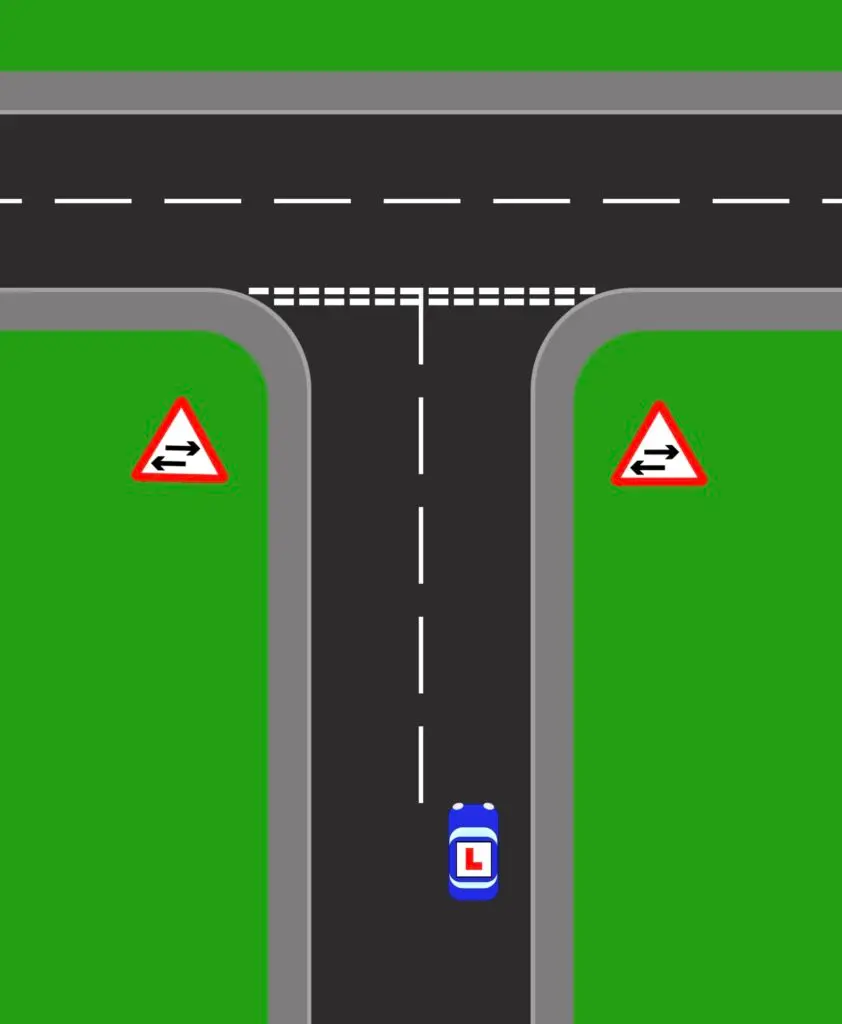
In other words:
- You’re on a one-way street right now.
- But up ahead, another road crosses with two-way traffic – so traffic may appear from both the left and the right.
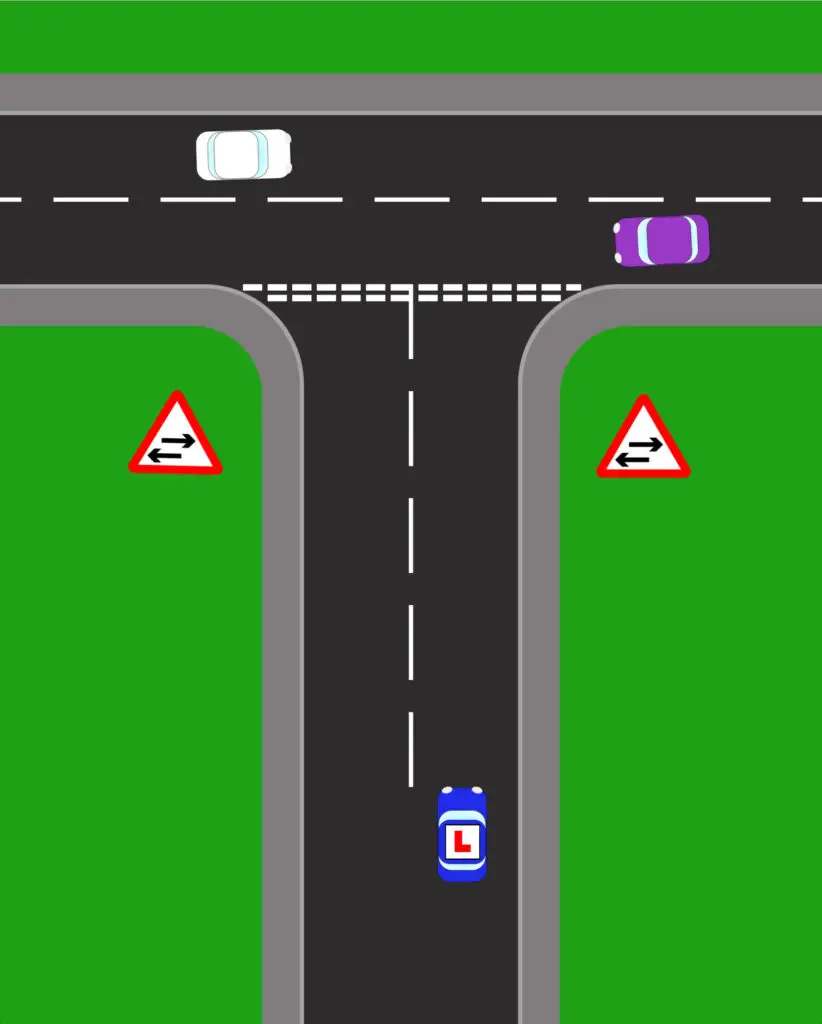
Why it’s important (for learners and the theory test)
- Drivers often expect vehicles to only come from one direction (because they’ve been on a one-way road).
- This sign alerts them that, at the junction ahead, they must look both ways before emerging or crossing.
- It reduces the risk of collisions where one-way and two-way systems meet.
How to remember it
Think: “Double arrows = double directions” – traffic could be coming from both ways across your path.
- Meaning of the 2 way traffic crosses 1 way road sign: The sign warns drivers that they are on a one-way road but are approaching a crossing with two-way traffic, indicating vehicles may come from both directions.
- What the sign indicates for drivers: It signifies that while on a one-way street, the upcoming crossing involves a road with traffic flowing in both directions, requiring drivers to be cautious of vehicles from both sides.
- Importance of the sign for safety and driving tests: The sign alerts drivers to look both ways at junctions, helping to prevent collisions where one-way and two-way traffic systems intersect, which is vital for learner drivers and the theory test.
- Memory aid for the sign’s meaning: Remember the phrase “Double arrows = double directions,” as it helps drivers recall that traffic could be approaching from both directions at crossings.
- Practical driving advice related to the sign: Drivers should anticipate vehicles from both directions ahead of the crossing and exercise caution before emerging or crossing the road.
How does understanding this sign benefit learner drivers and in the driving theory test?
Understanding this sign helps learners recognize potential hazards at junctions with mixed traffic flows, reinforcing the importance of safe observation and contributing to successful passing of the theory test.
What should I do as a driver when I see this sign?
Drivers should anticipate vehicles from both directions and exercise caution before emerging or crossing the intersection to ensure safety.
How can I remember the meaning of the ‘2 way traffic crosses 1 way’ sign?
A useful memory aid is the phrase “Double arrows = double directions,” which reminds drivers that traffic may be approaching from both ways at crossings.
Why is the ‘2 way traffic crosses 1 way road’ sign important for drivers?
This sign is important because it alerts drivers to look both ways before crossing or turning at the junction, helping to prevent collisions where one-way and two-way traffic systems meet.
What does the ‘2 way traffic crosses 1 way road’ sign mean?
The sign indicates that you are currently on a one-way road, but ahead, there is a crossing with traffic flowing in both directions, so vehicles may come from either side.
Theory Test Questions
Understanding Traffic Signs
Traffic signs are critical in maintaining order on the roads. Each sign, including the 2 way traffic crosses 1 way road sign, serves a specific purpose by conveying important information to drivers. Understanding these signs can help drivers navigate safely and efficiently.
For instance, consider the role of warning signs that alert drivers to changing road conditions. Just like the 2 way traffic crosses 1 way road sign warns of potential hazards when merging with two-way traffic, other signs, such as those indicating sharp turns or pedestrian crossings, are equally vital for ensuring safety on the road.
To further illustrate the significance of traffic signs, let’s take the example of a stop sign. This sign requires drivers to come to a complete halt and check for any oncoming traffic. Similarly, the 2 way traffic crosses 1 way road sign necessitates a pause to ensure the road is clear before proceeding, demonstrating how traffic signs work together to guide driving behaviour.
Common Scenarios Encountering the Sign
It is essential to discuss common scenarios where drivers might encounter the 2 way traffic crosses 1 way road sign. For example, when approaching a busy urban area, drivers might find themselves on a one-way street leading to a junction with a two-way road. In this case, awareness of the sign’s implications is crucial. Drivers must be ready to yield to vehicles coming from the opposite direction.
Another scenario could be near construction sites where road layouts are altered. Temporary signage may indicate a one-way street that intersects with two-way traffic. Here, the 2 way traffic crosses 1 way road sign may be placed to alert drivers to unexpected conditions. This highlights the importance of remaining vigilant and responsive to changes in road signage.
Practical Tips for Drivers
When driving, it is beneficial to employ practical strategies for interpreting the 2 way traffic crosses 1 way road sign. First, always approach the sign with caution and reduce speed, allowing time to assess the road ahead. This brief pause can prevent accidents and ensure that drivers are aware of their surroundings.
Secondly, using mirrors effectively is crucial. Drivers should check their side mirrors and rearview mirror before making any decisions at intersections where this sign is present. This practice not only helps in spotting potential hazards but also aids in making informed decisions about when to proceed.
Lastly, it’s essential to communicate with other road users. Using indicators to signal intentions clearly can prevent misunderstandings and promote smoother traffic flow, especially in areas where the 2 way traffic crosses 1 way road sign is present.
Conclusion
In conclusion, understanding the 2 way traffic crosses 1 way road sign is vital for ensuring safety on the roads. By being aware of its implications, drivers can navigate intersections more effectively, reducing the risk of accidents. Remember, looking both ways and being prepared for unexpected vehicles can save lives. As road users, awareness and caution play significant roles in maintaining safety for everyone. Traffic signs are there to guide us, and recognising their meanings, like that of the 2 way traffic crosses 1 way road sign, is essential for every driver.