No Motorised Vehicles Sign: What It Really Means
The No Motor Vehicles sign is encountered in various settings, and it’s essential to be aware of its implications. This sign not only affects individual drivers but also impacts the community at large, encouraging a shift towards more sustainable modes of transport. In cities, for example, the implementation of areas where this sign is displayed leads to a noticeable decrease in air pollution levels, thus contributing to public health and environmental sustainability. Moreover, it promotes a culture of walking and cycling, encouraging people to embrace healthier lifestyles.
When examining the No Motorised Vehicles sign, it’s important to understand not just its appearance, but also its context and the rationale behind its placement. For instance, many local councils have begun to implement these restrictions in response to the increasing popularity of cycling and to foster safer environments for pedestrians. In addition, events such as community fairs or markets often necessitate these restrictions to ensure the safety and comfort of attendees.
Some road signs look similar but carry very different rules — and this can trip up even the most careful learners. One that causes confusion is the No Motorised Vehicles sign. Let’s clear up what it means, where you’ll find it, and how to remember it for both the test and real life. Understanding road signs is crucial for all drivers, as they serve as visual cues to ensure safety and compliance on the roads. This sign plays a significant role in promoting a safer environment for non-motorised road users, thus reducing traffic accidents and enhancing the quality of urban living.
What the Sign Looks Like
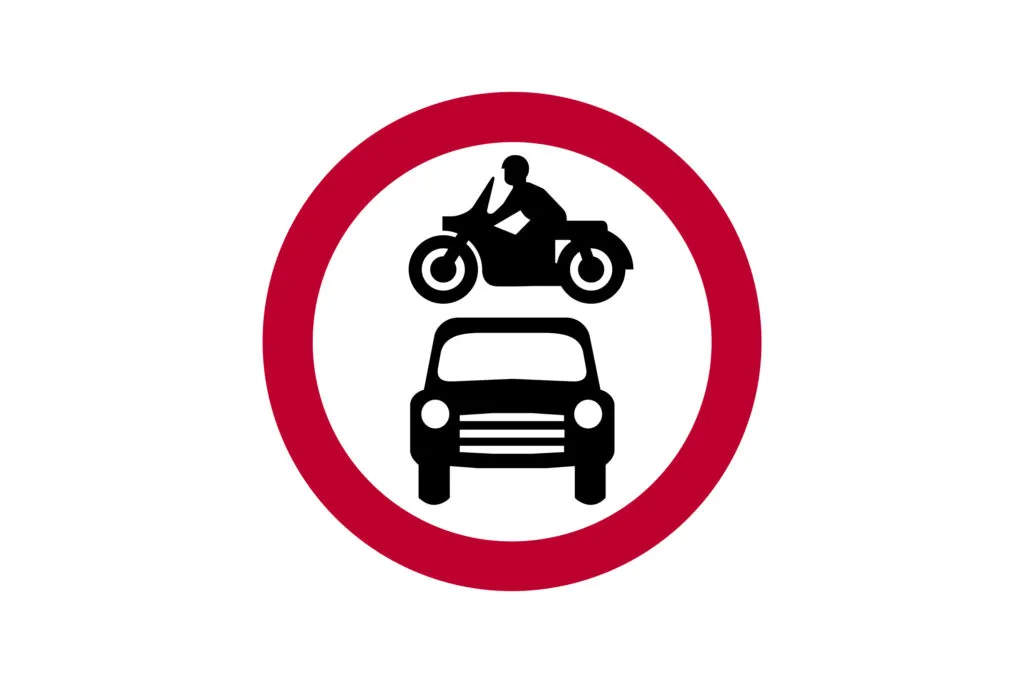
- A red circle (which always means prohibition).
- Inside, a car above and a motorbike below.
This is the classic No Motorised Vehicles sign.
What It Means
The sign tells you that all motor vehicles are prohibited beyond this point.
That includes:
- 🚗 Cars
- 🛻 Vans and lorries
- 🏍 Motorcycles (including mopeds and scooters)
- 🚌 Buses and coaches
Essentially, if it has a motor, it’s not allowed.
However — the restriction does not apply to:
- 🚲 Pedal cycles
- 🚶 Pedestrians
- 🐎 Horse riders
Those road users are still permitted.
Where You’ll See It
In urban areas, the implications of ignoring a No Motorised Vehicles sign extend beyond immediate penalties. Traffic data indicates that when these signs are disregarded, not only do incidents of accidents increase, but so does the potential for causing injury to vulnerable road users, such as children or the elderly. Therefore, respecting these signs is a collective responsibility, reinforcing the social contract among road users to maintain safety for everyone on the road.
You’ll often spot this sign at the start of:
- Pedestrian zones in towns and city centres
- Cycle paths or bridleways
- Traffic-calmed areas designed to keep vehicles out
- Parks or conservation areas where only walking and cycling are allowed
Why It Matters
This sign isn’t about catching drivers out — it’s there to protect vulnerable road users and preserve areas that aren’t safe for traffic. Respecting it helps prevent collisions and keeps shared spaces peaceful.
Common Mistakes by Learners
- Mixing it up with the No Motor Cars sign (just a car symbol).
- Thinking buses are allowed — they’re not. If it has a motor, it’s banned.
- Following a cyclist through — cycles are allowed, but that doesn’t mean cars can follow.
Penalties for Ignoring It
As learners prepare for their driving tests, understanding the No Motorised Vehicles sign becomes paramount. Mock tests and practice scenarios often expose learners to this sign, allowing them to familiarise themselves with all aspects of it. Instructors often emphasise the importance of correctly interpreting these signs as a key component of road safety education. Misunderstanding or overlooking such signs during a driving test can lead to unnecessary failures; hence, thorough preparation, including studying the nuances of each sign, is essential.
Entering a No Motorised Vehicles zone when you’re not entitled can lead to:
- A Penalty Charge Notice (PCN) from CCTV enforcement.
- Fines or points in serious cases of misuse.
Test Tip
On your driving test, if you see this sign:
- Recognise the pair of symbols (car + motorcycle).
- Know instantly it means no motor vehicles at all.
- React appropriately — don’t enter unless you’re on foot, a pedal cycle, or horseback.
✅ Takeaway: The No Motorised Vehicles sign means exactly what it shows — cars, motorcycles, vans, buses, and any powered vehicle must not pass. Only people, cycles, and horses are allowed.
Furthermore, it is worth noting that the No Motorised Vehicles sign also aligns with broader social and environmental goals. Many countries are pushing for reduced reliance on motor vehicles to combat climate change, promote public health, and enhance urban living spaces. As cities evolve, the integration of such restrictions is becoming a critical part of urban planning strategies, ensuring that future generations can enjoy cleaner, safer environments.
For practical application, consider how a community space, such as a park or plaza, can transform with the implementation of No Motorised Vehicles signs. These areas can become vibrant hubs of activity, allowing families to enjoy picnics, children to play freely, and local businesses to thrive without the disruption and danger posed by moving vehicles. In essence, these signs are not merely regulatory; they are catalysts for community engagement and enrichment.
✅ Takeaway: The No Motorised Vehicles sign means exactly what it shows — cars, motorcycles, vans, buses, and any powered vehicle must not pass. Only people, cycles, and horses are allowed. Understanding the implications behind this sign enhances not just individual compliance, but fosters a sense of community responsibility and awareness, paving the way for safer roads and more enjoyable public spaces for all.