What is a bus gate?
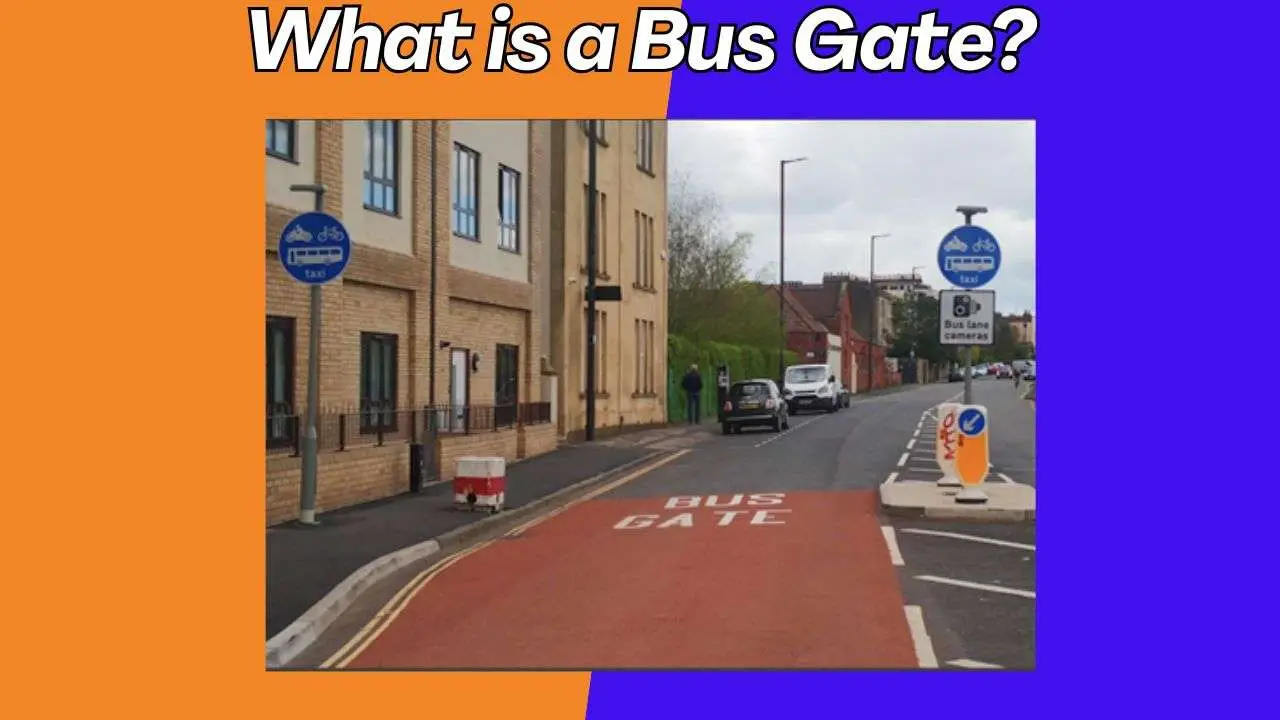
A bus gate is one of those features on British roads that often confuses learner drivers — and even catches out experienced ones. In simple terms, it’s a short section of road where only certain vehicles are allowed to pass through, usually buses, taxis, and sometimes bicycles.
Think of it as a traffic filter, not a physical gate. There aren’t any barriers or gates that open and close — it’s controlled by road signs and cameras. The idea is to give priority to public transport and reduce congestion in busy town centres.
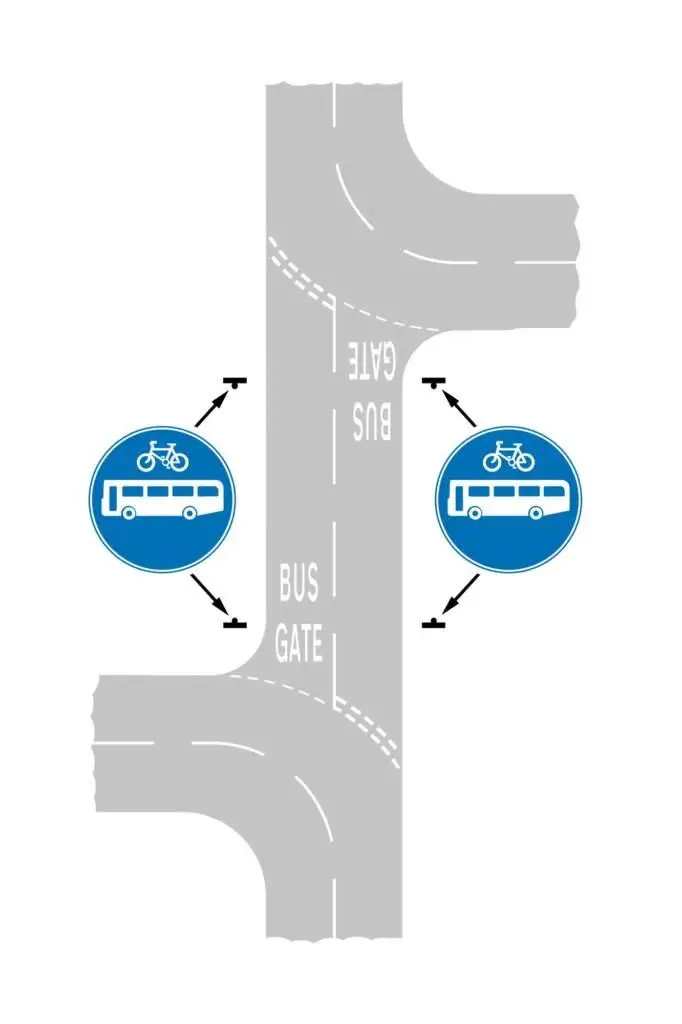
You’ll spot a bus gate by looking out for:
- A blue sign showing which vehicles can use it (for example, a bus symbol, taxi symbol, and/or bicycle).
- The words “BUS GATE” painted clearly on the road surface.
- Often, there’s a camera sign nearby too — because these zones are usually enforced by automatic number plate recognition (ANPR) cameras.
If you drive through a bus gate when you’re not allowed to, you could get a penalty charge notice (PCN) through the post.
So, for your theory test, remember:
✅ A bus gate keeps traffic flowing by limiting access to certain vehicles.
✅ It’s not a bus lane, which runs alongside other lanes — a bus gate is usually a short stretch across a junction or town centre road.
✅ Always check the blue signs before entering.
In short, a bus gate helps keep buses on time and town centres calmer — but it’s a quick route to a fine if you miss the sign!
Bus gates
What a bus gate is, where they are, and how to make sure you don’t get a fine for using them by mistake.
What a bus gate is
A bus gate is a short section of road which only buses and authorised vehicles can use.
CCTV cameras operate to make sure drivers obey bus gate restrictions.
How a bus lane is different from a bus gate
A bus lane is marked by a solid thick white line and the words ‘bus lane’ marked periodically on the road.
Bus gates serve an important role in urban transport management.
Only buses and authorised vehicles can use a bus lane.
What bus gate warning signs look like
Bus gates have the words ‘bus gate’ marked on the road at the entrance. Some also have a section of red road surface.
Only buses and authorised vehicles can use a bus gate.
These road users can travel through bus gates:
- buses
- emergency vehicles
- bicycles
Bus gate locations and exemptions
There are exemptions with some bus gates allowing motorcycles, private hire vehicles or taxis, HGVs and other vehicles to travel through.
What should I do to avoid penalties when approaching a bus gate?
To avoid penalties, always check for the ‘BUS GATE’ sign and road markings before entering, and only drive through if your vehicle is authorized as per the signage.
Who is allowed to drive through a bus gate?
Vehicles such as buses, emergency vehicles, and bicycles are generally permitted to drive through a bus gate, with some exemptions for motorcycles, taxis, private hire vehicles, and HGVs in certain areas.
What is the difference between a bus lane and a bus gate?
A bus lane is marked by a solid white line and runs alongside other lanes, allowing only buses and authorized vehicles to use it, while a bus gate is a short section of road restricting access to specified vehicles, often at junctions or town center streets.
How can I identify a bus gate on the road?
You can identify a bus gate by looking for a blue sign indicating which vehicles are permitted, the words ‘BUS GATE’ painted on the road surface, and often a nearby camera sign for enforcement.
What exactly is a bus gate and how does it work?
A bus gate is a short section of road where only certain vehicles, like buses, taxis, and sometimes bicycles, are allowed to pass through, controlled by road signs and cameras rather than physical barriers.