What Is a Zebra Crossing?
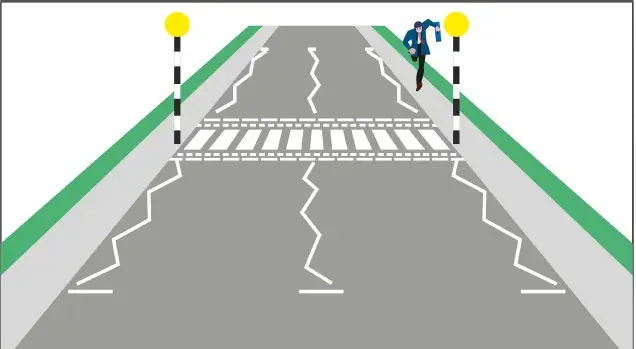
A zebra crossing is a pedestrian crossing designed to give people a safe place to cross the road without using traffic lights. It is one of the easiest crossings to recognise because it has distinctive black and white stripes across the road, together with flashing yellow Belisha beacons on poles at either side.
Unlike pelican, puffin and toucan crossings, there are no red and green traffic lights controlling the traffic. Instead, drivers have to observe the crossing, recognise when somebody wants to use it and respond appropriately.
How Do You Recognise a Zebra Crossing?
The most obvious feature is the series of black and white stripes running across the road, but there are other clues that should help you identify one well before you reach it.
You will normally see zig-zag markings on the road as you approach, while the flashing yellow Belisha beacons make the crossing easier to identify, particularly at night or in poor visibility.
For a learner driver, those zig-zag lines are an early warning that you are approaching a pedestrian crossing, so this is the time to check your mirrors, look carefully at both sides of the road and decide whether you need to reduce your speed.
Who Has Priority at a Zebra Crossing?
This is an important distinction for both the theory test and everyday driving.
The Highway Code says that you should give way to pedestrians waiting to cross at a zebra crossing and MUST give way when a pedestrian has moved onto the crossing.
This means you shouldn’t simply continue because somebody is still standing on the pavement. If it is clear that they are waiting to cross, you should be prepared to slow down and allow them to do so.
Once a pedestrian has stepped onto the crossing, the rule becomes stronger because you must give way.
How Should You Approach a Zebra Crossing?
A good driver should identify the crossing early rather than waiting until they are almost on top of it before deciding what to do.
Check your mirrors as you approach, particularly if you may need to slow down or stop, then look carefully towards both sides of the crossing. Reduce your speed when necessary and be prepared for somebody to step onto the crossing.
Extra care is needed when your view is restricted because a pedestrian may be hidden behind a parked vehicle, tree, street furniture or even another pedestrian. Children can be particularly difficult to see and their actions may be less predictable, so always approach at a speed that gives you enough time to respond safely.
Don’t Wave Pedestrians Across
It might seem friendly to wave somebody across the road, but The Highway Code advises drivers not to wave or use their horn to invite pedestrians across.
The problem is that you may have stopped, but another vehicle could be approaching that the pedestrian has not noticed. The safer approach is simply to stop when appropriate and allow the pedestrian to decide for themselves when it is safe to cross.
What Do the Zig-Zag Lines Mean?
The zig-zag markings protect the area around the crossing by helping to keep it clear so that drivers and pedestrians have a better view of each other.
You MUST NOT park on a crossing or in the area covered by the zig-zag lines, and there are also important restrictions on overtaking near pedestrian crossings.
Never overtake the moving vehicle nearest the crossing or a vehicle that has stopped nearest the crossing to give way to pedestrians. A stopped vehicle could easily be hiding somebody who is already walking across the road.
What If There Is a Central Island?
If a zebra crossing has a central island, each side is treated as a separate crossing.
A pedestrian may therefore cross one half of the road, wait safely on the island and then cross the second half when it is safe to do so.
This is a useful detail to remember because it regularly causes confusion when people are learning about pedestrian crossings.
Zebra Crossing or Parallel Crossing?
A zebra crossing is primarily for pedestrians, whereas a parallel crossing provides a pedestrian crossing with a separate cycle crossing running alongside it.
They can look very similar because both use the familiar zebra-style layout, so when approaching one, look for the additional cycle section and cycle symbols that identify a parallel crossing.
An easy way to remember the difference is:
Zebra crossing = pedestrians.
Parallel crossing = pedestrians and cyclists, with the cycle crossing running alongside the pedestrian crossing.
What Learner Drivers Need to Remember
A zebra crossing may be one of the simplest pedestrian crossings in Britain, but using one correctly depends on good observation and anticipation rather than simply knowing what the road markings mean.
Spot the crossing early, check your mirrors, look for pedestrians approaching or waiting at either side and adjust your speed so that you can stop smoothly if necessary. You should give way to pedestrians waiting to cross and you must give way once they have moved onto the crossing.
The important thing is not simply to react to somebody already walking across the road, but to recognise what is developing early enough to deal with it safely and smoothly.