You should give way to traffic already on the motorway. Where possible, traffic may move over to let you in, but do not force your way into the traffic stream. Traffic could be travelling at high speed, so try to match your speed to filter in without affecting the traffic flow.
Travelling at the national speed limit does not allow you to hog the right-hand lane. Always use the left-hand lane whenever possible.
When leaving a motorway, get into the left-hand lane well before your exit. Reduce your speed on the slip road and look out for sharp bends or curves and traffic queuing at roundabouts.
On a motorway, all traffic should use the left-hand lane unless overtaking. When overtaking a number of slower vehicles, move back to the left-hand lane when you’re safely past. Check your mirrors frequently and do not stay in the middle or right-hand lane if the left-hand lane is free.
On the motorway, any vehicle towing a trailer is restricted to 60 mph. It’s not allowed in the right-hand lane, as it might hold up faster-moving traffic that wishes to overtake in that lane.
On a motorway, it's best to use a roadside emergency telephone so that the emergency services are able to find you easily. The location of the nearest telephone is shown by an arrow on marker posts at the edge of the hard shoulder.
If you use a mobile, find out the number on the nearest marker post before you call. This number will let the operator know where you are and in which direction you're travelling.
Signal your intention and build up sufficient speed on the hard shoulder so that you can filter into a safe gap in the traffic. Do not push your way into a small gap or cause other traffic to alter speed or direction.
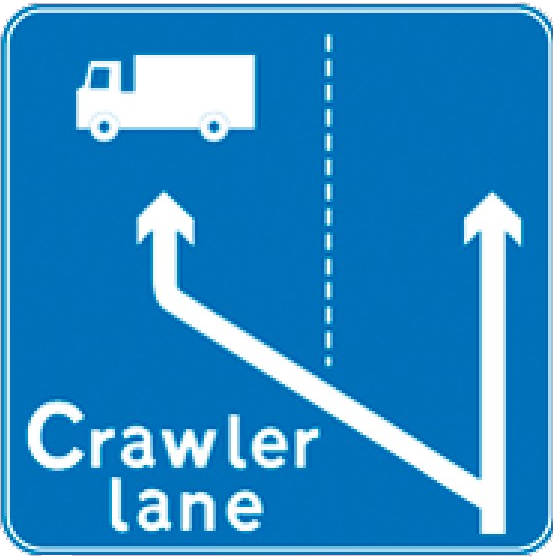 You're travelling along a motorway. Where would you find a crawler or climbing lane?Tap to reveal
Large, slow-moving vehicles can hinder the progress of other traffic. On a steep gradient, an extra crawler lane may be provided for slow-moving vehicles to allow faster-moving traffic to flow more easily.
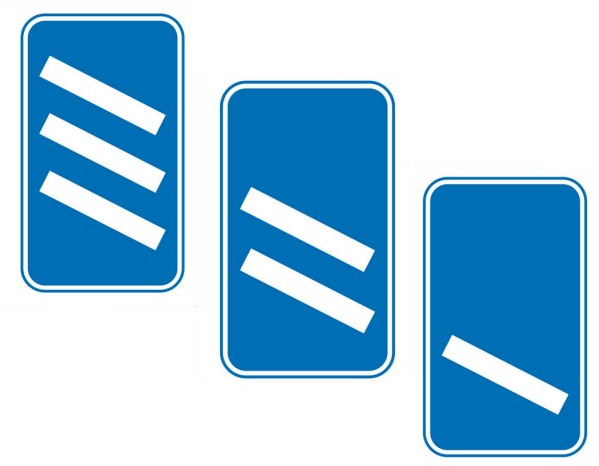 Tap to reveal
The exit from a motorway is indicated by countdown markers. These are positioned 90 metres (100 yards) apart, the first being 270 metres (300 yards) from the start of the slip road. Move into the left-hand lane well before you reach the start of the slip road.
On motorways, reflective studs of various colours are fixed in the road between the lanes. These help you to identify which lane you're in when it's dark or in poor visibility. Amber-coloured studs are found on the right-hand edge of the main carriageway, next to the central reservation.
White studs are found between the lanes on motorways. They reflect back the light from your headlights. This is especially useful in bad weather, when visibility is restricted.
The studs between the carriageway and the hard shoulder are normally red. These change to green where there's a slip road, helping you to identify slip roads when visibility is poor or when it's dark.
Along the hard shoulder there are marker posts at 100-metre intervals. These will direct you to the nearest emergency telephone.
Try to join the motorway without affecting the progress of the traffic in the left-hand lane and always give way to traffic already on the motorway. At busy times, you may have to slow down to merge into slow-moving traffic.
Traffic is passing you at speed. If the draught from a large lorry catches you by surprise, it could blow you off balance and even onto the carriageway.
By facing the oncoming traffic, you can see approaching lorries and so be prepared for their draught. You'll also be in a position to see any other hazards approaching.
Red studs are placed between the edge of the carriageway and the hard shoulder. Where slip roads leave or join the motorway, the studs are green.
On a three-lane motorway, you should travel in the left- hand lane unless you’re overtaking. This applies regardless of the speed at which you’re travelling.
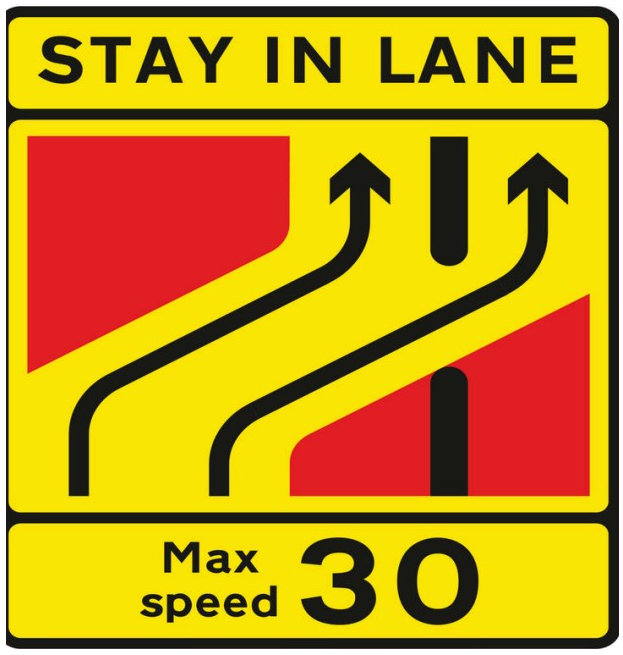 What should you do when going through a contraflow system on a motorway?Tap to reveal
At roadworks, and especially where a contraflow system is operating, a speed restriction is likely to be in place. Keep to the lower speed limit and do not • switch lanes • get too close to the vehicle in front of you. Be aware that there will be no permanent barrier between you and the oncoming traffic.
The colours of the reflective studs on the motorway and their locations are • red – between the hard shoulder and the carriageway • white – between lanes • amber – between the carriageway and the central reservation • green – along slip-road exits and entrances • bright green/yellow – at roadworks and contraflow systems.
Be aware of reduced speed limits at roadworks. Speed limits shown inside a red circle are mandatory and cameras are often used to enforce the reduced limit. Slow down in good time and keep your distance from the vehicle in front.
Motorways must not be used by pedestrians, cyclists, motorcycles under 50 cc, certain slow-moving vehicles without permission, and powered wheelchairs/mobility scooters.
Traffic on motorways usually travels faster than on other roads. You need to be looking further ahead to give yourself more time to react to any hazard that may develop.
When you've just joined a motorway, stay in the left-hand lane long enough to get used to the higher speeds of motorway traffic before considering overtaking.
The right-hand lane of the motorway is for overtaking. Sometimes you may be directed into a right-hand lane as a result of roadworks or a traffic incident. This will be indicated by signs or officers directing the traffic.
Do not use the hard shoulder for stopping unless it's an emergency. If you want to stop for any other reason, go to the next exit or service area.
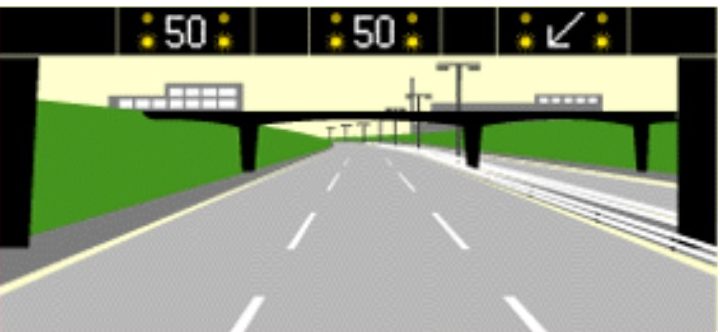 You're in the right-hand lane of a three-lane motorway. What do these overhead signs mean?Tap to reveal
You must obey these signs even if there appear to be no problems ahead. There could be queuing traffic or another hazard that you cannot see yet.
You must stop if overhead gantry signs show a red cross above every lane on the motorway. If any of the other lanes does not show a red cross, you may move into that lane and continue if it's safe to do so.
Plan well ahead when approaching a slip road. If you see traffic joining the motorway, be prepared to adjust your speed or move to another lane if it's safe to do so. This can help the flow of traffic joining the motorway, especially at peak times.
You should normally travel in the left-hand lane unless you're overtaking a slower-moving vehicle. When you've finished overtaking, move back into the left-hand lane, but do not cut across in front of the vehicle that you’ve overtaken.
Never overtake on the left, unless the traffic is moving in queues and the queue on your right is moving more slowly than the one you're in.
On some motorways, emergency areas are built at the side of the carriageway. If you break down, try to get your vehicle into the emergency area where there's an emergency telephone.
The phone connects directly to a control centre. Before rejoining the motorway, you must call the control centre - a lane may need to be closed to allow you to rejoin safely.
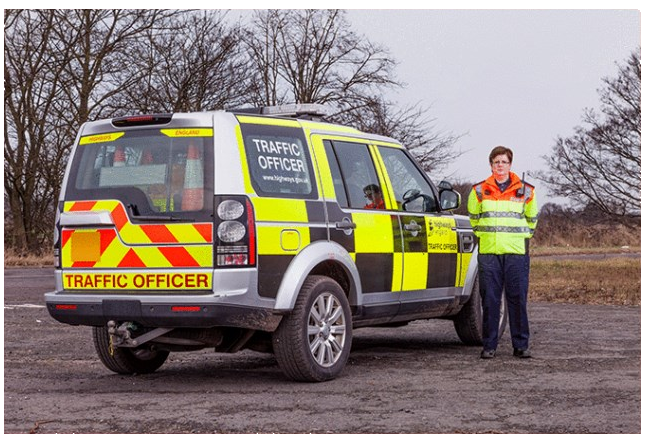 Traffic officers operate on motorways and some primary routes in England and Wales. What are they authorised to do?Tap to reveal
Traffic officers do not have enforcement powers but are able to stop and direct people on motorways and some ‘A’ class roads. They operate in England and Wales and work in partnership with the police at incidents, providing a highly trained and visible service. They're recognised by an orange-and-yellow jacket and their vehicle has yellow-and-black markings.
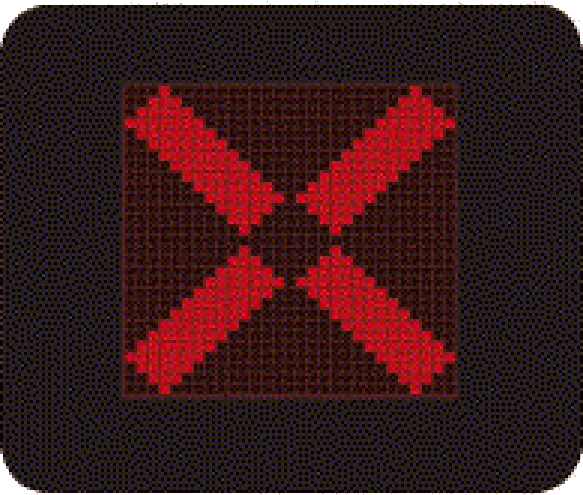 You're on a motorway. What does it mean when a red cross is displayed above the hard shoulder?Tap to reveal
At certain times, the hard shoulder will be open as a running lane. However, a red cross above the hard shoulder shows that it is not open as a running lane and should only be used for emergencies and breakdowns.
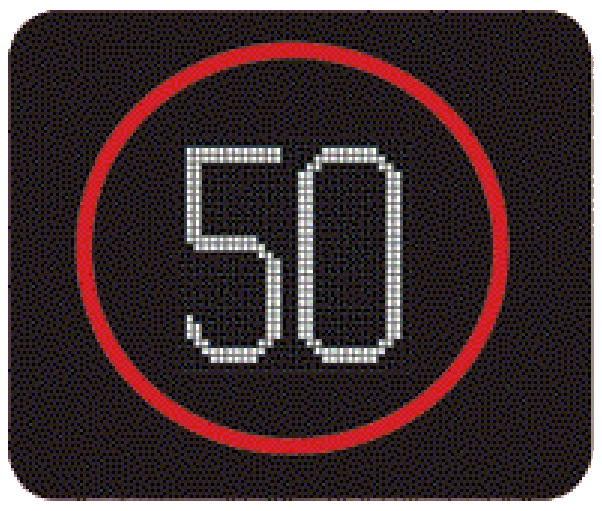 You're on a motorway. What does it mean when a mandatory speed limit is displayed above the hard shoulder?Tap to reveal
A mandatory speed-limit sign above the hard shoulder shows that this part of the road can be used as a running lane between junctions. You must stay within the speed limit. Look out for vehicles that may have broken down and could be blocking the hard shoulder.
You must follow the mandatory signs on the gantries above motorway lanes, including the hard shoulder. Variable speed limits help keep the traffic moving and also help to prevent bunching.
Congestion can be reduced by keeping traffic at a constant speed. At busy times, maximum speed limits are displayed on overhead gantries.
These can be varied quickly, depending on the amount of traffic. By keeping to a constant speed on busy sections of motorway, overall journey times are normally improved.
You should not normally stop on a motorway, but there may be occasions when you need to do so. If your vehicle breaks down or there's an emergency, stop on the hard shoulder and use the emergency telephones to call for assistance.
The national speed limit for a car or motorcycle on a motorway is 70 mph. Lower speed limits may be in force; for example, at roadworks. Variable speed limits also operate in some areas when the motorway is very busy. Cars or motorcycles towing trailers are subject to a lower speed limit.
When you're on the hard shoulder, you're at risk of being injured by motorway traffic. The safest place to wait is away from the carriageway, but near enough to see the emergency services arriving.
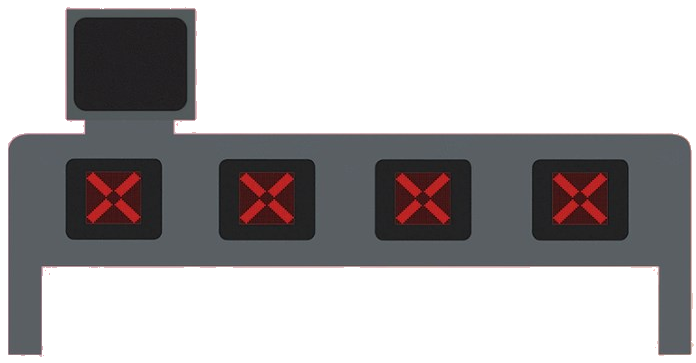 You're on a motorway. What must you do if there's a red cross showing above every lane?Tap to reveal
A red cross signal above all lanes means you must stop and wait. Do not change lanes and do not try to continue any further along the motorway.
A red cross above the hard shoulder shows that it's closed as a running lane and should only be used for emergencies or breakdowns. On some motorways, the hard shoulder may be used as a running lane at busy times. This will be shown by a mandatory speed limit on the gantry above the hard shoulder.
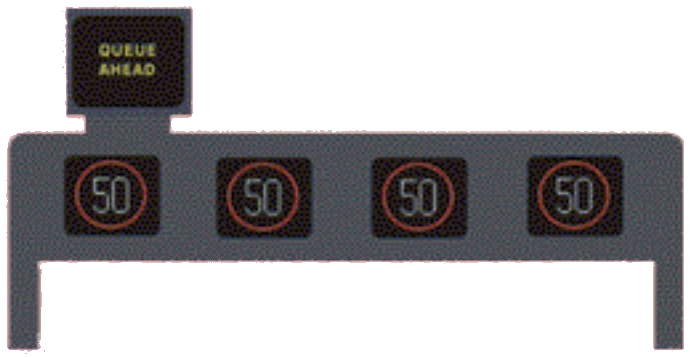 Tap to reveal
You must obey mandatory speed-limit signs above motorway lanes, including the hard shoulder. In this case, you can use the hard shoulder as a running lane but you should look for any vehicles that may have broken down and may be blocking the hard shoulder.
If you feel tired, stop at the nearest service area. If that's too far away, leave the motorway at the next exit and find a safe place to stop.
You must not stop on the carriageway or hard shoulder of a motorway except in an emergency, when in a traffic queue, or when signalled to do so by a police officer, a traffic officer or traffic signals. Plan your journey so that you have regular rest stops.
To rejoin the carriageway from an emergency area, you must use the emergency telephone and follow the operator's advice. A lane may have to be closed so that you can rejoin the carriageway safely.
To rejoin a motorway from the hard shoulder, you first need to build up speed on the hard shoulder. You can then look for a safe gap in the traffic in the left-hand lane. Watch for traffic that may be returning from a lane on the right into the left- hand lane.
If you’re towing a small, light trailer, it will not reduce your vehicle’s performance by very much and it may not be visible in your mirrors. However, strong winds or buffeting from large vehicles might cause the trailer to snake from side to side. Be aware of your speed and do not exceed the reduced speed limit imposed on vehicles towing trailers.
You should drive in the left-hand lane whenever possible. Only use the other lanes for overtaking or when directed to do so by signals. Using other lanes when the left-hand lane is empty can frustrate drivers behind you.
Using your hazard warning lights, as well as your brake lights, will give the traffic behind an extra warning of the problem ahead. Only use them for long enough for your warning to be seen.
Park as far to the left as you can and leave the vehicle by the nearside door. Do not attempt even simple repairs.
Instead, walk to an emergency telephone on your side of the road and phone for help. While waiting for help to arrive, stay by your car, keeping well away from the carriageway and hard shoulder.
It's illegal to reverse, cross the central reservation or drive against the traffic flow on a motorway. If you miss your exit, carry on until you reach the next one. Ask yourself why you missed your exit – if you think that your concentration is fading, take a break before continuing your journey.
If you cannot get your vehicle onto the hard shoulder, use your hazard warning lights to warn others. Leave your vehicle only when you can safely get clear of the carriageway. Do not try to repair the vehicle or attempt to place any warning device on the carriageway.
Before you start your journey, make sure that your vehicle can cope with the demands of high-speed driving. You should check a number of things; the main ones being fuel, oil, water and tyres. You also need to plan rest stops if you’re making a long journey.
If the vehicle in front shows its hazard warning lights, there may be an incident, stopped traffic or queuing traffic ahead. By keeping a safe distance from the vehicle in front, you're able to look beyond it and see any hazards well ahead.
You’ll see the first advance direction sign one mile from a motorway exit. If you’re travelling at 60 mph in the right-hand lane, you’ll only have about 50 seconds before you reach the countdown markers.
There'll be another sign at the half-mile point. Do not cut across lanes of traffic at the last moment – move to the left-hand lane in good time.
You will not be able to drive unaccompanied until you've passed your practical driving test. If you’ve not driven on the motorway while you were learning, ask your instructor to take you for a lesson on the motorway when you've passed your test. Alternatively, you could take part in the Pass Plus scheme.
This has been created for new drivers and includes motorway driving. Ask your instructor for details.
You should use an emergency telephone when you break down on the motorway; only use your mobile if this is not possible. The emergency services need to know your exact location so they can reach you as quickly as possible.
Look for a number on the nearest marker post beside the hard shoulder. Give this number when you call the emergency services.
If you're towing a caravan or trailer, you must not use the right-hand lane of a motorway with three or more lanes except in certain specified circumstances, such as when lanes are closed.
When approaching a contraflow system, reduce speed in good time and obey all speed limits. You may be travelling in a narrower lane than normal, with no permanent barrier between you and the oncoming traffic. Be aware that the hard shoulder may be used for traffic and the road ahead could be obstructed by slow-moving or broken-down vehicles.