ADI part 1

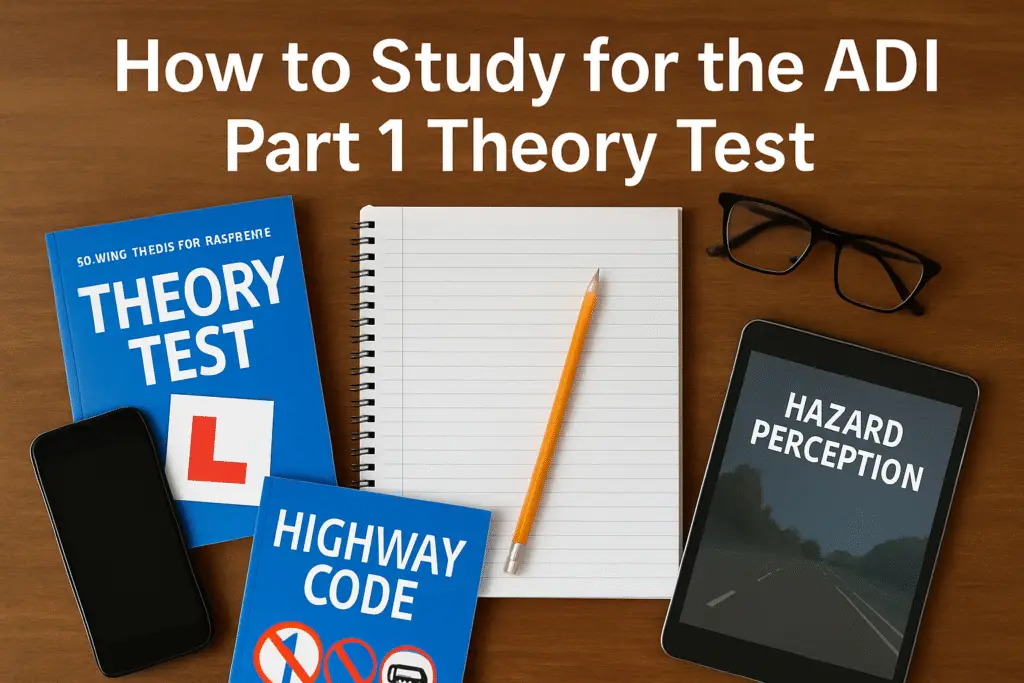
How to study for the ADI Part 1 Theory Test
ADI part 1, Uncategorized

How to study for the ADI Part 1 Theory Test

The Four Questions That Make You a Stronger ADI Part 1 Trainee How simple reflection turns wrong answers into real understanding How to study for the ADI Part 1 Theory Test Some trainees treat wrong answers like something to hide from, clicking past them as quickly as possible. But the sharpest future instructors do something different. They pause. They lean in. They treat every mistake like a signpost pointing to the next stretch of learning. And the tool they use is surprisingly simple: four honest questions that turn confusion into clarity. These are questions that build the quiet, steady habits great instructors rely on. They don’t just help you pass ADI Part 1. They help you think and teach like a professional. Let’s break them down. How to study for the ADI Part 1 Theory Test 1. “What part of the rule did I miss?” Many wrong answers aren’t caused by total misunderstanding. They’re caused by missing one detail. And in the world of driving instruction, detail matters. Take this classic yellow box junction question:“When may you wait in a yellow box junction?” If you answer: “When turning right,” you’ve missed a vital piece.The full rule is:You can only wait if you’re turning right AND oncoming traffic is preventing you from completing the turn. Half-right is still wrong, but it isn’t a failure.It’s a clue. This question helps you identify exactly which missing piece you need to plug. Instead of revising the entire topic, you can fix the specific gap. That’s efficient, focused learning. It’s the way instructors learn: accurately, not endlessly. How to study for the ADI Part 1 Theory Test What this means for trainees:You’re sharpening the fine detail the test looks for. More importantly, you’re building the precision your learners will one day rely on. 2. “Did I misunderstand the wording?” Sometimes you know the content perfectly well, but the phrasing of the question leads you astray. Words like:• “In good conditions”• “When stationary in traffic”• “Only if necessary”• “At night”• “In a tunnel” These aren’t throwaway phrases. They’re the key. The DVSA uses them to test your attention to detail and your ability to follow exact rules, just as you expect a learner to. For example:A question may ask about using fog lights “when visibility is reduced to less than 100 metres.”Choose an answer about general poor weather and you’ve missed the specific requirement. It’s not your knowledge that’s weak.It’s your reading speed. What this means for trainees:Good instructors read carefully. They train themselves to notice the little things. Slowing down isn’t a flaw. It’s a mark of professionalism. 3. “Am I guessing instead of knowing?” This is a brave question. It forces honesty. And it’s one of the most useful reflections you can make. If you catch yourself thinking:“I’ve seen that sign… I think it means this?”or“Two answers seem similar… I’ll pick the one that feels right,”that’s guessing. Guessing hides weak spots.Understanding reveals them. For example:You mix up the “end of a restriction” signs with “national speed limit applies.”They look similar. They both appear at the end of a restriction. But the meaning is different. A wild guess won’t help you during the exam. And it certainly won’t help when a learner asks, “What does that sign mean?” as you approach it at 40mph. What this means for trainees:Every time you catch yourself guessing, you’ve found a gap worth strengthening. You’re shaping yourself into the kind of instructor who knows, not hopes. 4. “Could I explain this to a learner with confidence?” This is the gold-standard test of understanding. It’s not about passing the theory test. It’s about preparing for the role you want to step into. Let’s say you get a stopping distance question wrong.Ask yourself:“If a learner asked me why the stopping distance doubles in the rain, could I explain it smoothly?” Could you talk through:• reduced tyre grip• surface water• increased braking distance• slower reaction times• how speed magnifies everything? Or would you fumble it? If you couldn’t teach it, you don’t fully understand it yet.And that’s fine.That’s exactly why this reflection matters. What this means for trainees:Part 1 isn’t just an exam. It’s the foundation of your teaching career. Explaining things clearly is the heart of the job. Start now. How to study for the ADI Part 1 Theory Test The Strength of These Four Questions These reflections do something no question bank alone can do. They train you to think like an instructor: • calm• reflective• analytical• aware of detail• focused on understanding• capable of explaining• comfortable fixing weak spots Instead of rushing through revision, you’re building depth.Instead of hiding from gaps, you’re using them.Instead of fearing mistakes, you’re turning them into stepping stones. This is traditional, steady, craftsman-like learning.The kind of learning that sticks. How to study for the ADI Part 1 Theory Test The Road Ahead When you train this way, the ADI Part 1 exam stops feeling like a hurdle and becomes a checkpoint. A moment to confirm what you already know, not something you need to fear. Because you’ve already done the real work:You’ve learned how to learn.You’ve learned how to notice your gaps.You’ve learned how to build strength where others skim. And that is exactly what makes a strong, confident, dependable driving instructor
ADI part 1, Driving Theory Test Help ADvice and Training, LGV Theory Test, Motorcycle Theory Test, PCV Theory Test

Motorway Studs and Their Colours: Essential Guide for Safe Driving (2026 Update)

Motorway Studs and Their Colours Introduction to Motorway Studs When you’re cruising along a motorway—especially at night or during heavy rain—it’s the small things like motorway studs and their colours that silently keep you safe. These tiny reflective markers, often called “cat’s eyes,” help drivers stay in their lanes, judge road layouts, and make well-informed decisions during challenging driving conditions. Motorway studs play a huge role in road safety, and knowing what each colour means can make your journey smoother and safer. What Are Motorway Studs? Motorway studs are raised or embedded reflective devices placed between lane markings. They bounce light back to the driver, helping them see the road layout even when visibility is poor. You’ll see them on: They’re especially helpful at night, in fog, heavy rain, or on unfamiliar routes. Why Colour-Coded Studs Matter Each stud colour gives drivers a message. Understanding these colours helps you: Motorway studs and their colours are essential for safe, confident driving. The Meaning Behind Motorway Stud Colours Understanding motorway stud colours is simple once you know the rules. Every colour has a specific purpose that improves safety and navigation White Studs: Standard Lane Markers White studs are the most common. They indicate the lanes on the carriageway and separate: You’ll follow these most of the time while driving. Red Studs: Hard Shoulder Boundary Red studs mark the left-hand edge of the motorway, showing the boundary with the hard shoulder. They’re a warning that: Seeing red studs on your right means you’ve drifted! Amber Studs: Central Reservation Amber studs run along the right-hand side of the carriageway, separating the motorway lanes from the central reservation. They help drivers: Green Studs: Exits, Slip Roads & Lay-Bys Green studs highlight the entry and exit points, such as: If you see green studs, it often means an exit or joining point is ahead. Green/Yellow Studs: Temporary Road Works These two-tone studs guide drivers through road works or temporary diversions. They are: These studs help keep drivers safe in fast-changing environments. How Motorway Studs Improve Road Safety Motorway studs help reduce accidents by: Research shows they can reduce nighttime accident rates significantly because they improve reaction time and visual clarity. Motorway Stud Regulations and Standards Motorway studs must meet strict standards set by road safety authorities. In the UK, these include: Maintenance teams inspect and replace studs as needed to ensure their reflectivity remains effective. New Innovations in Motorway Studs Modern road studs go far beyond simple reflectors. Solar-Powered Studs These store energy during the day and shine bright LEDs at night. Intelligent Studs Used in smart motorways, these can: They’re part of the future of safer highways. Common Driver Mistakes When Interpreting Stud Colours Even experienced drivers sometimes misinterpret motorway studs. Mistake 1: Confusing Amber and Green Amber = central reservationGreen = slip roads and exits Mistake 2: Ignoring Red Studs Red studs show the hard shoulder.If you see red to your right, move back safely. Frequently Asked Questions (FAQs) 1. What do red motorway studs mean? They mark the hard shoulder boundary on the left side of the motorway. 2. Which colour shows the central reservation? Amber studs mark the central reservation. 3. What do green motorway studs indicate? They show slip roads, lay-bys, and exits. 4. Are motorway stud colours the same worldwide? Not always. Colours may differ internationally, but the UK uses a strict colour system. 5. What do green/yellow studs mean? They indicate temporary road works or diversions. 6. Why are motorway studs reflective? They use retroreflective technology to return light from your headlights back to your eyes.

ADI part 1, ADI Part 2 Training, ADI Part 3 Training, Driving Theory Test Help ADvice and Training, LGV Theory Test, Motorcycle Theory Test, PCV Theory Test

Theory Test Questions How to Deal with a flooded ford

HOW TO DEAL WITH A FLOODED FORD HOW TO DEAL WITH A FLOODED FORD A flooded ford is one of the most deceptively dangerous hazards on Britain’s roads. What’s normally a simple shallow crossing can turn treacherous in minutes after heavy rain. Even seasoned motorists treat flooded fords with deep respect — and rightly so. Water has a way of humbling even the most capable vehicles. Here’s how to handle the situation safely, sensibly, and in line with the long-standing principles of good driving. HOW TO DEAL WITH A FLOODED FORD – 1. STOP WELL BACK AND ASSESS THE SITUATION As soon as you see a ford flooded, do not drive straight in.Pull up at a safe distance and take a moment to observe: If water has risen above the depth gauge or you cannot see the bottom surface at all, that’s a clear sign the ford is unsafe. HOW TO DEAL WITH A FLOODED FORD – 2. UNDERSTAND THE RISKS It only takes 30cm of fast-moving water to float a car.Just 15cm can cause you to lose steering control.Floodwater also hides hazards: This is why experienced drivers never rely on guesswork. If there’s doubt, there’s danger. HOW TO DEAL WITH A FLOODED FORD – 3. DO NOT ENTER IF THE WATER LOOKS DEEP OR FAST This is the golden rule: If the ford looks flooded, you do not attempt to drive through it. A flooded ford is very different from a normal shallow crossing. The road may be completely hidden, the force of the water can be far stronger than it appears, and once you’re in, you’re committed — with very little room for recovery. Even 4x4s get caught out. Modern engines, electrics, and intakes are not designed for floodwater. HOW TO DEAL WITH A FLOODED FORD – 4. FIND AN ALTERNATIVE ROUTE This is the correct DVSA-aligned response. Turn around in a safe place and follow diversion signs or plan a new route. It might add a few minutes to your journey, but it could save your vehicle — and potentially your life. Remember the old saying every good driving instructor knows:“Better to arrive late than not arrive at all.” 5. IF IN DOUBT, STAY OUT This is the attitude the DVSA encourages for new drivers.Floodwater is unpredictable and unforgiving. A ford that’s normally harmless can turn dangerous after just a short burst of heavy rain. The sensible, traditional, time-tested answer is simple: Do not take risks with water. 6. REPORT IF NECESSARY If the flooding looks severe, or if another driver is stranded, call 999 in an emergency or 101 to report a hazard. Local authorities can close the ford until it’s safe again. SUMMARY: YOUR FLOODED FORD CHECKLIST A flooded ford is a hazard you treat with caution and respect. The safest crossing is the one you don’t attempt. THEORY TEST EXPLAINER: DEALING WITH A FLOODED FORD A flooded ford is one of the most dangerous water hazards on UK roads. A ford is normally a shallow place where a road crosses a stream or river — but when the water level rises, the crossing becomes unsafe. The DVSA wants learners to know that you must never attempt to drive through a flooded ford. Depth can rise suddenly, currents can become powerful, and the road beneath the water may be damaged or missing altogether. Key points to remember: This is one of those traditional bits of road wisdom that has stood the test of time:If in doubt — stay out. ✅ PRACTICE QUESTIONS Question 1 You approach a ford that is heavily flooded. What should you do?A) Drive through quickly to avoid stallingB) Enter slowly in first gearC) Turn around and find another routeD) Sound your horn before entering Question 2 Why is it dangerous to drive into a flooded ford?A) The water might cool your brakes too quicklyB) Floodwater can hide hazards and sweep your vehicle awayC) Visibility reduces the closer you getD) Tyres grip better when wet Question 3 What does a depth gauge at a ford help you decide?A) Whether your tyres need replacingB) Whether the water is warm or coldC) Whether it’s safe to crossD) How fast to drive through Question 4 What is the safest action when a ford’s water level is above the depth gauge?A) Enter slowlyB) Increase speedC) Wait for another driver to test itD) Do not enter — find another route Question 5 What is the correct DVSA-aligned advice for flooded fords?A) Drive through steadily to avoid hesitationB) Only drive through if you have a 4×4C) Never drive through floodwater; turn backD) Stop in the water if you feel unsure ✅ Answers & Explanations 1 — CA flooded ford should never be entered. Always choose another route. 2 — BFloodwater conceals hazards and can be strong enough to move a vehicle. 3 — CDepth gauges show how deep the water is and whether it’s safe. 4 — DIf the water level is above the gauge, the ford is unsafe. 5 — CThe DVSA is clear: never drive through floodwater.

with the right approach to driving theory test practice questions, you can boost your confidence, sharpen your skills, and significantly increase your chances of passing on your first attempt.
ADI part 1, Driving Theory Test Help ADvice and Training

Driving Theory Test Practice Questions: Ultimate Guide to Pass on Your First Try

Driving Theory Test Practice Questions: Ultimate Guide to Pass on Your First Try If you’re preparing to get your driving license, one of the biggest milestones on your journey is passing the driving theory test. Many learners feel anxious about it, but here’s the good news: with the right approach to driving theory test practice questions, you can boost your confidence, sharpen your skills, and significantly increase your chances of passing on your first attempt. Introduction to Driving Theory Test Practice Questions What is the Driving Theory Test? The driving theory test is a written and visual exam designed to assess your knowledge of road rules, signs, and safe driving practices. It ensures that every new driver has the foundation needed to drive responsibly and legally on UK roads. Why Practice Questions Are Essential Practice questions give you a sneak peek into the real test environment. They help you familiarize yourself with the format, the types of questions, and the pressure of timed responses. Regular practice ensures you don’t just memorize answers but also understand the reasoning behind them. Structure of the Driving Theory Test Multiple-Choice Questions Explained The first part of the theory test consists of multiple-choice questions covering rules of the road, traffic signs, vehicle handling, and safety measures. You’ll need to select the correct answer from several options. Hazard Perception Test Overview The second part assesses your ability to identify developing hazards in real-life traffic scenarios. You’ll watch short video clips and click when you spot potential dangers like pedestrians crossing or cars braking suddenly. Scoring System and Passing Marks To pass, you must score at least 43 out of 50 in the multiple-choice section and 44 out of 75 in hazard perception. Both sections must be passed together—there’s no partial pass. Benefits of Practicing Driving Theory Test Questions Building Confidence Before Test Day Confidence is key to success. Practicing theory questions repeatedly helps you walk into the test center feeling calm and prepared. Improving Hazard Awareness Skills By practicing hazard perception clips, you train your brain to spot risks quickly, which makes you a safer driver—not just during the exam, but in real life. Reducing Test Anxiety The unknown can be stressful. By practicing questions daily, you reduce uncertainty, which lowers test-day anxiety significantly. Types of Driving Theory Test Practice Questions Road Signs and Their Meanings From stop signs to motorway markers, road sign questions test your ability to recognize symbols quickly. Rules of the Road Expect questions about speed limits, pedestrian crossings, lane usage, and safe overtaking. Vehicle Handling and Safety These questions focus on maintaining control, handling adverse weather, and ensuring roadworthiness. Case Studies and Mock Tests Mock tests simulate real exam conditions, giving you the perfect rehearsal for the actual test. How to Use Driving Theory Test Practice Questions Effectively Daily Study Routines Instead of cramming, dedicate 20–30 minutes daily to practice. Short, consistent study sessions are more effective than long, irregular ones. Time Management Strategies Practice completing questions within the official time limit. This helps you manage stress and avoid rushing during the actual test. Common Mistakes to Avoid Best Resources for Driving Theory Test Practice Official DVSA Resources The DVSA (Driver and Vehicle Standards Agency) offers official practice tests and apps. Since the real exam is based on their material, these resources are the most reliable. Mobile Apps and Online Platforms Several mobile apps provide thousands of practice questions with progress tracking. Some even offer hazard perception clips identical to the official test. Practice Books and Guides Printed guides are ideal for offline learning. They provide in-depth explanations and diagrams that strengthen your understanding. Frequently Asked Questions (FAQs) 1. How many practice questions should I do daily? Aim for at least 20–30 questions per day to steadily build your knowledge and confidence. 2. Are online theory practice tests reliable? Yes, but always make sure they’re based on DVSA-approved materials. 3. What is the pass mark for the theory test? You need 43/50 on multiple-choice and 44/75 on hazard perception to pass. 4. How long should I prepare before the exam? Most learners need 4–6 weeks of regular practice to feel ready. 5. Can I retake the test if I fail? Yes, but you must wait at least 3 working days before booking another attempt. 6. Is hazard perception harder than multiple choice? Many learners find hazard perception more challenging because it requires quick reactions. With practice, it becomes much easier. Driving theory test practice questions Mastering the driving theory test practice questions isn’t just about passing an exam—it’s about becoming a safer, more confident driver. By practicing consistently, using official resources, and simulating real test conditions, you’ll be ready to pass on your first try. 🚘✨ For official practice materials, visit https://www.drivertrainingltd.com

ADI part 1, ADI Part 2 Training, ADI Part 3 Training, Driving lessons and Intensive Driving Courses, Driving Theory Test Help ADvice and Training, Latest News

Driving Test Waiting Times Hit Record Highs | Driver Training Ltd News

Driving Test Waiting Times Hit Record Highs: Learners Face Delays for Both Theory and Practical Tests

Learner drivers across the UK are facing record delays for both theory and practical driving test bookings, with waiting lists stretching into 2026.

ADI part 1

ADI Theory Test: Ultimate 2025 Guide to Passing with Confidence

ADI Part 1 Theory Test: Ultimate 2025 Guide to Passing with Confidence Introduction to the ADI Theory Test If you’re looking to become an Approved Driving Instructor (ADI) in the UK, passing the ADI theory test is one of the first hurdles you’ll face. This essential step ensures that aspiring instructors don’t just know how to drive but also understand the rules of the road, safe teaching practices, and hazard perception at an advanced level. The ADI theory test is more challenging than the learner driver theory test because it evaluates knowledge required for teaching, not just driving. In this guide, we’ll break down everything you need to know — from the structure of the test to expert preparation strategies — so you can walk into your test centre with confidence. What Is the ADI Theory Test? The ADI theory test is a government-administered assessment for those training to become Approved Driving Instructors in the UK. It’s part of the three-stage ADI qualification process, consisting of: Passing the theory test proves you have the depth of knowledge and hazard awareness required to teach others to drive safely. Why the ADI Theory Test Matters for Driving Instructors Unlike learner drivers, instructors must understand not only how to drive but also how to explain rules and best practices clearly to others. A strong grasp of theory ensures instructors can answer student questions confidently and keep learners safe on the road. By passing this test, you demonstrate: Who Needs to Take the ADI Theory Test? The test is mandatory for anyone pursuing a career as a UK Approved Driving Instructor. If you’ve only passed the standard learner theory test, you’ll need to sit the ADI version because it’s more advanced and tailored for instructors. ADI Theory Test Structure and Format The ADI theory test is split into two key sections: You must pass both sections in the same sitting to move forward in your ADI qualification journey. Multiple-Choice Questions Explained This section tests your understanding of driving laws, teaching practices, and road safety. Number of Questions and Passing Score Topics Covered in Multiple-Choice Questions Hazard Perception Test Section The hazard perception part is designed to assess your ability to identify developing hazards while driving. How Hazard Perception Is Scored Common Mistakes to Avoid ADI Theory Test Topics You Must Study To pass, you need strong knowledge in several areas: How to Book the ADI Theory Test Booking your ADI theory test is straightforward, and everything can be done online. Booking Online via GOV.UK The official GOV.UK website is the only reliable platform to book your test. Here’s how: Booking Online via GOV.UK Test Fees and Payment Options As of 2025, the cost for the ADI theory test is £81. You can pay securely via: Rescheduling or Cancelling Your Test You can reschedule or cancel up to 3 working days before the test without losing your fee. If you fail to show up or cancel too late, you’ll have to pay again. Preparation Strategies for the ADI Theory Test Preparation is key to success. Unlike the learner test, the ADI version requires in-depth knowledge and practice. Using Official DVSA Materials The DVSA provides a wealth of resources: Best Apps and Online Mock Tests Many apps and websites simulate the real test environment. Regularly doing mock tests helps you: Study Timetable and Revision Plan Create a revision plan that spreads your study sessions over several weeks. For example: Practicing Hazard Perception Videos The hazard perception section is often underestimated. Practice with real clips to sharpen your reflexes and ability to spot hazards early. Tips for Success on Test Day When test day arrives, good preparation meets good execution. What to Bring to the Test Centre Managing Time During the Test Staying Calm and Focused Under Pressure Take deep breaths, stay hydrated, and remind yourself you’ve prepared. Anxiety can affect performance, but confidence goes a long way. Common Reasons Candidates Fail the ADI Theory Test Understanding why people fail helps you avoid the same pitfalls. Poor Time Management Some candidates spend too much time on a few questions, leaving others unanswered. Lack of Familiarity with Hazard Perception Candidates often click too early or too late, missing scoring opportunities. Overlooking Highway Code Updates Road laws and signs change over time. Always review the latest Highway Code. Retaking the ADI Theory Test Failing isn’t the end of the road — but it can be frustrating. Waiting Period Before Retaking If you fail, you’ll need to wait 3 working days before booking another test. How to Learn from Previous Mistakes Differences Between Learner Theory Test and ADI Theory Test The ADI theory test is more advanced than the standard learner version. Content Differences Higher Standards for Instructors Advanced Study Resources Beyond official materials, there are other resources to boost your preparation. Recommended Books and Guides Online Forums and Support Groups Engage with other ADI trainees in forums and Facebook groups to share experiences and tips. One-to-One Tutoring Options If you struggle with self-study, private tutors or driving instructor trainers can provide tailored support. Frequently Asked Questions (FAQs) Q1: How long is the ADI theory test valid for?A: It’s valid for 2 years. You must pass ADI Parts 2 and 3 within that time. Q2: Can I use the same study material as the learner theory test?A: Some overlaps exist, but you’ll need specialised ADI materials for advanced topics. Q3: How many times can I take the ADI theory test?A: There’s no limit, but repeated failures delay your ADI qualification. Q4: How soon should I start preparing?A: Most candidates need 4–6 weeks of consistent study before they feel ready. Q5: Is the hazard perception harder for ADIs?A: Yes. The clips are the same style, but the pass mark is higher for instructors. Q6: Can I take the ADI theory test in another language?A: No. The ADI theory test is only available in English or Welsh. Conclusion: Passing the ADI Theory Test with Confidence The ADI theory test is a

ADI part 1

How to pass ADI Part 1

How to pass the ADI Part 1 Test How to Pass ADI Part 1 with Driver Training LtdAre you feeling overwhelmed by the ADI Part 1 theory test? You’re not alone. Many aspiring driving instructors hit a wall right at the first hurdle—confused by the DVSA’s wording, stressed by the volume of questions, and unsure how to really retain it all. This channel is here to change that. How to pass ADI Part 1 At Driver Training Ltd, we understand how tough it can be to juggle study with everyday life. That’s why we’ve created this channel specifically for people like you—those who are serious about becoming an Approved Driving Instructor but need straight-talking, easy-to-follow support to pass Part 1 with confidence. Expect bite-size tutorials, practice questions explained in plain English, memory hacks, and real-world insight from experienced trainers who’ve been there, done it, and helped hundreds of others do the same. How to pass ADI Part 1 If you’re tired of wading through endless PDFs and second-guessing every answer—subscribe now. Let’s make sure you don’t just study, but understand—so you can pass first time and move one step closer to a career that changes lives. How to pass ADI Part 1

Scroll to Top