PCV Theory Test

ADI part 1, LGV Theory Test, Motorcycle Theory Test, PCV Theory Test

What is the stopping distance at 70mph?

What is the stopping distance at 70 mph? The typical stopping distance at 70 mph is 96 metres. Understanding what is the stopping distance at 70 mph? is crucial for safe driving. To calculate what is the stopping distance at 70 mph? effectively, consider both thinking and braking distances. This consists of: What Is a Stopping Distance? Stopping distance is the total distance your vehicle travels from the moment you spot a hazard until the vehicle comes to a complete stop. Stopping distance has two parts: The concept of what is the stopping distance at 70 mph? encompasses various factors affecting a driver’s response. When assessing what is the stopping distance at 70 mph?, remember that speed significantly influences the required distance. Thinking Distance The distance travelled while: Braking Distance The distance travelled after the brakes are applied until the vehicle stops. UK Stopping Distance Chart Speed Thinking Braking Total 20 mph 6m 6m 12m 30 mph 9m 14m 23m 40 mph 12m 24m 36m 50 mph 15m 38m 53m 60 mph 18m 55m 73m 70 mph 21m 75m 96m Why Does Stopping Distance Increase So Much? In conclusion, understanding what is the stopping distance at 70 mph? is vital for road safety. Many learners assume that doubling speed doubles stopping distance. It doesn’t. A vehicle travelling at 60 mph has far more kinetic energy than one travelling at 30 mph. This means braking distance increases dramatically as speed rises. What Can Increase Stopping Distance? Consequently, if you ask what is the stopping distance at 70 mph?, the answer includes various critical factors. It’s important to discuss what is the stopping distance at 70 mph? during any driver’s education programme. Driver Factors Vehicle Factors Many people often wonder what is the stopping distance at 70 mph? when considering driving conditions. Road Factors Theory Test Example Question: What is the typical stopping distance at 70 mph? Answer: 96 metres. Related Questions FAQs Is 96 metres exact? No. It is a typical Highway Code figure used for theory test purposes. Can stopping distances increase? Yes. In wet conditions they can double. On icy roads they can be up to ten times greater. Thus, knowing what is the stopping distance at 70 mph? can enhance your driving skills and awareness. Ultimately, evaluating what is the stopping distance at 70 mph? is crucial for all drivers.

PCV Theory Test

Everything You Need to Know About the PCV Theory Test: The Ultimate 2025 Guide

Introduction to the PCV Theory Test If you’re planning to become a professional passenger-carrying vehicle driver, then the PCV theory test is one of the most important steps on your journey. This test checks whether you understand the rules, responsibilities, and safety standards needed to drive large passenger vehicles such as buses, minibuses, and coaches. Driving a PCV is a big responsibility, and the theory test makes sure that drivers can handle the unique challenges that come with transporting people safely. In this guide, you’ll learn everything you need to prepare, pass, and progress to the next stage of your training. What Is the PCV Theory Test? The PCV theory test is a two-part exam required for anyone who wants to become a licensed PCV driver in the UK. This includes people who want to drive minibuses, larger buses, or coaches. The exam is designed to test your understanding of road safety, passenger care, hazard awareness, and regulations specific to commercial passenger transport. The test consists of: You must pass both parts to move forward in your PCV licensing process. Why the PCV Theory Test Matters for Professional Drivers The PCV theory test isn’t just a formality. It prepares you for real-life situations you’ll face when transporting passengers. You need to know how to maintain safe distances, handle emergencies, support vulnerable passengers, and navigate busy urban areas. Passing the PCV theory test also shows employers that you have the knowledge needed to operate safely and confidently. Eligibility Requirements for the PCV Theory Test Before you book the test, you must meet certain eligibility requirements. PCV License Categories Explained PCV licenses have several categories, including: Your category will determine which test modules you must take and what vehicles you can eventually drive. Medical & Legal Requirements Before booking the PCV theory test, you must: This ensures you’re physically and mentally fit to operate large passenger vehicles. Components of the PCV Theory Test The PCV theory test has two sections, and both must be passed on the same day. Multiple-Choice Section This section includes 100 questions. You need at least 85 correct answers to pass. It covers topics such as: Key Topics Covered Some of the most important topic areas include: Hazard Perception Test This test includes 19 video clips showing everyday driving situations. You must click when you spot a developing hazard. A developing hazard is something that forces you to take action, such as slowing down or changing lanes. Common Hazard Types You may see: To pass, you need at least 67 out of 100 points. How to Prepare Effectively for the PCV Theory Test Effective preparation can make the difference between passing and failing. Best Study Resources Here are the most reliable sources: For accurate information, refer to the DVSA official site: https://www.gov.uk/theory-test Study Schedule for Busy Drivers Many PCV learners work full-time, so here’s a simple weekly plan: Consistency is the key to success.T Tips to Pass the PCV Theory Test on the First Attempt Passing the first time saves money, effort, and stress. Here are top tips: Common Mistakes to Avoid With proper preparation, you can avoid these issues easily. What to Expect on Test Day Required Documents & Rules Bring: Phones must be switched off during the test. You’ll store belongings in a locker. Understanding the Scoring System You must pass both sections: Failing one section means retaking both parts. After You Pass the PCV Theory Test Booking Your Practical Test After passing, you can book: Progressing to Full PCV Qualification To become a fully qualified PCV driver, you must complete: This opens the door to jobs in public transport, private coach companies, and school transport services. FAQs About the PCV Theory Test 1. How long is the PCV theory test valid for? Your test result is valid for two years. 2. Can I retake the test if I fail one section? Yes, but you must retake both parts, even if you passed one. 3. How much does the PCV theory test cost? The test costs around £37, but fees may vary. 4. Can I take the PCV theory test online? No, it must be taken at an official theory test centre. 5. What happens after I pass? You can start booking your practical PCV tests. 6. What vehicles can I drive with a PCV licence? It depends on your category (D1, D1E, D, DE). PCV Theory Test The PCV theory test is a crucial step in becoming a safe and responsible passenger-carrying vehicle driver. With the right preparation, study habits, and mindset, you can pass confidently and move on to your practical training. Whether you’re aiming to drive a school bus, a minibus, or a full-size coach, this theory test ensures you’re ready for the road ahead.

ADI part 1, Driving Theory Test Help ADvice and Training, Hazard Perception Training, LGV Theory Test, Motorcycle Theory Test, PCV Theory Test

Top 10 Reasons for Failing the theory test

Top 10 Reasons People Fail the UK Driving Theory Test Top 10 Reasons People Fail the Theory Test Top 10 reasons for failing the theory test – Failing the theory test is rarely about intelligence. It’s about preparation, habits, and underestimating a test that quietly demands respect. The rules of the road haven’t changed much over the years — but the way people approach learning them has. Top 10 reasons for failing the theory test Here are the ten most common reasons candidates fail, year after year. 1. Treating the Theory Test as “Common Sense” This is the biggest mistake of all. The Highway Code is not a set of opinions — it’s a rule book. Many questions hinge on specific wording, legal duties, or priority rules. Guessing based on what “feels right” is a fast route to failure. Good drivers know the rules. Great drivers respect them 2. Not Studying the Highway Code Properly Apps are useful, but they’re not a replacement for the Highway Code. Candidates who skip reading it miss vital details: The theory test rewards those who’ve done their homework the traditional way. Top 10 reasons for failing the theory test 3. Over-Practising Questions, Under-Understanding Answers Doing hundreds of mock questions doesn’t help if you’re memorising answers rather than learning why they’re correct. The DVSA regularly rephrases questions. If your knowledge is shallow, unfamiliar wording will catch you out. Understanding beats repetition — every time. 4. Ignoring Hazard Perception Until the Last Minute Many candidates focus heavily on the multiple-choice section and assume hazard perception is “easy marks”. It isn’t. Click too early, too late, or in a pattern — and the system marks you down. Hazard perception requires timing, anticipation, and restraint. Just like real driving. 5. Clicking Too Much in Hazard Perception More clicks do not mean more points. Excessive or rhythmic clicking triggers the anti-cheating system, scoring you zero for that clip. This single mistake alone has caused thousands of otherwise good candidates to fail. Calm, measured clicks win the day. 6. Weak Knowledge of Road Signs and Markings Road signs are a favourite testing ground for the DVSA — because they matter. Common problem areas include: If you can’t instantly recognise signs, you’re leaving marks on the table. 7. Poor Time Management in the Test Rushing leads to careless mistakes. Dwelling too long creates panic. Some candidates: The test is generous on time — but only if you stay composed. 8. Learning Out-of-Date or Unreliable Information Old books, unofficial websites, and hearsay from friends can do real damage. Rules change. The DVSA updates questions. Using approved, current materials isn’t optional — it’s essential. Trust proper sources, not social media shortcuts. 9. Letting Nerves Take Control Knowledge disappears quickly under pressure if confidence hasn’t been built properly. Many failures come from: Steady preparation builds calm confidence. There’s no substitute for it. 10. Booking the Test Too Soon Perhaps the most avoidable reason of all. Candidates often book because: The theory test isn’t something to get through. It’s something to be ready for. Theory Test Success The theory test rewards the same values that make safe drivers: Pass rates improve dramatically when learners slow down, study properly, and prepare the old-fashioned way. Get the foundations right — and the pass will follow.

ADI part 1, Driving Theory Test Help ADvice and Training, LGV Theory Test, Motorcycle Theory Test, PCV Theory Test

Theory Test Explained – What is a Ford?

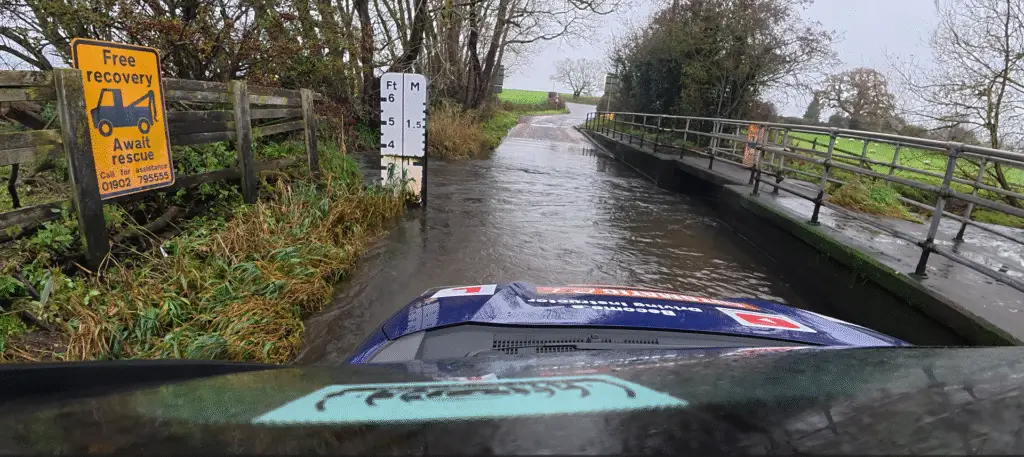
What is a Ford?: The Hidden Water Hazard Every UK Driver Must Understand What is a Ford? Every now and then, the UK theory test asks a question that sounds almost too simple. One of those is: “What is a ford?”It’s the kind of thing many learners skip over, assuming it’s common knowledge. But as with so much in driving, the simplest features on the road often carry the biggest risks. A ford is, at heart, a piece of British motoring history. Long before bridges and bypasses, travellers crossed water at the shallowest point — and in many corners of the UK, that tradition remains. Today, a ford is a shallow section of a river or stream that the road passes directly through, marked by a red warning triangle and often a white plate reading “Ford”, along with a depth gauge standing like a ruler in the riverbed. Picturesque? Often.Harmless? Not always. Water levels can change in minutes — especially after heavy rain. What looks like a gentle trickle on a summer’s drive can become a strong current by autumn’s afternoon shower. That’s why the DVSA includes fords in the theory test: because recognising one and responding correctly is a genuine safety skill, not trivia. Drivers with experience — the sort who remember how things used to be done — know to approach with respect.Slow down. Assess the depth. Enter in first gear. Keep the pace steady. Test your brakes afterwards.These time-honoured habits have kept motorists safe for generations, and they still matter today. So with that grounding, let’s turn this knowledge into test-ready confidence. Theory Test Section: Fords & Water Hazards Below is a full practice module including questions, answers, and explanations — ideal as a revision tool or teaching handout. Multiple-Choice Questions Question 1 What is a ford?A) A shallow water crossing where the road passes through a stream or riverB) A type of low bridgeC) A drainage channel beside the roadD) A temporary water diversion Question 2 Which sign warns you of a ford ahead?A) Blue information signB) Red triangle with water across the roadC) Red circle with a water symbolD) Yellow diamond-shaped sign Question 3 What should you do before driving through a ford?A) Increase speedB) Sound your hornC) Assess the depth using the gaugeD) Turn on your hazard lights Question 4 Why might a ford become dangerous after heavy rain?A) More wildlife may be presentB) Water depth can rise suddenlyC) Road markings disappearD) The road surface becomes too warm Question 5 How should you drive through a ford safely?A) High gear, fast speedB) First gear, steady paceC) Neutral, coastingD) Reverse through slowly Question 6 What should you do immediately after emerging from a ford?A) Accelerate hardB) Open the bonnet to check the engineC) Gently test your brakesD) Stop in the middle of the road Question 7 If the water level at a ford looks too deep to cross, you should:A) Drive through quickly to avoid stallingB) Wait for another vehicle to test it firstC) Find an alternative routeD) Try to walk through the ford to check the depth Question 8 What does the depth gauge at a ford help you judge?A) Water temperatureB) Speed limit through the crossingC) How deep the water isD) Road gradient Question 9 Driving too fast into a ford can cause:A) Improved tractionB) Splashing that clears debrisC) Loss of steering controlD) Increased braking efficiency Question 10 What additional sign might you see next to a ford warning sign?A) “No entry”B) “Ford” written on a white plateC) A blue mini-roundabout signD) “Dual carriageway ends” Answer Key and Explanations 1 — AA ford is a shallow water crossing used instead of a bridge — part of Britain’s long road-building history. 2 — BThe correct warning sign is a red warning triangle with water across the road. 3 — CAlways check the depth using the gauge before entering. 4 — BWater levels rise quickly after rain, turning a safe ford into a dangerous one. 5 — BUse first gear, maintain steady revs, and keep the vehicle moving smoothly. 6 — CLight braking helps dry the brakes and restores normal stopping power. 7 — CIf it looks unsafe, don’t risk it. Choose another route. 8 — CThe depth gauge measures water depth at the crossing. 9 — CHitting water at speed can cause the tyres to lose grip, affecting steering control. 10 — BA supplementary “Ford” plate often sits beneath the main warning sign.

ADI part 1, Driving Theory Test Help ADvice and Training, LGV Theory Test, Motorcycle Theory Test, PCV Theory Test

Top Tips to help you pass your theory test

Top Tips to Pass Your Theory Test If you’re preparing to take and pass your theory test your driving theory test, you’re likely feeling a mix of excitement and nerves — and that’s completely normal. Whether you’re applying for a car licence, motorcycle, LGV, PCV, or even the ADI theory test for instructors, a solid understanding of the process and proper preparation can make all the difference. This guide will walk you through practical tips to give you the best possible chance of passing first time. Understand the Structure of the Theory Test The driving theory test consists of two parts: multiple-choice questions and the hazard perception test. You must pass both parts to be successful. For car drivers, the multiple-choice section contains 50 questions, and you’ll need to score at least 43 to pass. The hazard perception test involves watching 14 video clips to identify developing hazards, requiring a minimum score of 44 out of 75. If you’re preparing for the motorcycle theory test, LGV theory test, or PCV theory test, the core format is similar but the content is tailored to the specific vehicle type. ADI candidates – those training to become driving instructors – face a more advanced theory test with 100 questions, as well as a higher standard for the hazard perception element. Knowing the test format ahead of time reduces anxiety and helps target your study efforts. Use Official DVSA Resources The best way to prepare is by studying with up-to-date, official DVSA material. These resources reflect the actual questions you may face and offer the most accurate information about road rules, signs, and driving techniques. You can purchase the DVSA Theory Test Kit app or use their books and CD-ROMs to study at your own pace. There are countless unofficial apps and websites offering mock tests, but not all are reliable. Stick to those that align closely with DVSA content. If you’re preparing for the ADI theory test, make sure your resources are specific to instructor-level knowledge, covering deeper road safety, teaching techniques, and instructional responsibilities. Master the Multiple-Choice Section Success in the multiple-choice section comes from consistent, focused revision. Start by reading the Highway Code thoroughly. Make notes or flashcards for rules you find tricky to remember. Then, move on to practice questions. Many apps allow you to work by topic – such as road signs, vehicle handling, or vulnerable road users – which helps identify weak areas to focus on. Don’t rely on memorising answers; understand why each answer is correct. This approach helps if questions are worded differently on the actual test. Those taking the LGV theory test or PCV theory test should pay special attention to rules about vehicle size, weight, and safe loading – subjects unique to those licences. Practice the Hazard Perception Test The hazard perception test often catches people out, but it doesn’t have to. This part assesses your ability to spot developing hazards early. A developing hazard is something that would cause you to take action, like a car pulling out or a pedestrian stepping into the road. You’ll be shown 14 video clips, each containing at least one developing hazard. One clip will feature two. Clicking too often or too rhythmically can be penalised, so it’s important to learn what to look for and how to react naturally. Practice clips are available in the DVSA kit and many good-quality apps. Remember, LGV and PCV candidates also have to complete a separate hazard perception test as part of their CPC Module 1. Book the Test at the Right Time Don’t rush to book your theory test the moment you start learning to drive. Give yourself a few weeks to study thoroughly. Aim to complete mock tests regularly and only book once you’re passing those with confidence. That said, avoid waiting too long — momentum is key. If you’re revising well, aim to book your test within a few weeks of starting preparation. ADI theory test candidates should only book once they’ve passed multiple full-length mocks and feel confident handling both the breadth of knowledge and the time pressure. Unlike the learner theory test, the ADI version is longer and more demanding, so allow ample preparation time. Test Day Tips On the day of the test, make sure you bring the correct ID — usually your provisional licence photocard. Arrive early, stay calm, and take your time. You’ll have a short practice session before the test begins so you can get used to the computer system. Use the flag function during the multiple-choice part if you’re unsure of an answer. You can return to it later. During the hazard perception clips, stay focused but avoid over-clicking. Click once when you see a potential hazard developing, and again if the situation changes — but don’t fall into a rhythm or try to ‘beat the system.’ After the Test – What’s Next? If you pass, congratulations! You’re now one step closer to the open road. You’ll be sent a theory test pass certificate with a number you’ll need when booking your practical test. The certificate is valid for two years, so be sure to complete your practical within that time. If you don’t pass, don’t be discouraged. Review your feedback, identify where you struggled, and prepare to try again. Many successful drivers and even instructors didn’t pass on their first attempt. Whether you’re going for a car, motorcycle, LGV, PCV, or ADI theory test, persistence and preparation are the keys to success. Final Thoughts The driving theory test is a vital part of becoming a safe, knowledgeable driver — or instructor. With the right preparation, you can walk into the test centre feeling confident and come out with a pass certificate in hand. Use trusted resources, practise regularly, and give yourself time to prepare properly. Good luck!
ADI part 1, Driving Theory Test Help ADvice and Training, LGV Theory Test, Motorcycle Theory Test, PCV Theory Test

What Is a Bus Lane? – A Simple Guide for the UK Theory Test

What is a bus lane? Bus lanes are one of those everyday road features that learners see constantly, yet they still cause confusion in the theory test. Get them right, though, and you’re showing the examiner you understand discipline, observation, and respect for other road users – values that have always mattered on British roads.

ADI part 1, Driving Theory Test Help ADvice and Training, LGV Theory Test, Motorcycle Theory Test, PCV Theory Test

Motorway Studs and Their Colours: Essential Guide for Safe Driving (2026 Update)

Motorway Studs and Their Colours Introduction to Motorway Studs When you’re cruising along a motorway—especially at night or during heavy rain—it’s the small things like motorway studs and their colours that silently keep you safe. These tiny reflective markers, often called “cat’s eyes,” help drivers stay in their lanes, judge road layouts, and make well-informed decisions during challenging driving conditions. Motorway studs play a huge role in road safety, and knowing what each colour means can make your journey smoother and safer. What Are Motorway Studs? Motorway studs are raised or embedded reflective devices placed between lane markings. They bounce light back to the driver, helping them see the road layout even when visibility is poor. You’ll see them on: They’re especially helpful at night, in fog, heavy rain, or on unfamiliar routes. Why Colour-Coded Studs Matter Each stud colour gives drivers a message. Understanding these colours helps you: Motorway studs and their colours are essential for safe, confident driving. The Meaning Behind Motorway Stud Colours Understanding motorway stud colours is simple once you know the rules. Every colour has a specific purpose that improves safety and navigation White Studs: Standard Lane Markers White studs are the most common. They indicate the lanes on the carriageway and separate: You’ll follow these most of the time while driving. Red Studs: Hard Shoulder Boundary Red studs mark the left-hand edge of the motorway, showing the boundary with the hard shoulder. They’re a warning that: Seeing red studs on your right means you’ve drifted! Amber Studs: Central Reservation Amber studs run along the right-hand side of the carriageway, separating the motorway lanes from the central reservation. They help drivers: Green Studs: Exits, Slip Roads & Lay-Bys Green studs highlight the entry and exit points, such as: If you see green studs, it often means an exit or joining point is ahead. Green/Yellow Studs: Temporary Road Works These two-tone studs guide drivers through road works or temporary diversions. They are: These studs help keep drivers safe in fast-changing environments. How Motorway Studs Improve Road Safety Motorway studs help reduce accidents by: Research shows they can reduce nighttime accident rates significantly because they improve reaction time and visual clarity. Motorway Stud Regulations and Standards Motorway studs must meet strict standards set by road safety authorities. In the UK, these include: Maintenance teams inspect and replace studs as needed to ensure their reflectivity remains effective. New Innovations in Motorway Studs Modern road studs go far beyond simple reflectors. Solar-Powered Studs These store energy during the day and shine bright LEDs at night. Intelligent Studs Used in smart motorways, these can: They’re part of the future of safer highways. Common Driver Mistakes When Interpreting Stud Colours Even experienced drivers sometimes misinterpret motorway studs. Mistake 1: Confusing Amber and Green Amber = central reservationGreen = slip roads and exits Mistake 2: Ignoring Red Studs Red studs show the hard shoulder.If you see red to your right, move back safely. Frequently Asked Questions (FAQs) 1. What do red motorway studs mean? They mark the hard shoulder boundary on the left side of the motorway. 2. Which colour shows the central reservation? Amber studs mark the central reservation. 3. What do green motorway studs indicate? They show slip roads, lay-bys, and exits. 4. Are motorway stud colours the same worldwide? Not always. Colours may differ internationally, but the UK uses a strict colour system. 5. What do green/yellow studs mean? They indicate temporary road works or diversions. 6. Why are motorway studs reflective? They use retroreflective technology to return light from your headlights back to your eyes.

ADI part 1, ADI Part 2 Training, ADI Part 3 Training, Driving Theory Test Help ADvice and Training, LGV Theory Test, Motorcycle Theory Test, PCV Theory Test

Theory Test Questions How to Deal with a flooded ford

HOW TO DEAL WITH A FLOODED FORD HOW TO DEAL WITH A FLOODED FORD A flooded ford is one of the most deceptively dangerous hazards on Britain’s roads. What’s normally a simple shallow crossing can turn treacherous in minutes after heavy rain. Even seasoned motorists treat flooded fords with deep respect — and rightly so. Water has a way of humbling even the most capable vehicles. Here’s how to handle the situation safely, sensibly, and in line with the long-standing principles of good driving. HOW TO DEAL WITH A FLOODED FORD – 1. STOP WELL BACK AND ASSESS THE SITUATION As soon as you see a ford flooded, do not drive straight in.Pull up at a safe distance and take a moment to observe: If water has risen above the depth gauge or you cannot see the bottom surface at all, that’s a clear sign the ford is unsafe. HOW TO DEAL WITH A FLOODED FORD – 2. UNDERSTAND THE RISKS It only takes 30cm of fast-moving water to float a car.Just 15cm can cause you to lose steering control.Floodwater also hides hazards: This is why experienced drivers never rely on guesswork. If there’s doubt, there’s danger. HOW TO DEAL WITH A FLOODED FORD – 3. DO NOT ENTER IF THE WATER LOOKS DEEP OR FAST This is the golden rule: If the ford looks flooded, you do not attempt to drive through it. A flooded ford is very different from a normal shallow crossing. The road may be completely hidden, the force of the water can be far stronger than it appears, and once you’re in, you’re committed — with very little room for recovery. Even 4x4s get caught out. Modern engines, electrics, and intakes are not designed for floodwater. HOW TO DEAL WITH A FLOODED FORD – 4. FIND AN ALTERNATIVE ROUTE This is the correct DVSA-aligned response. Turn around in a safe place and follow diversion signs or plan a new route. It might add a few minutes to your journey, but it could save your vehicle — and potentially your life. Remember the old saying every good driving instructor knows:“Better to arrive late than not arrive at all.” 5. IF IN DOUBT, STAY OUT This is the attitude the DVSA encourages for new drivers.Floodwater is unpredictable and unforgiving. A ford that’s normally harmless can turn dangerous after just a short burst of heavy rain. The sensible, traditional, time-tested answer is simple: Do not take risks with water. 6. REPORT IF NECESSARY If the flooding looks severe, or if another driver is stranded, call 999 in an emergency or 101 to report a hazard. Local authorities can close the ford until it’s safe again. SUMMARY: YOUR FLOODED FORD CHECKLIST A flooded ford is a hazard you treat with caution and respect. The safest crossing is the one you don’t attempt. THEORY TEST EXPLAINER: DEALING WITH A FLOODED FORD A flooded ford is one of the most dangerous water hazards on UK roads. A ford is normally a shallow place where a road crosses a stream or river — but when the water level rises, the crossing becomes unsafe. The DVSA wants learners to know that you must never attempt to drive through a flooded ford. Depth can rise suddenly, currents can become powerful, and the road beneath the water may be damaged or missing altogether. Key points to remember: This is one of those traditional bits of road wisdom that has stood the test of time:If in doubt — stay out. ✅ PRACTICE QUESTIONS Question 1 You approach a ford that is heavily flooded. What should you do?A) Drive through quickly to avoid stallingB) Enter slowly in first gearC) Turn around and find another routeD) Sound your horn before entering Question 2 Why is it dangerous to drive into a flooded ford?A) The water might cool your brakes too quicklyB) Floodwater can hide hazards and sweep your vehicle awayC) Visibility reduces the closer you getD) Tyres grip better when wet Question 3 What does a depth gauge at a ford help you decide?A) Whether your tyres need replacingB) Whether the water is warm or coldC) Whether it’s safe to crossD) How fast to drive through Question 4 What is the safest action when a ford’s water level is above the depth gauge?A) Enter slowlyB) Increase speedC) Wait for another driver to test itD) Do not enter — find another route Question 5 What is the correct DVSA-aligned advice for flooded fords?A) Drive through steadily to avoid hesitationB) Only drive through if you have a 4×4C) Never drive through floodwater; turn backD) Stop in the water if you feel unsure ✅ Answers & Explanations 1 — CA flooded ford should never be entered. Always choose another route. 2 — BFloodwater conceals hazards and can be strong enough to move a vehicle. 3 — CDepth gauges show how deep the water is and whether it’s safe. 4 — DIf the water level is above the gauge, the ford is unsafe. 5 — CThe DVSA is clear: never drive through floodwater.

aioseo ai before you even turn a ke medium auto landscape 20251010 190844
ADI part 1, Driving Theory Test Help ADvice and Training, Hazard Perception Training, LGV Theory Test, Motorcycle Theory Test, PCV Theory Test

Theory Test Pass Marks Explained

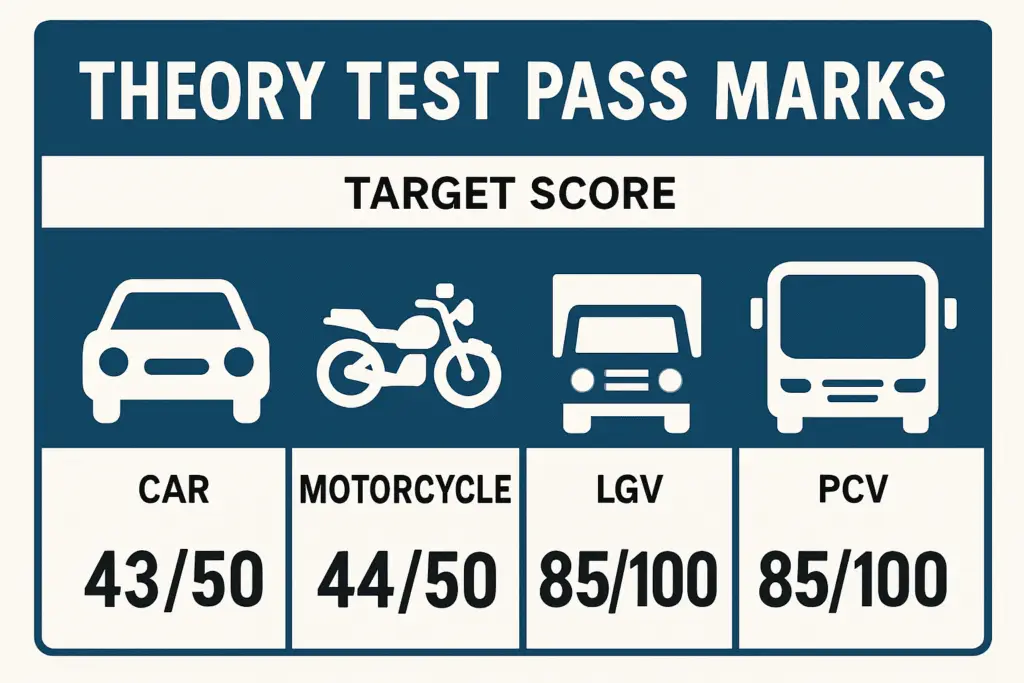
Before you even turn a key or twist a throttle, every British driver faces the same rite of passage — the theory test. It’s the first real test of your road knowledge and hazard perception, and it’s designed to make sure you’re safe, aware, and ready for the realities of driving so what are the theory test pass marks?

Scroll to Top