End of Dual Carriageway or Road narrows from both sides
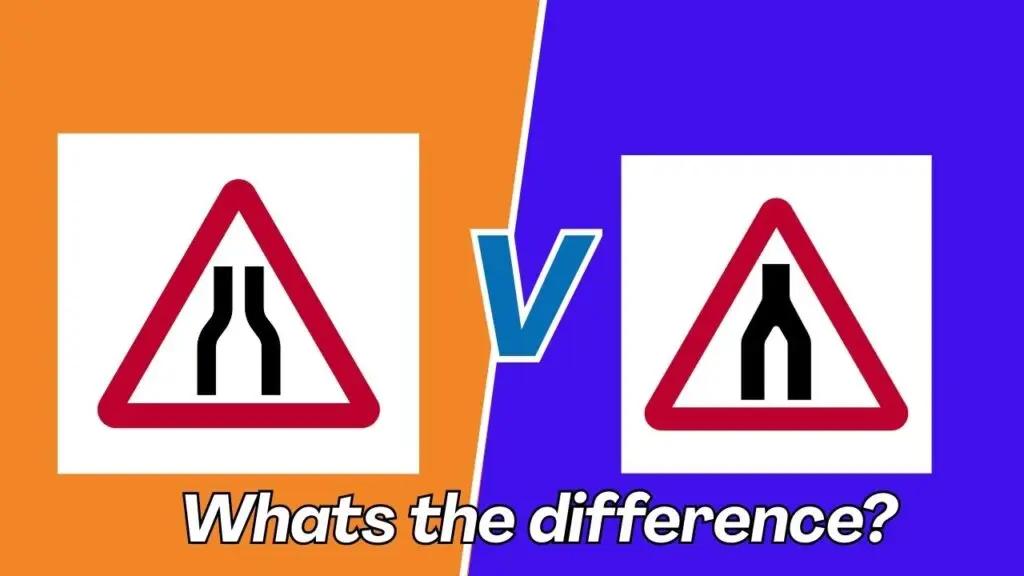
End of Dual Carriageway or Road narrows from both sides? When you’re studying for the UK Driving Theory Test, some road signs can look confusingly similar. Two of the most common are:
- End of Dual Carriageway
- Road Narrows From Both Sides
Get these mixed up in the real world, and you could end up in a very risky situation. In this guide, we’ll explain the difference, how to spot them instantly, and a simple memory trick to help you on test day.
What Does the End of Dual Carriageway Sign Mean?
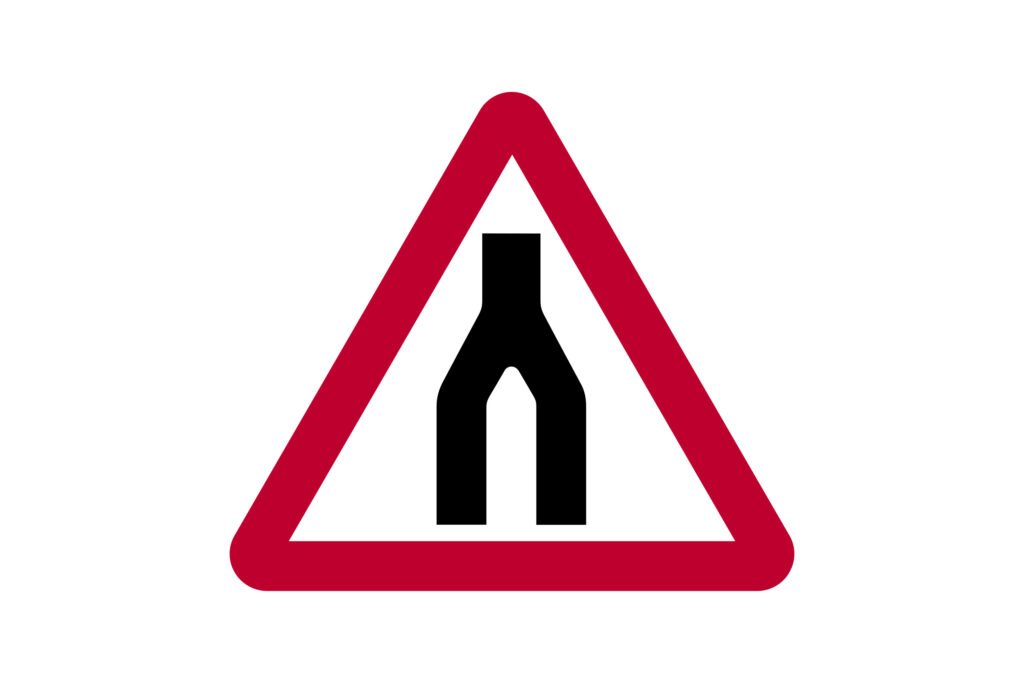
The End of Dual Carriageway sign shows two diagonal black lines slanting towards each other.
End of Dual Carriageway Meaning:
- You’re leaving a dual carriageway (a road divided by a central reservation).
- Ahead, there is no barrier or separation between you and oncoming traffic.
- The road becomes a standard two-way road.
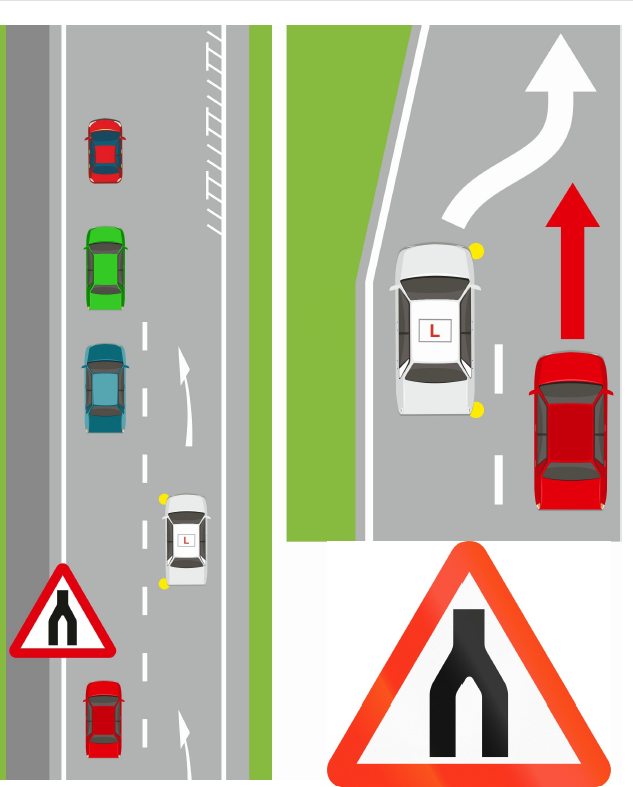
⚠️ Why it’s important:
When the central reservation ends, vehicles travelling the opposite way will be closer. You must keep a steady position in your lane and stay alert to overtaking vehicles.
What Does Road Narrows From Both Sides Mean?
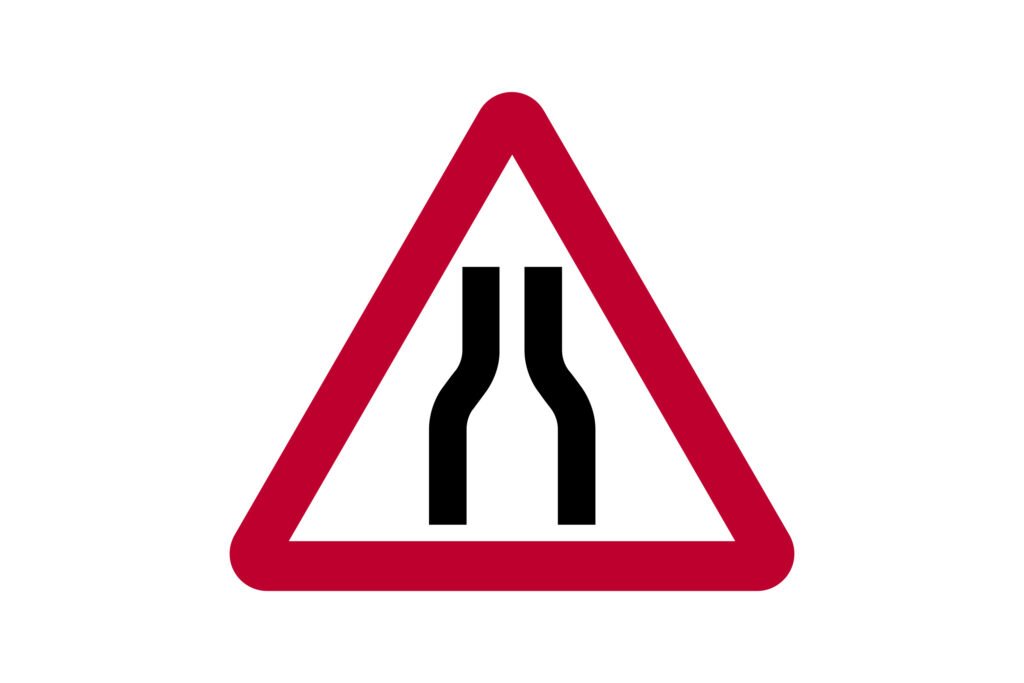
The Road Narrows From Both Sides sign shows two thick black lines, upright at the top and squeezing inwards at the bottom.
Meaning:
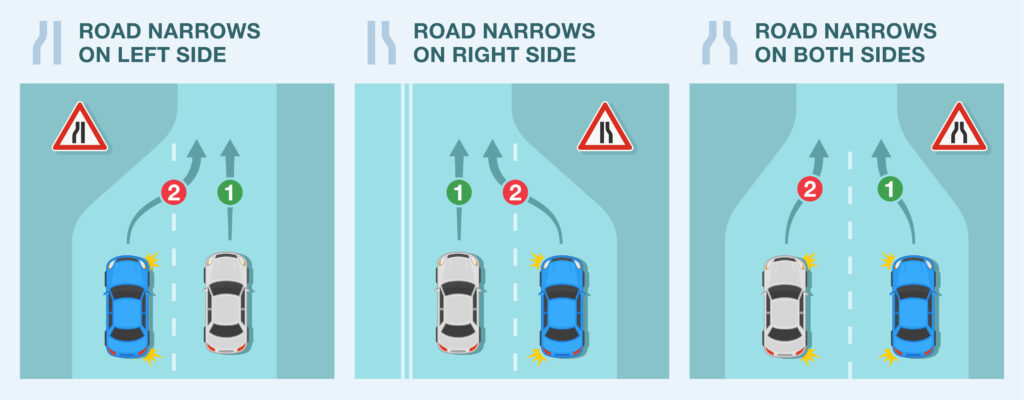
- The road ahead is about to get narrower.
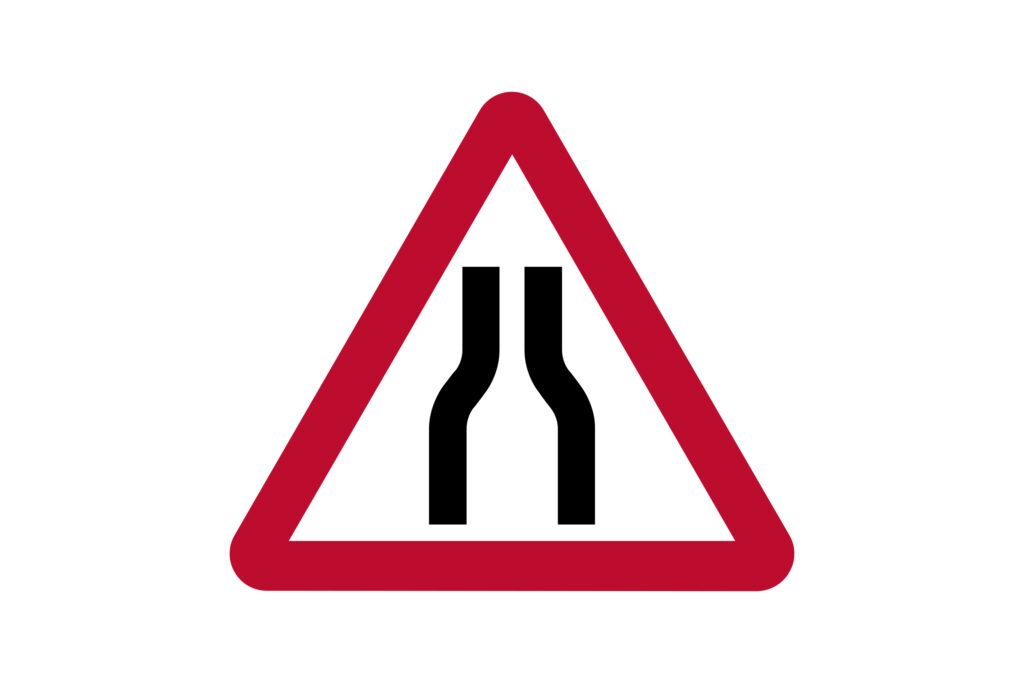
- This might be caused by a bridge, roadworks, or natural narrowing.
- Both sides of the carriageway are closing in.
Why it’s important:
You may need to slow down, reposition your car, or even give way to large vehicles if space is tight.
How to Tell the Difference Between the Two Signs
Here’s a quick comparison:
- End of Dual Carriageway: lines slant diagonally — imagine two lanes merging back into one road.
- Road Narrows From Both Sides: lines stay straight but squeeze together — imagine the road being pinched in from the edges.
✅ Memory Trick:
- Diagonal = lanes merging (dual carriageway ending).
- Straight lines = road physically narrowing.
Why These Road Signs Come Up in the Theory Test
The DVSA loves these two signs because they check whether you can spot subtle differences.
- Mistaking “End of Dual Carriageway” for “Road Narrows” could make you panic about a narrowing that doesn’t exist.
- Mistaking “Road Narrows” for “End of Dual Carriageway” could make you expect oncoming traffic when the danger is actually reduced space.
On your theory test, you’ll often see these signs shown side by side — so make sure you know which is which.
Quick Recap for Your Theory Test Revision
- End of Dual Carriageway = central reservation ends, two-way traffic ahead.
- Road Narrows From Both Sides = road gets physically narrower, drive with caution.
- Look at the shape of the lines on the sign — they are a diagram of what’s happening to the road.
Final Tip
When you’re revising road signs, don’t just memorise the pictures — think about what they mean for your driving. That way, when the day of your theory test arrives, you’ll be answering with confidence and real-world understanding.
What should I remember when revising these road signs for my theory test?
You should remember that ‘End of Dual Carriageway’ means the central reservation ends and a two-way road resumes, while ‘Road Narrows From Both Sides’ means the road physically gets narrower; focus on the shape of the lines on the signs to understand what change is happening to the road.
Why are these signs important for the UK driving theory test?
These signs are important because they test your ability to distinguish between similar-looking signs and understand the real-world implications, such as anticipating a change in road layout or narrowing, which affects driving behavior and safety.
What does the ‘Road Narrows From Both Sides’ sign indicate?
The ‘Road Narrows From Both Sides’ sign, shown by two thick black lines that stay straight but squeeze inward at the bottom, indicates that the road ahead will get narrower due to factors like bridges, roadworks, or natural narrowing, and drivers may need to slow down or give way.
How can I tell the difference between the ‘End of Dual Carriageway’ sign and the ‘Road Narrows From Both Sides’ sign?
The ‘End of Dual Carriageway’ sign features diagonal slanting lines indicating lanes merging back into one, while the ‘Road Narrows From Both Sides’ sign shows straight lines squeezing together, resembling the road being pinched from the edges. A simple memory trick is that diagonal lines suggest lanes merging, whereas straight lines imply physical narrowing.
What is the meaning of the ‘End of Dual Carriageway’ road sign?
The ‘End of Dual Carriageway’ sign, indicated by two diagonal black lines slanting towards each other, means you are leaving a dual carriageway, and the road ahead is a standard two-way road without a central barrier.