The Ultimate Guide to Passing the Motorcycle theory test
Understanding the Motorcycle theory test
The Motorcycle theory test is a crucial step for anyone aiming to become a licensed motorcyclist. Within the first 10% of this guide, it’s important to understand exactly what this test is and what it measures. The exam ensures that every rider has the knowledge needed to safely navigate UK roads. It combines a multiple-choice section and a hazard perception test, both designed to evaluate your understanding of road rules, awareness, and decision-making skills.
The multiple-choice portion covers essential topics like road signs, safety distances, braking techniques, and motorcycle-specific regulations. On the other hand, the hazard perception test assesses your ability to identify and react to potential dangers on the road. Together, these sections make sure future riders can respond confidently in real-life situations.
What the Motorcycle theory test Covers
The Motorcycle theory test checks whether you understand fundamental riding principles and can apply them. You’ll answer questions on:
- Traffic rules and road layouts
- Rider safety equipment
- Motorcycle control
- Speed limits and braking distances
- Vulnerable road users
- Environmental considerations
Hazard Perception Section Breakdown
This part of the test uses video clips to measure your ability to detect developing hazards. You must click at the right moment—not too early, not too late—to earn maximum points. Developing hazards are anything that requires you to change speed or direction. You’ll need to stay focused and avoid rhythmic clicking, as doing so can cause you to lose points.
Multiple-Choice Section Breakdown
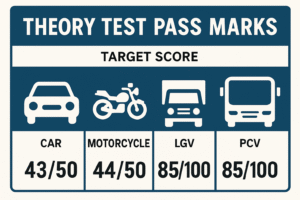
You’ll face 50 questions with a requirement to score at least 43 to pass. These questions are randomized and may feature images or diagrams. Some questions are motorcycle-specific, so be sure to focus on bike safety, maintenance, and riding techniques.
Eligibility Requirements for the Motorcycle theory test
Before booking the Motorcycle theory test, you need to ensure you’re eligible. The DVSA sets clear guidelines for age, documents, and license categories.
Age Limits and License Categories
Your age determines the type of motorcycle you can ride:
- Age 16: Eligible for AM category (mopeds up to 50cc).
- Age 17 and above: Eligible for A1, A2, or A motorcycle categories depending on power and training.
Understanding these categories helps you choose the right training path.
Required Documents and Identification
You’ll need:
- A valid UK driving licence (photocard)
- Proof of identity
- Correct booking details
Missing any required documents may prevent you from taking the test.
How to Prepare Effectively for the Motorcycle theory test
Preparation is the key to success. With the right materials and consistent study habits, you can confidently pass on your first try.
Using DVSA-Approved Study Materials
Official DVSA learning tools—including mobile apps, books, and online practice tests—provide the most accurate preparation. These materials mirror real exam questions and hazard clips.
Mastering Road Signs and Traffic Rules
Road signs provide essential information about directions, warnings, and regulations. Understanding them thoroughly will help you in both your theory test and real-life riding.
Practicing Hazard Perception Skills
Hazard perception requires practice. Use official videos to get familiar with the clicking rhythm and what counts as a “developing hazard.” This skill becomes second nature with repetition.
Common Mistakes to Avoid During the Motorcycle theory test
Avoiding mistakes is just as important as studying.
Misreading Questions and Rushing
Many candidates rush through questions and pick the wrong answer. Take a moment to analyze each question clearly.
Poor Hazard Perception Timing
Clicking too much or too early can cost you points. Practice helps improve timing.
Study Plan for Acing the Motorcycle theory test
7-Day Prep Schedule
| Day | Task |
|---|---|
| 1 | Study road signs |
| 2 | Learn safety rules |
| 3 | Multiple-choice practice |
| 4 | Hazard perception practice |
| 5 | Review weak areas |
| 6 | Full mock tests |
| 7 | Final revision |
Daily Practice Techniques
- 30 minutes of multiple-choice practice
- 15–20 minutes of hazard perception
- Flashcards for road sign memorization
Test-Day Tips for the Motorcycle theory test
What to Bring and What to Expect
Arrive early and bring your photocard license. The test center provides instructions before you begin, so listen carefully.
Mental Preparation and Focus Techniques
Deep breathing, enough sleep, and staying hydrated can improve your focus significantly.
After the Motorcycle theory test—What Happens Next?
Validity Period of Your Pass Certificate
Your pass certificate lasts for two years, giving you time to prepare for the practical test.
Booking Your Practical Riding Test
Once you pass, you can book your Module 1 and Module 2 practical tests. Visit official DVSA resources like:
🔗 https://www.gov.uk/motorcycle-theory-test
FAQs about the Motorcycle theory test
1. How long is the Motorcycle theory test?
It lasts about one hour, including instructions.
2. How many questions must I answer correctly?
You must get at least 43 out of 50.
3. Can I retake the test if I fail?
Yes, but you’ll need to wait 3 working days before rebooking.
4. Are practice tests helpful?
Absolutely—they mirror the real exam format.
5. What happens if I lose my pass certificate?
You can request details from the DVSA.
6. Do hazard perception scores matter a lot?
Yes, both sections must be passed to succeed.
Passing the Motorcycle theory test may seem intimidating, but with proper preparation, official study materials, and consistent practice, anyone can succeed. By understanding the test structure, planning your studies, and using the tips above, you’ll build the confidence needed to excel and move on to your practical test. Becoming a safe and skilled motorcyclist starts with mastering the basics—and your theory test is the first big milestone.