 Tap to reveal
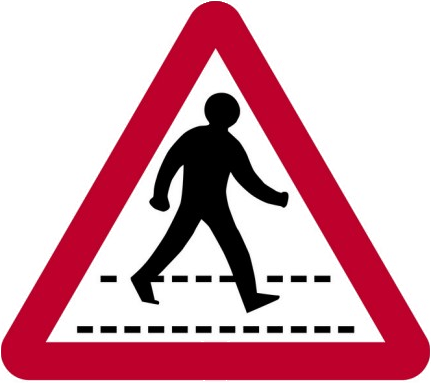
Look well ahead and be ready to stop for any pedestrians crossing, or about to cross, the road. Also check the pavements for anyone who looks like they might step or run into the road.
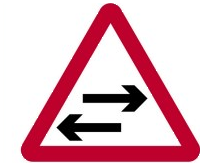
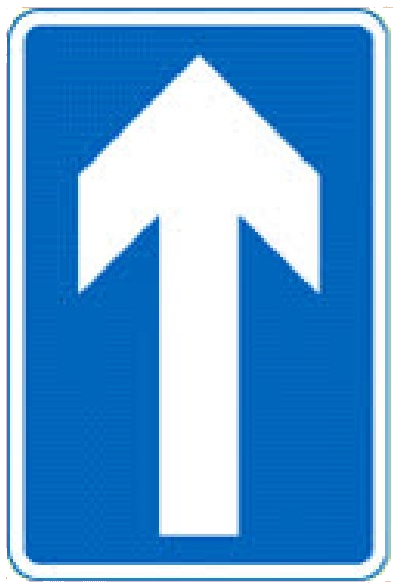
This sign is found in or at the end of a one- way system. It warns you that traffic will be crossing your path from both directions.
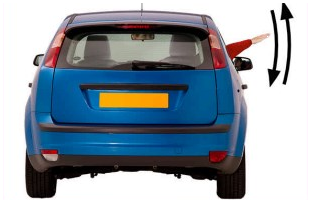
There may be occasions when drivers need to give an arm signal to confirm their intentions. This could include in bright sunshine, at a complex road layout, when stopping at a pedestrian crossing or when turning right just after passing a parked vehicle.
You should understand what each arm signal means. If you give arm signals, make them clear, correct and decisive.
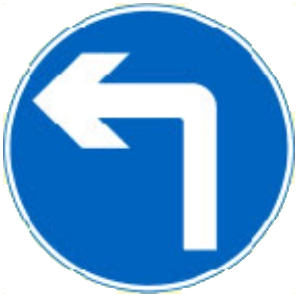
Blue circles tell you what you must do and this sign gives a clear instruction to turn left ahead. You should be looking out for signs at all times and know what they mean.
 Tap to reveal
In a one-way system, traffic may pass you on either side. Always be aware of all traffic signs and understand their meaning. Look well ahead and react to them in good time.
If you know which light is going to show next, you can plan your approach accordingly. This can help prevent excessive braking or hesitation at the junction.
 Tap to reveal
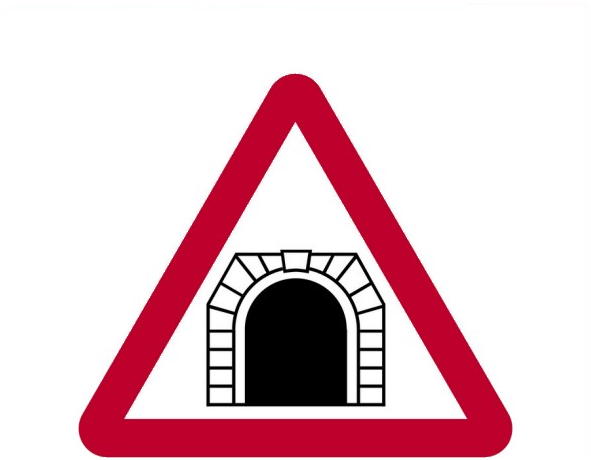
When approaching a tunnel, switch on your dipped headlights. Be aware that your eyes might need to adjust to the sudden darkness. You may need to reduce your speed.
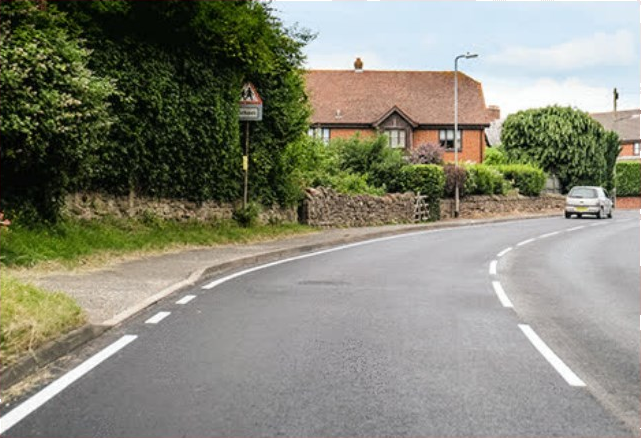 What does the white line along the side of the road indicate?Tap to reveal
A continuous white line is used on many roads to indicate the edge of the carriageway. This can be useful when visibility is restricted. The line is discontinued at junctions, lay-bys, and entrances to or exits from private drives.
 Tap to reveal
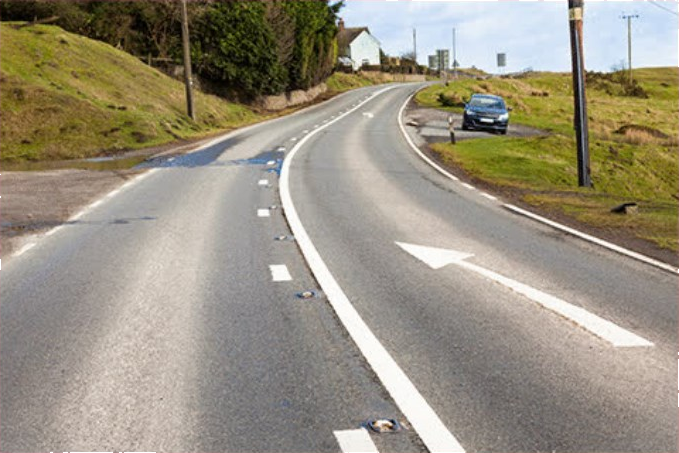
The arrow indicates the direction in which to pass hatch markings or double white lines. If you're overtaking, you must return to the left-hand side of the road.
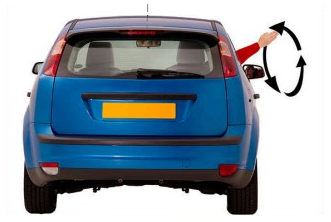
There may be occasions when other road users are unable to see your indicator, such as in bright sunlight or at a busy, complicated junction. In these cases, an arm signal will help others to understand your intentions.
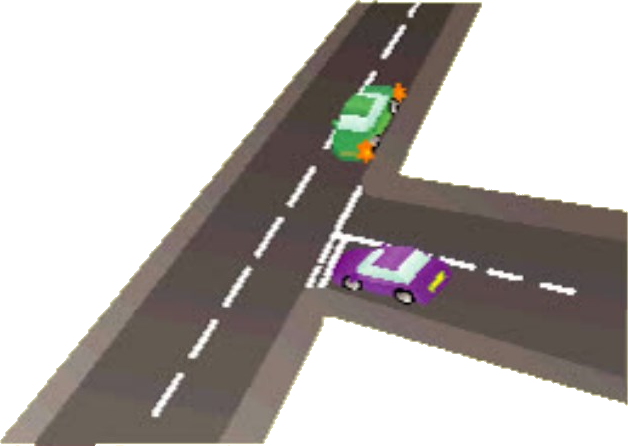 You're waiting at a T-junction. What should you do if a vehicle is coming from the right, with its left indicator flashing?Tap to reveal
Other road users may give misleading signals. When you’re waiting at a junction, do not emerge until you’re sure of their intentions.
When there’s queuing traffic ahead and you have to slow down or even stop, briefly showing your hazard warning lights will help alert the traffic behind to the hazard.
Leaving your indicators on could confuse other road users and may even lead to a crash. Be aware that if you’ve not turned sharply, your indicators may not self-cancel and you'll need to turn them off manually.
You need to signal to let other drivers know your intentions. However, if you indicate too early, they may think you're turning left into the junction. Correct timing of the signal is very important to avoid misleading others.
Free Theory Test Road Signs Practice – ensure that you review the latest updates on road signs and regulations as they can change over time. Familiarizing yourself with any new signs introduced in your area, or changes to existing signs, is essential for staying informed. Many local governments provide resources or updates online that can help you keep your knowledge current. Always check for any changes before taking your Theory Test so that you are not caught off guard by new information. Staying up-to-date will give you the best chance of success in the Theory Test Road Signs Practice and help you become a responsible driver.

Additionally, practicing with a variety of road signs can enhance your recognition skills, making it easier to respond appropriately while driving. Utilize online platforms and mobile applications that offer mock tests and quizzes to reinforce your understanding of road signs. Engaging in discussions with experienced drivers or instructors can also provide valuable insights and clarify any uncertainties regarding road signage and regulations. By actively participating in these learning opportunities, you will be better prepared for the Theory Test and improve your overall driving proficiency. Regularly reviewing the latest driving regulations will further solidify your knowledge and confidence. Consider forming a study group with peers who are also preparing for the test, as collaboration can lead to a deeper understanding of the material. Taking practice tests under timed conditions can help simulate the actual test environment, reducing anxiety on the day of the exam. Lastly, ensure that you have all necessary documents and identification ready prior to the test to avoid any last-minute issues.
Integrating Theory Test Road Signs Practice into your preparation is vital for success. Consistent practice will reinforce your understanding of how road signs function.
Theory Test Road Signs Practice
In conclusion, successfully passing the Theory Test not only requires knowledge of road signs but also the ability to apply that knowledge in real-world scenarios. Through comprehensive study, practice tests, and staying updated on road regulations, you can build a solid understanding of road signs. Remember, the more effort you put into your preparation, the more confident you will be during the test. Ultimately, a well-prepared driver is a safe driver, which benefits everyone on the road. Ensure your studies include the keyword seamlessly: Theory Test Road Signs Practice, as it encapsulates your preparation for the test.
Using Theory Test Road Signs Practice materials can significantly improve your confidence and readiness.
Understanding the Theory Test Road Signs Practice content will aid in recognizing signs while driving.
Incorporating Theory Test Road Signs Practice into flashcard sessions can enhance memory retention.
The Theory Test Road Signs Practice will help clarify the importance of different road signs.
Practicing with Theory Test Road Signs Practice is advisable for enhancing your test-taking skills.
Emphasizing the Theory Test Road Signs Practice will prepare you for the nuances of road safety.
Practice tests also frequently feature questions that require you to interpret road signs in context. For example, you might encounter a question asking what you should do when you see a particular road sign while driving. Understanding the situation that each sign indicates can be fundamental to answering these questions correctly. Therefore, supplementing your study with real-world driving practice, when possible, will help solidify your knowledge. This practical application reinforces what you’ve learned and prepares you to respond appropriately during your theory test.
In addition to studying road signs, it’s important to understand the scenarios in which these signs are used. For example, know when to yield to pedestrians at crosswalks, which is indicated by specific road signs. Practicing how to react in various driving situations, such as when you see a yield sign versus a stop sign, can be incredibly beneficial. Moreover, watching educational videos that demonstrate real-life driving scenarios can provide insight into the importance of these road signs in everyday driving. This will not only help you understand their significance but will also prepare you for any questions related to road signs on the theory test.
Another effective study method is to create flashcards featuring different road signs and their meanings. By repeatedly going through these flashcards, you can reinforce your memory and ensure that you can identify each sign quickly and accurately. You could also group signs by category to make your study sessions more organized. For instance, keep all warning signs together, and then separate them from regulatory signs. This technique helps to visualize and remember the unique characteristics of each sign type. Furthermore, consider studying in groups, where you can quiz each other on road signs and their meanings, making learning more interactive and enjoyable.
Understanding road signs is crucial for any driver, as they provide vital information about the rules of the road, potential hazards, and necessary actions for safe driving. Road signs can be categorized into various types, including regulatory signs, warning signs, and informational signs. Each category serves a specific purpose and is essential for maintaining road safety. For instance, regulatory signs, such as stop signs and speed limit signs, indicate the laws that drivers must follow. Warning signs, like those indicating sharp turns or pedestrian crossings, alert drivers to potential dangers ahead. Lastly, informational signs provide guidance, such as directions to nearby attractions or services. Knowing how to interpret these signs is key in preparing for your theory test.
To prepare effectively for the Theory Test, it’s advisable to practice with various resources that simulate real test conditions. One effective method is to use mock tests that include questions about different types of road signs. These tests not only help you become familiar with the signs but also improve your overall knowledge of road safety rules. For example, you can find practice materials online that present a series of questions related to road signs, accompanied by images to help you visualize them. Engaging with these practice tests regularly will enhance your confidence and increase your chances of passing the theory test on your first attempt.
Theory Test Road Signs Practice