Understanding Tunnel Safety and the Theory Test Questions
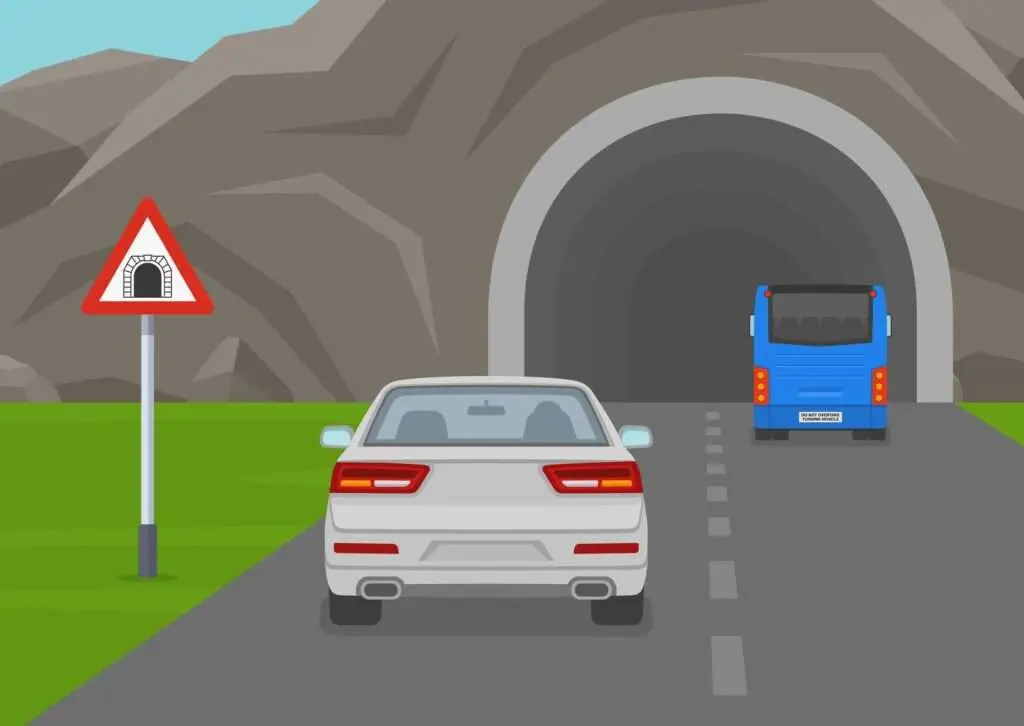
Tunnel Safety and the Theory Test Questions
Theory Test Tunnel questions – Driving through a tunnel can feel slightly unnerving — a long, enclosed stretch of road where your normal visual cues and escape routes are reduced. That’s exactly why tunnels are carefully engineered with layers of safety systems, and why several of the UK theory test questions focus on how drivers should behave when entering and driving through them.
Let’s take one of the most commonly asked questions:
Question: You’re going through a long tunnel. What will warn you of congestion or an incident ahead?
Answer: Variable message signs.
Why this is the correct answer
Modern tunnels are equipped with variable message signs (VMS) — electronic display panels suspended above or beside the carriageway. These can change instantly to warn drivers of congestion, accidents, lane closures, or even fire incidents ahead. In the confined space of a tunnel, where traffic can build rapidly and stopping distances are limited, early warning is essential.
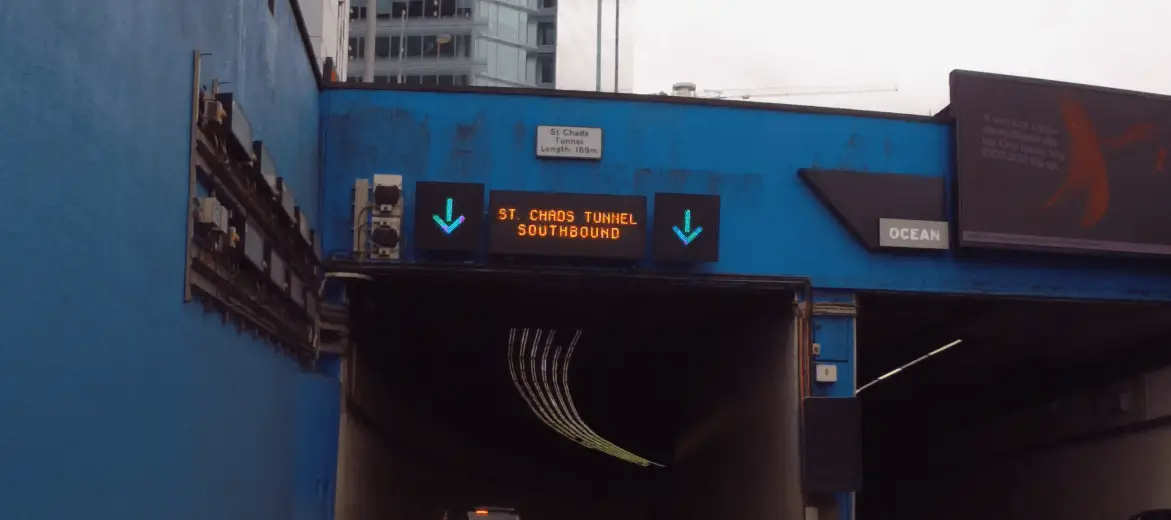
These signs might flash up speed limits, lane arrows, or hazard messages such as “ACCIDENT AHEAD” or “QUEUE CAUTION”. The key is to obey them immediately — they’re not suggestions, they’re live instructions designed to keep traffic moving safely and to give you enough time to react before reaching the problem area.
How tunnels keep you informed — even without a radio signal
Many longer tunnels in the UK are fitted with radio transmitters that rebroadcast national and local FM/AM frequencies inside the tunnel. This allows emergency services or tunnel operators to cut into broadcasts with safety announcements if an incident occurs.
If you’re listening to the radio and notice the sound suddenly fade or switch to a pre-recorded message — that’s not a glitch. It’s the tunnel’s built-in communication system taking over to keep you informed. It’s a subtle but vital safety feature that most drivers never notice until it’s needed.
Other Tunnel-Related Theory Test Questions
The DVSA theory test includes several other questions about driving in tunnels, all aimed at promoting calm, controlled, and observant behaviour:
- Before entering a tunnel, what should you do?
- Remove your sunglasses.
→ Light levels drop dramatically in a tunnel, and tinted lenses reduce visibility even further.
- Remove your sunglasses.
- What should you do if your vehicle breaks down in a tunnel?
- Switch on your hazard warning lights, pull into an emergency lane or bay if possible, stop the engine, and evacuate to the nearest emergency exit if it’s safe.
→ Use the emergency telephone to contact control rather than your mobile — it connects you directly to the tunnel’s control room and automatically identifies your location.
- Switch on your hazard warning lights, pull into an emergency lane or bay if possible, stop the engine, and evacuate to the nearest emergency exit if it’s safe.
- If traffic stops in a tunnel, what should you do?
- Keep a safe distance from the vehicle in front.
→ Leave enough space to move again if traffic starts to flow — and never perform a U-turn or reverse.
- Keep a safe distance from the vehicle in front.
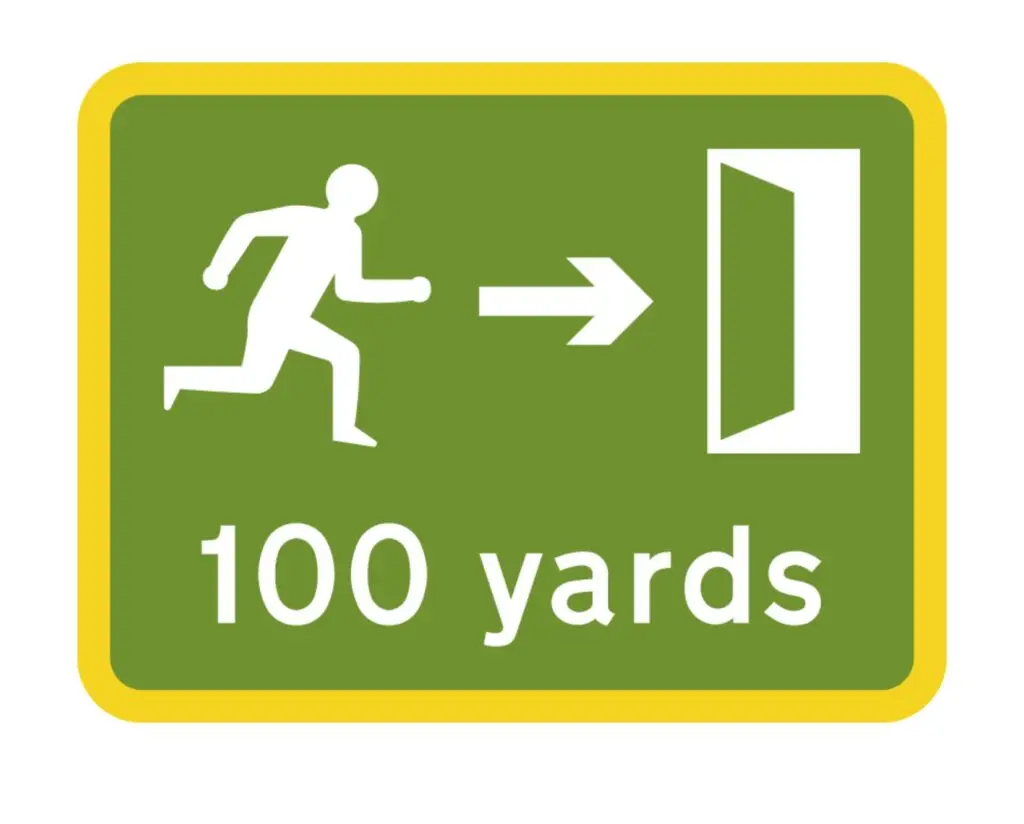
- What should you do if there’s a fire or you see smoke ahead in the tunnel?
- Stop, switch off the engine, leave the vehicle, and move to the nearest emergency exit.
→ Tunnels are fitted with clearly marked pedestrian escape routes and fire-resistant refuges. Following the signs could save your life.
- Stop, switch off the engine, leave the vehicle, and move to the nearest emergency exit.
Driving through a tunnel is one of those moments where technology quietly works in the background to protect you. Sensors monitor air quality, CCTV tracks every vehicle, and the control centre stands ready to close lanes or issue warnings in seconds.
So when that theory test asks about variable message signs, it’s really testing more than your memory — it’s checking that you understand how to stay alert and trust the systems designed to keep us all safe.
As ever, the traditional virtues of good driving still apply: look well ahead, stay calm, and be ready to respond. The tunnel might be man-made, but your safety depends on very human awareness.
many tunnels are equipped with radio transmitters so that drivers can tune in to be warned of any incidents, congestion or roadworks
Tunnels – Staying Safe Underground
Tunnels are designed with clever safety systems to keep traffic moving and drivers informed, even when something goes wrong. These questions test your understanding of how to stay safe and respond correctly.
Question 1
You’re driving through a long tunnel. What will warn you of congestion or an incident ahead?
✅ Correct answer: Variable message signs.
Explanation:
Long tunnels are fitted with variable message signs (VMS) – electronic panels that display live messages from the tunnel control room. They can warn of queues, accidents, lane closures, or even fire emergencies.
If you see one, follow the instructions immediately. In a tunnel, stopping distances are short and escape routes are limited, so quick action is essential. You may see flashing arrows, temporary speed limits, or a warning such as “SLOW – QUEUE AHEAD.”
Did you know?
Many long tunnels also have radio transmitters built in. These rebroadcast national and local radio stations so you can still receive updates underground. In an emergency, the tunnel operators can interrupt the broadcast with safety announcements — a vital system if visibility is poor or traffic has stopped.
Question 2
Before entering a tunnel, what should you do?
✅ Correct answer: Take off your sunglasses.
Explanation:
Tunnels are much darker than daylight conditions outside. If you enter wearing sunglasses, your vision can take several seconds to adjust — long enough to miss an early warning sign or a slowing vehicle. Always remove them before you go in.
Question 3
If traffic stops in a tunnel, what should you do?
✅ Correct answer: Keep a safe distance from the vehicle in front.
Explanation:
Leave enough space to move off smoothly if traffic starts again. Never reverse or perform a U-turn — the tunnel is strictly one-way, and control staff may be monitoring your vehicle on CCTV. Keep your engine running only if necessary to prevent battery drain, and stay alert for instructions on signs or radio.
Question 4
Your vehicle breaks down in a tunnel. What should you do?
✅ Correct answer: Switch on your hazard warning lights, stop if possible in an emergency lane or bay, turn off the engine, and use the emergency telephone.
Explanation:
Emergency phones in tunnels connect directly to the tunnel control room and automatically transmit your location. They’re far safer and more reliable than a mobile phone. Wait in a designated safe area — not beside your vehicle — and follow any instructions from tunnel staff.
Question 5
You see smoke or a fire ahead in a tunnel. What should you do?
✅ Correct answer: Stop, switch off your engine, leave the vehicle, and follow the emergency exit signs to a safe area.
Explanation:
Tunnels have clearly marked escape routes and refuges with fire-resistant doors. Never try to turn around or drive through smoke. The tunnel’s ventilation and fire systems are designed to protect people on foot, not moving traffic.
🧭 Key points to remember
- Follow variable message signs instantly — they’re live safety instructions.
- Remove sunglasses before entering a tunnel.
- Keep space in stationary traffic — don’t close up tightly.
- Use emergency phones, not mobiles, if you break down.
- Leave the vehicle and follow exit signs if there’s fire or smoke.
- Many tunnels have radio transmitters that can interrupt normal broadcasts to give you urgent safety updates.
Tunnels may feel like just another stretch of road, but they’re a masterclass in engineering and driver discipline. Every sensor, sign, and signal works together to keep people safe — but it’s still the driver’s awareness that makes the difference.
Stay alert, trust the systems, and drive with that steady confidence that’s always been at the heart of good motoring.