What is a Contraflow Bus Lane?
What is a contraflow bus lane? When you’re learning to drive in the UK, the Highway Code introduces you to many different road markings and signs – and one that often confuses learners is the contraflow bus lane. Understanding what it means, how it works, and how to deal with it on the road is essential if you want to stay safe and avoid penalties.
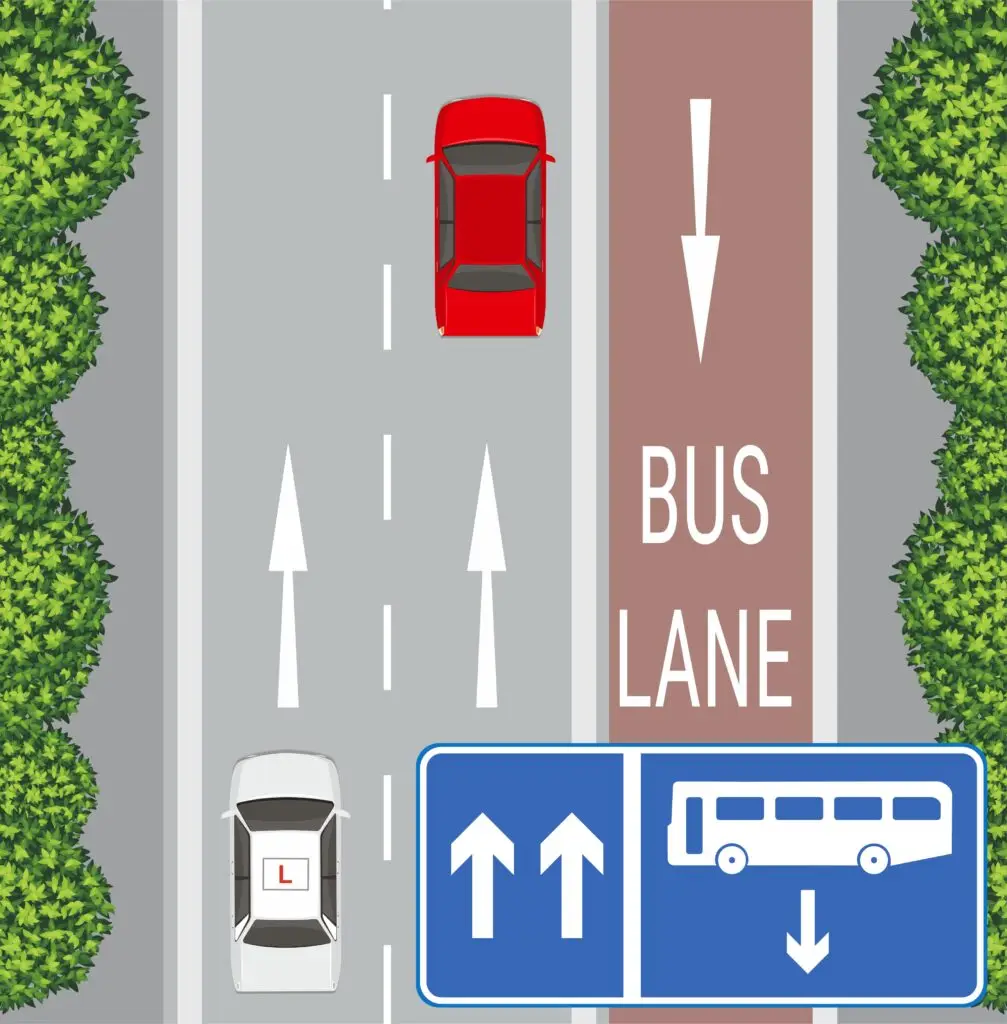
What is a Contraflow Bus Lane? The Basics: What “Contraflow” Means
The word contraflow simply means traffic moving in the opposite direction to the normal flow on that road.
So, a contraflow bus lane is a bus lane that runs against the main direction of traffic on a one-way street.
For example:
- Imagine you’re driving down a one-way street where all vehicles are moving south.
- On your left, there’s a clearly marked lane where buses are allowed to travel north – in the opposite direction.
That’s a contraflow bus lane.
Why Contraflow Bus Lanes Exist
Contraflow bus lanes are designed to:
- Improve efficiency for public transport – allowing buses to take more direct routes instead of being forced to follow the one-way system.
- Reduce congestion – fewer cars stuck in traffic means smoother journeys for everyone.
- Encourage bus use – quicker, more reliable bus journeys make public transport more attractive.
How to Recognise a Contraflow Bus Lane
Contraflow bus lanes are clearly signed and marked. Here’s what you’ll typically see:
- Blue rectangular signs with a white bus symbol and an arrow showing direction of travel.
- Road markings: the lane is usually separated by a solid white line and sometimes with physical barriers or kerbs.
- A “No Entry” sign for other traffic at the end where buses are coming towards you.
⚠️ Important: Unlike ordinary bus lanes, contraflow bus lanes can feel unnatural because buses appear to be coming towards you, even though you’re on a one-way street.
Contraflow Bus Lane Rules You Must Follow
- Do not enter the contraflow bus lane – unless signs indicate that taxis, cyclists, or motorcyclists are also permitted.
- Obey the solid white line – this marks the boundary and must not be crossed.
- Be alert at junctions – if you’re turning into or out of a one-way road with a contraflow bus lane, you must check carefully for buses travelling against the flow.
Failing to respect contraflow bus lane rules can result in:
- Penalty Charge Notices (fines)
- Points on your licence in some cases
- Increased risk of collisions
What is a Contraflow Bus Lane? Example: Oxford High Street
One of the most well-known contraflow bus lanes is in Oxford. The historic city centre has several restricted streets where buses can travel in both directions, but cars must obey the one-way system. Drivers unfamiliar with the area can easily be caught out if they’re not alert to the signage.
What is a Contraflow Bus Lane? Tips for Learner Drivers
- Always check for signs – look for blue bus lane plates and arrows before entering a one-way road.
- Expect the unexpected – just because you’re on a one-way street doesn’t mean nothing will be coming the other way.
- Stay in your lane – never drift towards the bus lane, especially if it’s protected by a solid line.
- Extra caution at night – buses may have headlights facing you in what feels like the “wrong” direction.
Why you need to know about Contraflow Bus Lane
A contraflow bus lane is a clever piece of road design that helps buses move efficiently through busy towns and cities. For drivers, the golden rule is simple: do not enter it, respect the signs, and always be prepared for buses coming towards you even on a one-way street.
Get this right and you’ll not only avoid fines but also drive with the confidence that you’re sharing the road responsibly.