Introduction to the PCV Theory Test
If you’re planning to become a professional passenger-carrying vehicle driver, then the PCV theory test is one of the most important steps on your journey. This test checks whether you understand the rules, responsibilities, and safety standards needed to drive large passenger vehicles such as buses, minibuses, and coaches.
Driving a PCV is a big responsibility, and the theory test makes sure that drivers can handle the unique challenges that come with transporting people safely. In this guide, you’ll learn everything you need to prepare, pass, and progress to the next stage of your training.
What Is the PCV Theory Test?
The PCV theory test is a two-part exam required for anyone who wants to become a licensed PCV driver in the UK. This includes people who want to drive minibuses, larger buses, or coaches. The exam is designed to test your understanding of road safety, passenger care, hazard awareness, and regulations specific to commercial passenger transport.
The test consists of:
- A multiple-choice theory test
- A hazard perception test
You must pass both parts to move forward in your PCV licensing process.
Why the PCV Theory Test Matters for Professional Drivers
The PCV theory test isn’t just a formality. It prepares you for real-life situations you’ll face when transporting passengers. You need to know how to maintain safe distances, handle emergencies, support vulnerable passengers, and navigate busy urban areas.
Passing the PCV theory test also shows employers that you have the knowledge needed to operate safely and confidently.
Eligibility Requirements for the PCV Theory Test
Before you book the test, you must meet certain eligibility requirements.
PCV License Categories Explained
PCV licenses have several categories, including:
- D1 – Minibuses with up to 16 passengers
- D1E – Minibuses with trailers
- D – Full-size buses & coaches
- DE – Full-size buses with trailers
Your category will determine which test modules you must take and what vehicles you can eventually drive.
Medical & Legal Requirements
Before booking the PCV theory test, you must:
- Have a valid provisional bus license
- Complete a DVLA D4 medical assessment
- Be at least 18 years old in most cases
- Provide proof of identity when booking
This ensures you’re physically and mentally fit to operate large passenger vehicles.
Components of the PCV Theory Test
The PCV theory test has two sections, and both must be passed on the same day.
Multiple-Choice Section
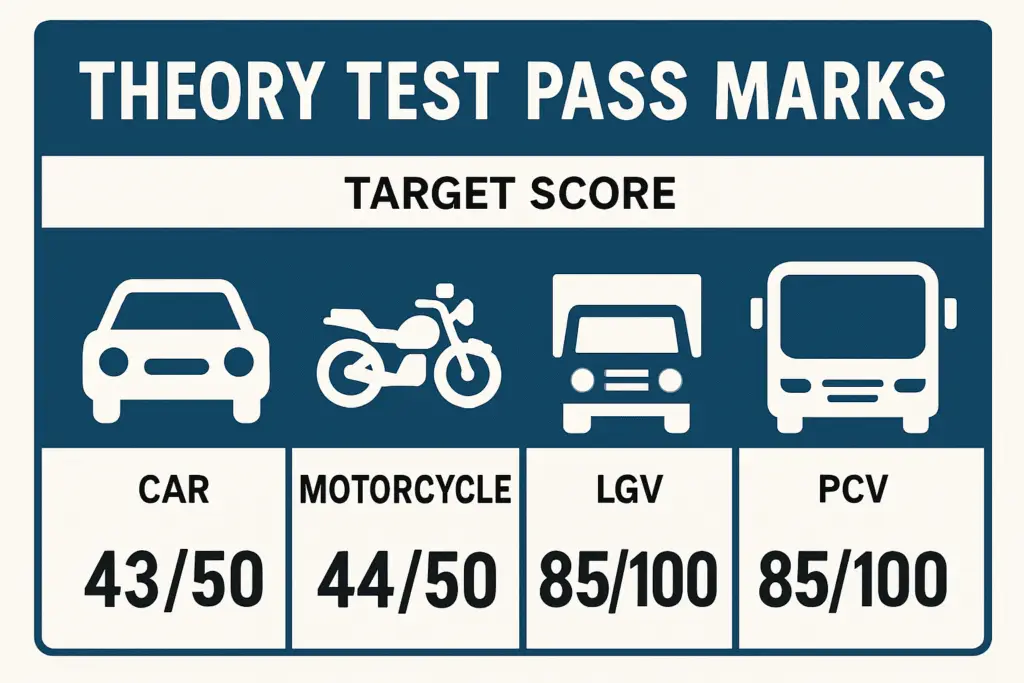
This section includes 100 questions. You need at least 85 correct answers to pass.
It covers topics such as:
- Road signs & traffic laws
- Passenger safety
- Vehicle handling
- Safety margins
- Incident prevention
Key Topics Covered
Some of the most important topic areas include:
- Speed and stopping distances
- Loading and vehicle balance
- Dealing with passengers with disabilities
- Emergency procedures
- Environmental considerations
Hazard Perception Test
This test includes 19 video clips showing everyday driving situations. You must click when you spot a developing hazard. A developing hazard is something that forces you to take action, such as slowing down or changing lanes.
Common Hazard Types
You may see:
- Pedestrians stepping into the road
- Cyclists swerving
- Motorcycles overtaking
- Poor weather conditions
- Roadworks or temporary signs
To pass, you need at least 67 out of 100 points.
How to Prepare Effectively for the PCV Theory Test
Effective preparation can make the difference between passing and failing.
Best Study Resources
Here are the most reliable sources:
- Official DVSA theory test kit
- Hazard perception practice DVDs
- Mobile apps with mock tests
- Online platforms offering PCV-specific content
For accurate information, refer to the DVSA official site: https://www.gov.uk/theory-test
Study Schedule for Busy Drivers
Many PCV learners work full-time, so here’s a simple weekly plan:
- 30 minutes daily of multiple-choice practice
- 3 days a week of hazard perception clips
- 1 weekend session for reviewing weak areas
- Mock exams twice a week
Consistency is the key to success.T
Tips to Pass the PCV Theory Test on the First Attempt
Passing the first time saves money, effort, and stress. Here are top tips:
- Take full-length mock tests
- Read each question carefully
- Practice hazard perception until it feels natural
- Review road signs regularly
- Stay calm during the exam
- Arrive early and well-prepared
Common Mistakes to Avoid
- Clicking too early or too late during hazard perception
- Ignoring safety margin questions
- Not reading all answer choices
- Panicking under timed conditions
With proper preparation, you can avoid these issues easily.
What to Expect on Test Day
Required Documents & Rules
Bring:
- Your photocard driving licence
- Confirmation email for your booking
- Glasses if needed
Phones must be switched off during the test. You’ll store belongings in a locker.
Understanding the Scoring System
You must pass both sections:
- 85/100 on multiple-choice
- 67/100 on hazard perception
Failing one section means retaking both parts.
After You Pass the PCV Theory Test
Booking Your Practical Test
After passing, you can book:
- PCV driving lessons
- The practical test
- CPC Module 3 and Module 4 (if required)
Progressing to Full PCV Qualification
To become a fully qualified PCV driver, you must complete:
- Driver CPC training
- Medical renewals
- Practical assessments
This opens the door to jobs in public transport, private coach companies, and school transport services.
FAQs About the PCV Theory Test
1. How long is the PCV theory test valid for?
Your test result is valid for two years.
2. Can I retake the test if I fail one section?
Yes, but you must retake both parts, even if you passed one.
3. How much does the PCV theory test cost?
The test costs around £37, but fees may vary.
4. Can I take the PCV theory test online?
No, it must be taken at an official theory test centre.
5. What happens after I pass?
You can start booking your practical PCV tests.
6. What vehicles can I drive with a PCV licence?
It depends on your category (D1, D1E, D, DE).
PCV Theory Test
The PCV theory test is a crucial step in becoming a safe and responsible passenger-carrying vehicle driver. With the right preparation, study habits, and mindset, you can pass confidently and move on to your practical training.
Whether you’re aiming to drive a school bus, a minibus, or a full-size coach, this theory test ensures you’re ready for the road ahead.