What Affects Thinking Distance?
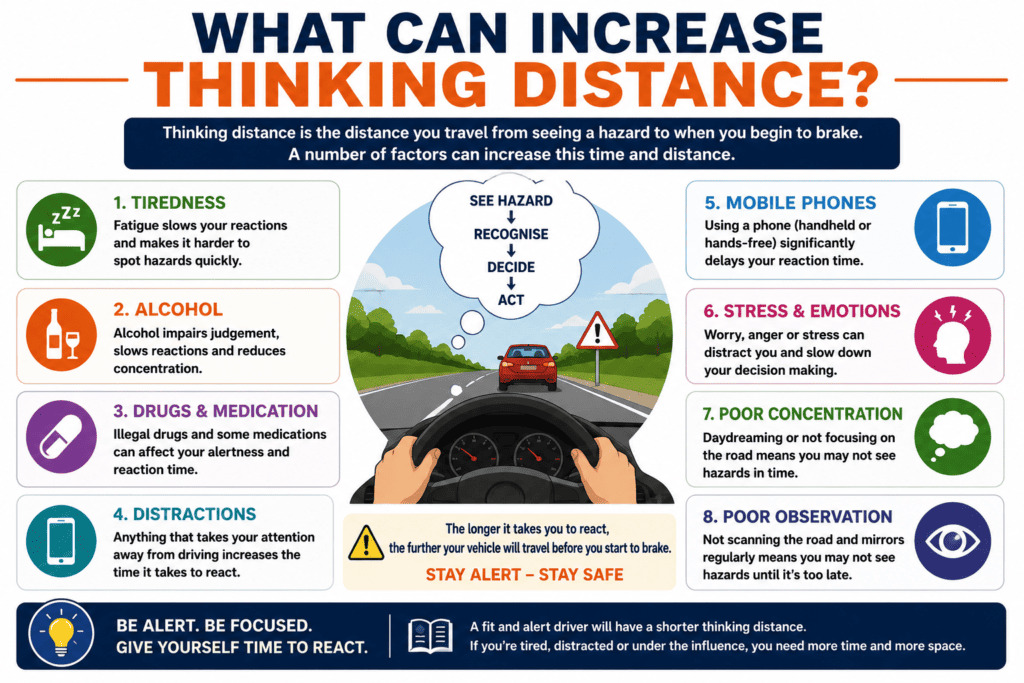
Thinking distance is the distance a vehicle travels between a driver seeing a hazard and applying the brakes.
Thinking distance plays a vital role in road safety and is influenced by various factors. Understanding these factors can help drivers anticipate hazards better and respond in a timely manner. The longer the thinking distance, the greater the risk of an accident, as it directly affects the overall stopping distance of a vehicle.
Understanding what affects thinking distance is crucial for safe driving.
Various studies have shown that an average driver may take around 0.75 seconds to react in ideal conditions. However, this reaction time can be significantly longer under less favourable circumstances. It is essential for drivers to be aware of these influences to mitigate risks on the road.
Anything that slows a driver’s reaction time will increase thinking distance.
SEE OUR FULL GUIDE TO STOPPING DISTANCES
Furthermore, research indicates that fatigue can impair cognitive function, leading to slower decision-making and delayed responses. It is advisable for drivers to take regular breaks during long journeys to maintain alertness.
1. Tiredness
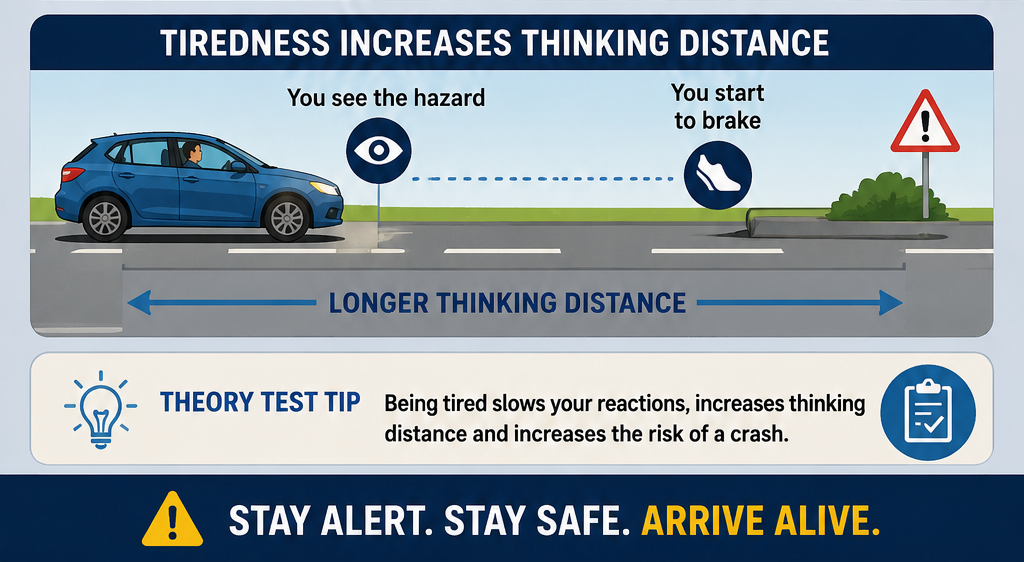
For example, a driver who has had a poor night’s sleep may take as much as 2 seconds longer to react compared to a well-rested individual. This extra time can result in several car lengths of increased thinking distance.
Drivers need to know what affects thinking distance to avoid accidents.
A tired driver takes longer to notice hazards and react.
Examples:
- Lack of sleep
- Long journeys
- Driving late at night
2. Alcohol
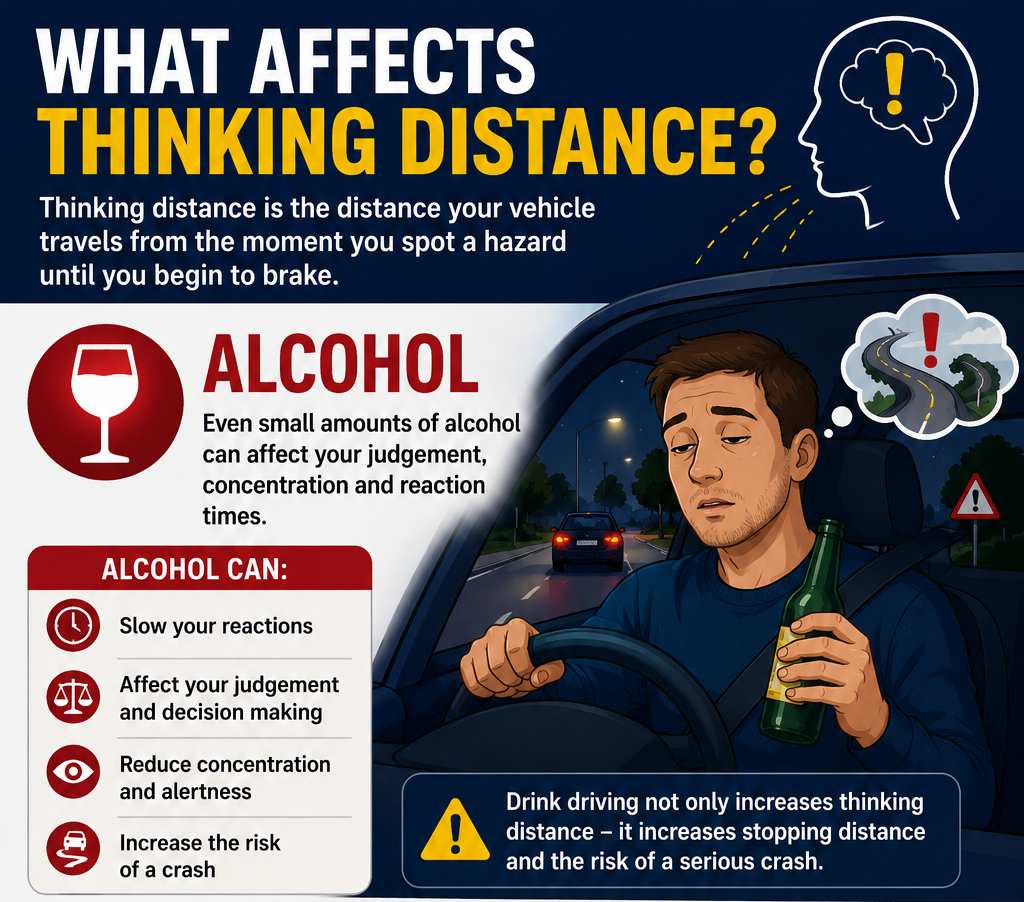
Alcohol affects:
By recognising what affects thinking distance, drivers can make better choices.
- Judgement
- Concentration
- Reactions
Even small amounts can increase thinking distance.
3. Drugs
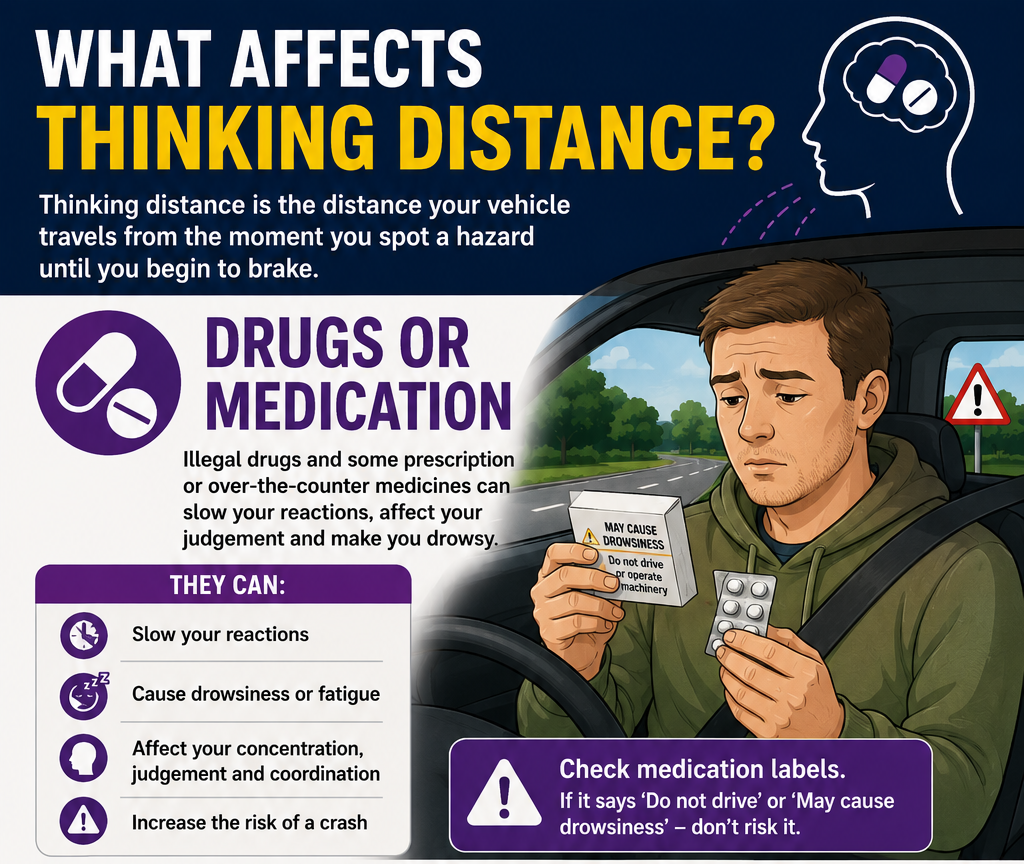
Both illegal drugs and some medicines can slow reactions.
Alcohol consumption, even in small amounts, can drastically affect a driver’s abilities. Studies have shown that at just 0.05% blood alcohol concentration, a driver’s reaction time can increase by as much as 30%. This increase can represent a significant threat to road safety.
Always check medication warnings before driving.
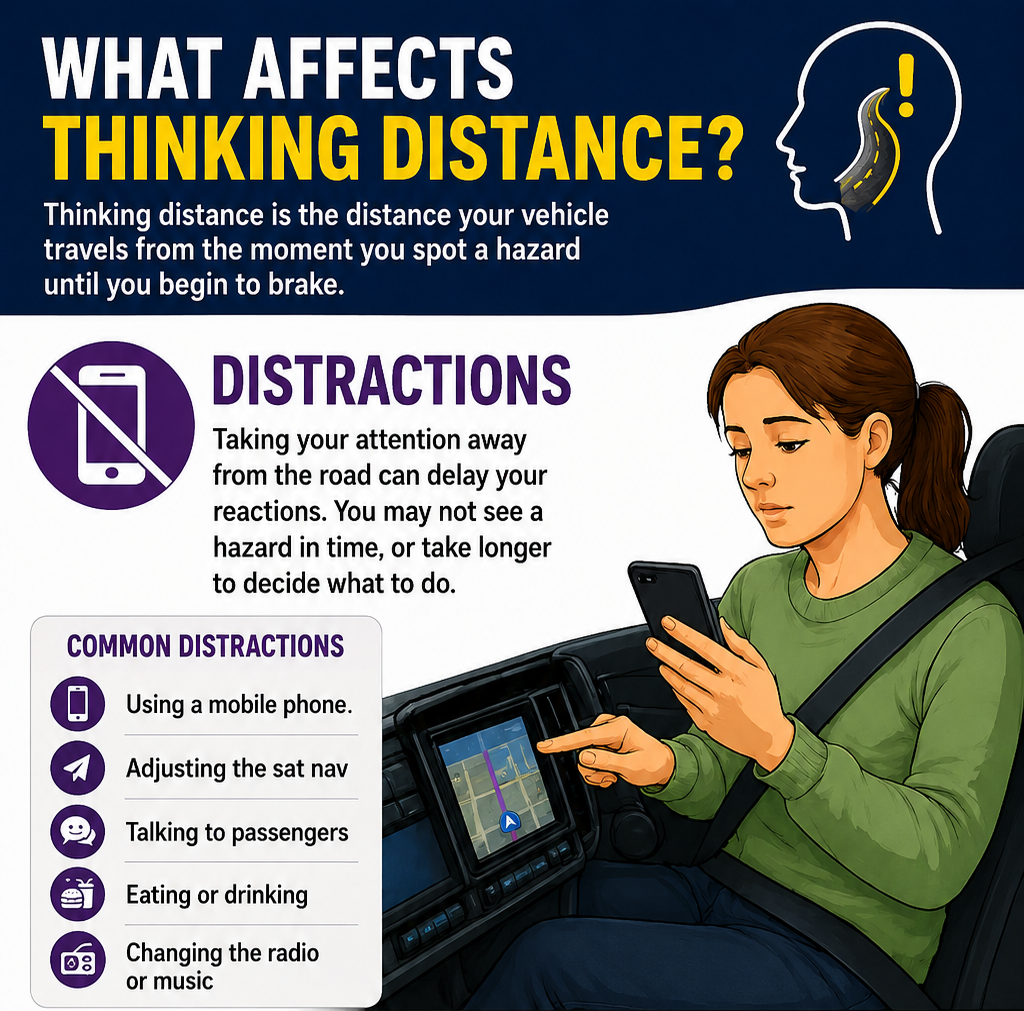
4. Distractions
In addition to alcohol, prescription drugs can have similar effects. Sedatives, for instance, are known to slow down the central nervous system, impairing motor skills and reaction times. It is crucial that drivers consult their healthcare provider about potential side effects before taking medication that could affect their driving.
Distractions are another major contributor to increased thinking distance. A recent study revealed that drivers using mobile phones are four times more likely to cause an accident than those who focus solely on driving. Taking your eyes off the road for just a few seconds can lead to a significant delay in reaction times.
Anything that takes your attention away from driving can increase thinking distance.
Examples:
- Mobile phones
- Sat-nav adjustments
- Eating or drinking
- Talking to passengers
- Changing music
5. Poor Eyesight
It’s important to consider what affects thinking distance when driving.
If hazards are seen later, drivers have less time to react.
Drivers should ensure they can meet the legal eyesight requirements.
6. Stress and Emotions
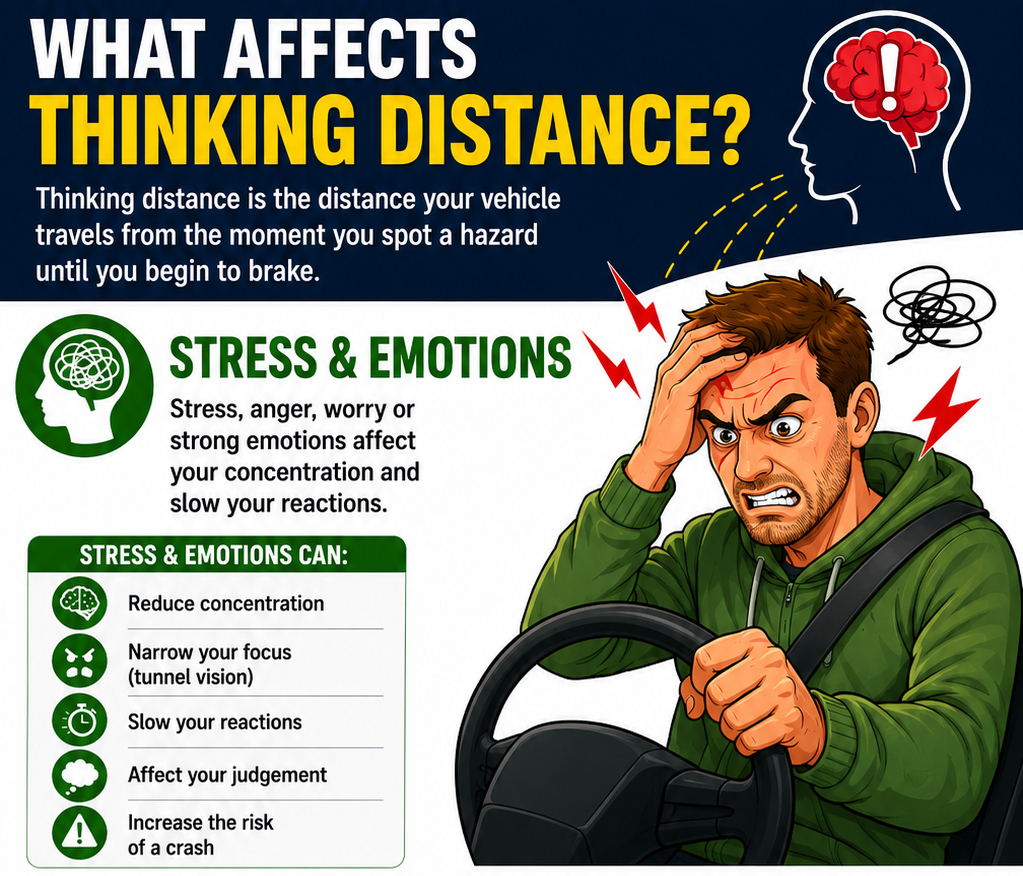
Stress, anger, anxiety and emotional upset can affect concentration and slow decision-making.
Visual acuity is paramount when driving. Individuals with uncorrected eyesight problems may not perceive potential hazards until it is too late, increasing thinking distance. Regular eye examinations and wearing prescribed eyewear can significantly enhance driving safety.
7. Inexperience
Moreover, even simple actions like adjusting the radio or conversing with passengers can divert attention and extend thinking distance. Drivers should strive to limit distractions by preparing before their journey and keeping interactions minimal while on the road.
New drivers may take longer to recognise developing hazards and decide on the safest action.
Emotional states play a significant role as well. High-stress levels can cloud judgement and slow reaction times. Techniques such as deep breathing or mindfulness can help drivers manage stress and maintain focus during critical moments.
Easy Way to Remember
Inexperience can compound all these factors. Novice drivers may lack the instinctive reactions or the experience to predict road scenarios, which can lead to longer thinking distances. It’s beneficial for new drivers to gain experience in various driving conditions under the supervision of more seasoned individuals.
THINK
One effective mnemonic for remembering these factors is the acronym THINK. Each letter represents a significant contributor to thinking distance. Understanding this can help drivers self-assess before getting behind the wheel.
T – Tiredness
H – Health (illness, medication)
I – Intoxication (alcohol or drugs)
Emotions can also impact what affects thinking distance significantly.
N – Not paying attention (distractions)
Inexperience plays a role in what affects thinking distance for new drivers.
K – Keeping emotions under control
Theory Test Question
Ultimately, the question remains: how can we effectively reduce thinking distance? Strategies include ensuring adequate rest, avoiding substances that impair judgement, and staying focused and calm while driving. By being proactive, individuals can significantly enhance their driving safety and reduce the risk of accidents.
Which factor is most likely to increase thinking distance and what affects thinking distance?
A) New tyres
B) Dry roads
C) Tiredness ✅
D) Good visibility
Explanation
Tiredness slows a driver’s reaction time, meaning they travel further before applying the brakes.
Theory Test Fact
In conclusion, understanding what affects thinking distance is vital for making informed decisions while driving. It is the responsibility of each driver to be aware of their limitations and the external factors that can influence their ability to react in critical situations.
Therefore, being knowledgeable about what affects thinking distance is essential for all road users. By recognising these factors and implementing strategies to mitigate their impact, drivers can contribute to safer roads for everyone.
Thinking distance increases when your reaction time increases. The main causes are tiredness, alcohol, drugs, distractions, poor eyesight, stress and inexperience.
Being aware of what affects thinking distance can improve road safety.