Common Pelican Crossing Mistakes
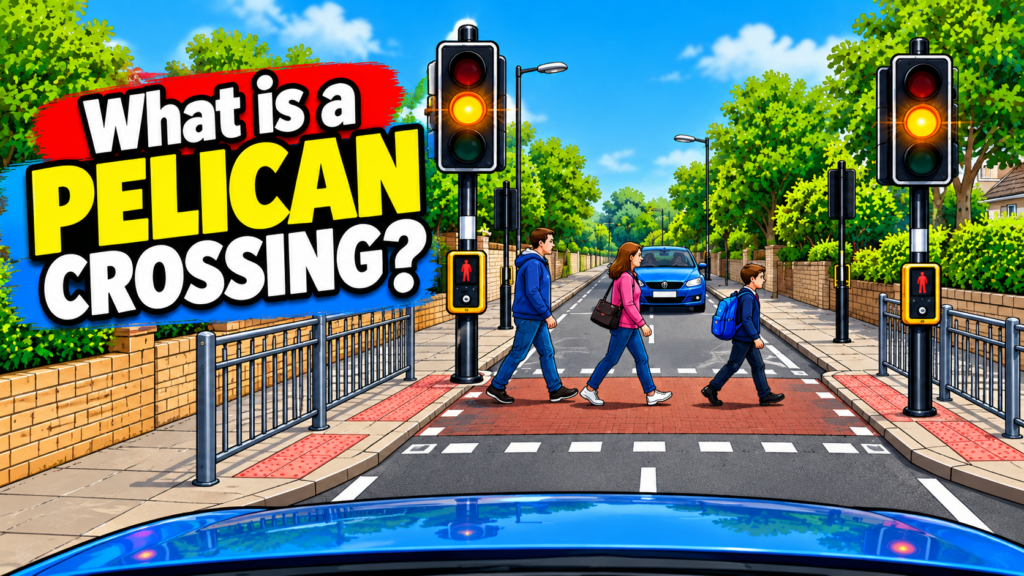
Pelican crossings are a common subject in the UK car theory test, but they can catch candidates out because they work differently from newer signal-controlled pedestrian crossings.
One of the most important differences is the flashing amber light. If you misunderstand what flashing amber means, it is very easy to choose the wrong answer in your theory test.
Here are the common pelican crossing mistakes you need to avoid.
1. common pelican crossing mistakes – Thinking Flashing Amber Means You Must Wait
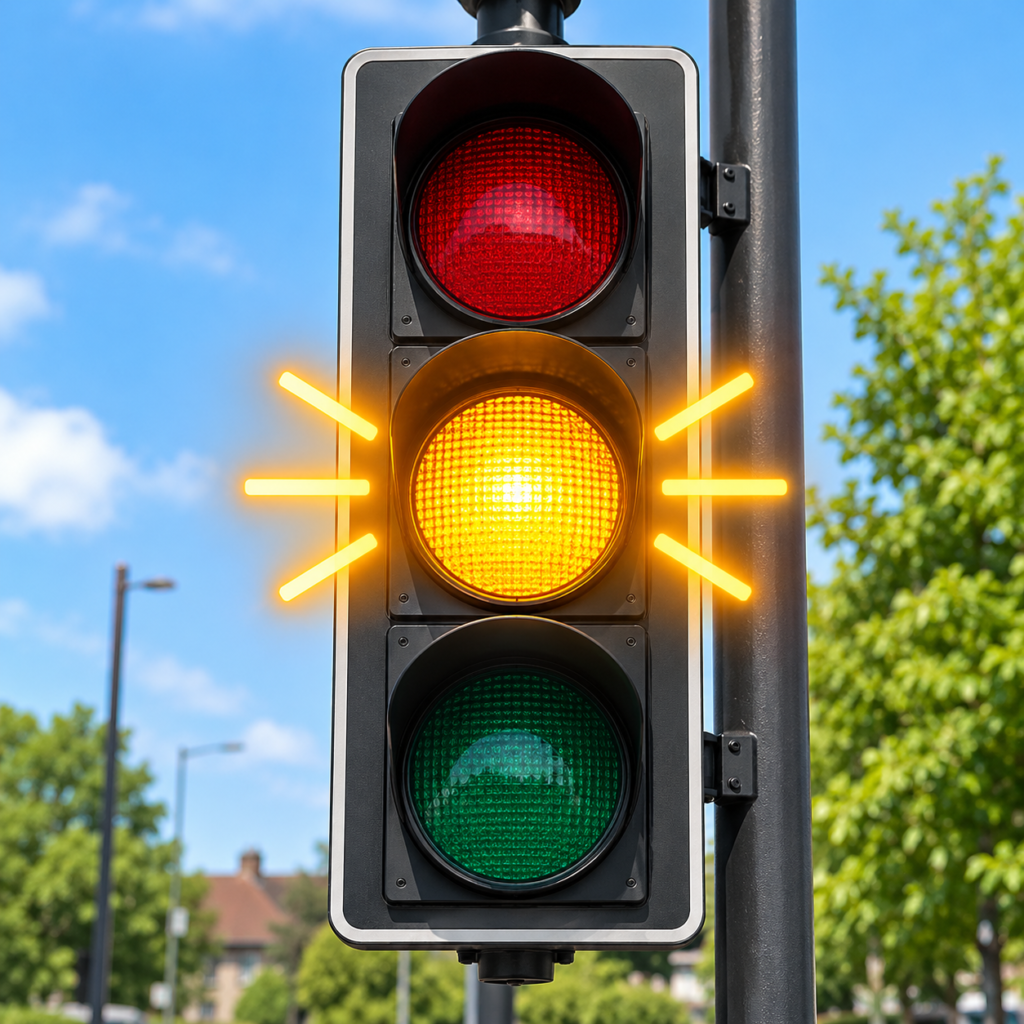
This is probably the biggest pelican crossing mistake. At a pelican crossing, the traffic-light sequence includes a flashing amber phase.
If the amber light is flashing, you must give way to any pedestrians who are still on the crossing. However, if the crossing is completely clear, you may proceed.
So remember:
Flashing amber + pedestrians on crossing = wait.
Flashing amber + crossing clear = you may proceed.
Don’t confuse flashing amber with a normal steady amber traffic light.
2.common pelican crossing mistakes – Moving Off While a Pedestrian Is Still Crossing
Another mistake is assuming that flashing amber automatically gives drivers permission to move.
It doesn’t.
If pedestrians are still on the crossing, you must give way and allow them to finish crossing safely.
Only proceed when the crossing is clear and it is safe to do so.
Theory Test Tip
If a question shows a flashing amber light with pedestrians still crossing, the correct response will normally involve waiting or giving way to the pedestrians.
3. common pelican crossing mistakes – Confusing a Pelican Crossing With a Puffin Crossing
Pelican and puffin crossings are both controlled by traffic lights, but they do not operate in exactly the same way.
A traditional pelican crossing has a flashing amber phase for drivers.
A puffin crossing does not use the same flashing amber sequence. Instead, the vehicle signals follow the normal sequence back towards green.
For theory-test questions, the flashing amber light is one of the biggest clues that you’re dealing with a pelican crossing.
4. common pelican crossing mistakes – Thinking Flashing Amber Means Accelerate
Flashing amber isn’t an instruction to accelerate through the crossing before the lights change. You should check carefully that the crossing is clear before proceeding.
There may be someone who needs more time to cross, such as an older pedestrian, a young child or somebody with reduced mobility. The key word is give way.
5. common pelican crossing mistakes – Stopping on the Crossing
You should never enter a pedestrian crossing unless you can clear it. If traffic ahead is queuing, don’t simply follow the vehicle in front onto the crossing. Hold back until there is enough room on the other side.
Blocking the crossing can prevent pedestrians from using it safely.
6. Overtaking Near a Pelican Crossing
The zig-zag markings around a pelican crossing are there for safety.
You must not overtake the moving vehicle nearest the crossing, and you must not overtake a vehicle that has stopped to give way to pedestrians.
A vehicle stopped at the crossing may be hiding a pedestrian from your view.
This is exactly the type of situation where knowing the reason behind a rule makes theory-test questions much easier to answer.
7. Parking on the Zig-Zag Lines
Another common mistake is thinking the zig-zag markings are simply there to warn you that a crossing is ahead.
They also create a controlled area around the crossing.
You must not park on the zig-zag markings.
Keeping this area clear helps drivers and pedestrians see each other properly.
8. Waving Pedestrians Across
It might seem polite to wave somebody across, but this can be dangerous.
You may have stopped, but another road user might not have seen the pedestrian.
Instead of waving pedestrians across, allow them to make their own decision about when it is safe to cross.
9. Forgetting to Check Before Moving Away
Even when your signal allows you to proceed, don’t simply move away without checking.
Look at the crossing and make sure pedestrians have cleared your path.
This is particularly important when the flashing amber light is showing.
Remember: a traffic light does not replace observation.
10. Confusing Steady Amber With Flashing Amber
This is an important distinction for the theory test.
A steady amber light normally means you must stop unless you’ve already crossed the stop line or are so close that stopping might cause an accident.
A flashing amber light at a pelican crossing means you must give way to pedestrians on the crossing. If nobody is on the crossing and it is safe, you may proceed.
They are two different signals with two different meanings.
Easy Way to Remember the Pelican Crossing Rule
When you see flashing amber, think:
PEDESTRIAN THERE? — WAIT.
CROSSING CLEAR? — GO IF SAFE.
Don’t just memorise that flashing amber means “go”. That’s where theory-test candidates can get caught out.
Quick Theory Test Question
You’re waiting at a pelican crossing. The red light changes to flashing amber, but a pedestrian is still crossing. What should you do?
A. Sound your horn
B. Drive around the pedestrian
C. Wait and give way to the pedestrian
D. Move forward slowly to encourage them to finish crossing
Correct answer: C — Wait and give way to the pedestrian.
The flashing amber signal allows you to proceed only when there are no pedestrians on the crossing and it is safe to move.
Final Theory Test Tip
Pelican crossing questions become much easier when you remember the three main points:
- Red means stop.
- Flashing amber means give way to pedestrians on the crossing.
- If the crossing is clear during flashing amber, you may proceed if it is safe.
Also remember the zig-zag restrictions, don’t block the crossing, and always check for pedestrians before moving away.
Get those rules straight and you’ll avoid some of the most common pelican crossing traps in the UK theory test.