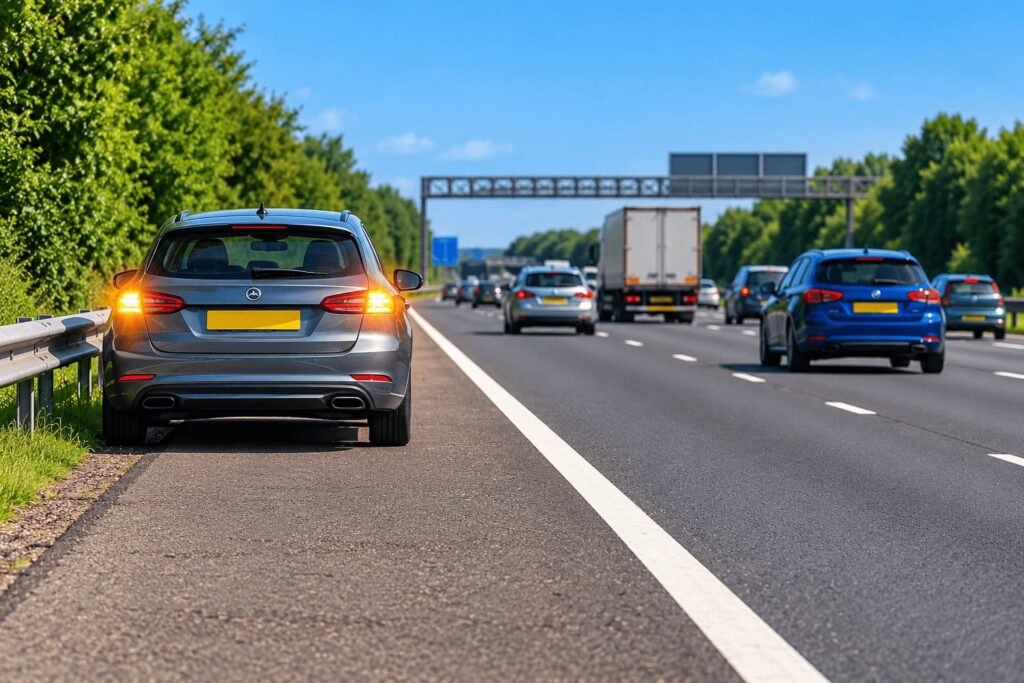
How to identify the hard shoulder on motorways
The hard shoulder is an important feature of motorway driving, serving as a safety zone for vehicles experiencing issues. Understanding its significance and proper usage is crucial for all drivers.
Runs along the left side of a motorway and is separated by a solid white line. It is important to recognize its boundaries and purpose to ensure safety on the road.
When driving on a motorway, you should always be aware of the road layout, including the positioning of the hard shoulder.
You can identify a hard shoulder as the wide strip of road running along the left-hand side of a motorway. It is normally separated from the main carriageway by a continuous solid white line. This line serves as a visual guide, indicating that the area is not meant for regular traffic.
Understanding the characteristics of the hard shoulder can help prevent accidents and ensure that you know where to stop in case of an emergency.
Unlike a normal traffic lane, the hard shoulder is not intended for everyday driving. It is usually wide enough for a vehicle to stop without remaining in a live traffic lane. This feature is critical for providing a safe space for vehicles that need to halt due to breakdowns or emergencies.
Additionally, learning how to properly use the hard shoulder can help you make informed decisions when faced with unforeseen circumstances on the motorway.
You may also see marker posts and emergency telephones positioned alongside it. These elements are there to assist drivers in emergencies, providing guidance and help when needed. Remember: solid white line on your left + wide strip of road beyond it = likely hard shoulder.
Marker posts typically have a reflective surface, making them easy to spot at night, while emergency phones are strategically placed to enhance safety.
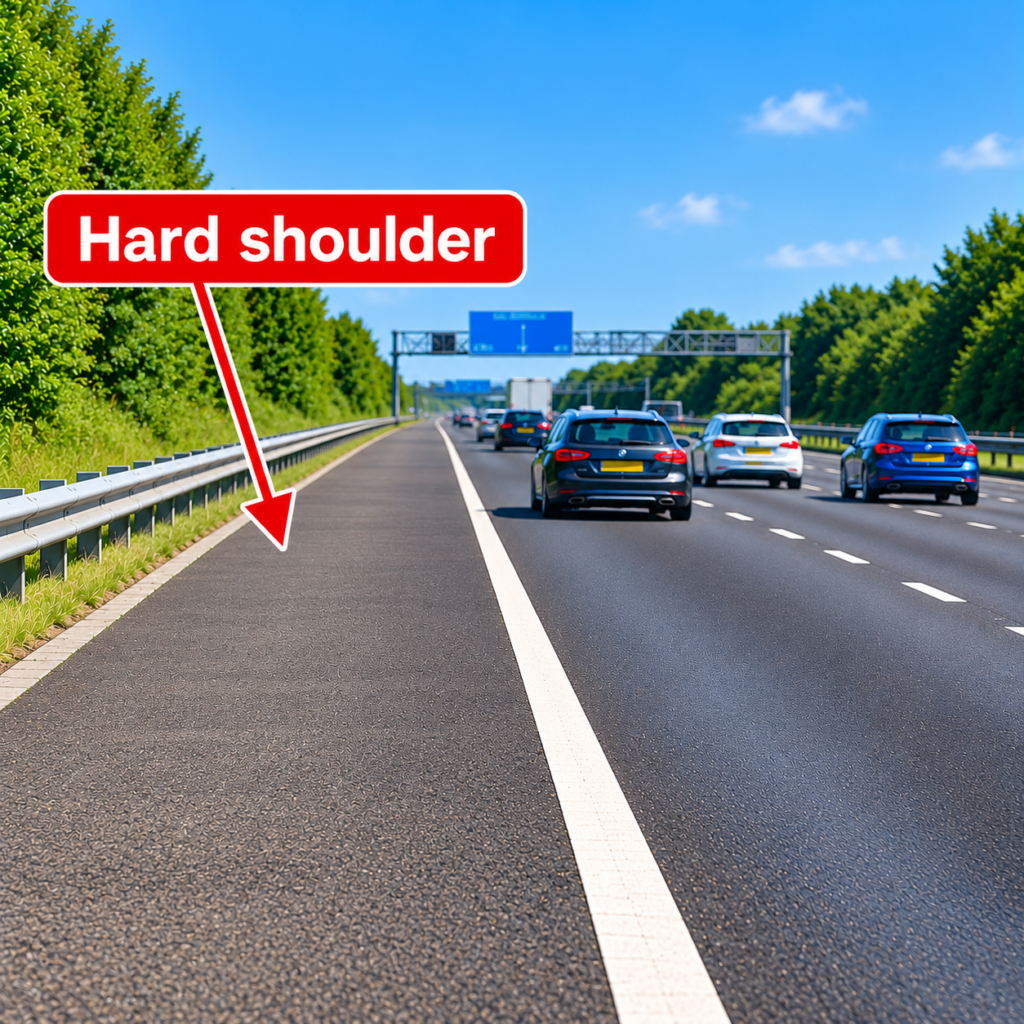
You can identify a hard shoulder as the wide strip of road running along the left-hand side of a motorway. It is normally separated from the main carriageway by a continuous solid white line. This line serves as a visual guide, indicating that the area is not meant for regular traffic.
Understanding the characteristics of the hard shoulder can help prevent accidents and ensure that you know where to stop in case of an emergency.
Unlike a normal traffic lane, the hard shoulder is not intended for everyday driving. It is usually wide enough for a vehicle to stop without remaining in a live traffic lane. This feature is critical for providing a safe space for vehicles that need to halt due to breakdowns or emergencies.
Additionally, learning how to properly use the hard shoulder can help you make informed decisions when faced with unforeseen circumstances on the motorway.
You may also see marker posts and emergency telephones positioned alongside it. These elements are there to assist drivers in emergencies, providing guidance and help when needed. Remember: solid white line on your left + wide strip of road beyond it = likely hard shoulder.
Marker posts typically have a reflective surface, making them easy to spot at night, while emergency phones are strategically placed to enhance safety.
Motorways often have variable speed limits and traffic conditions that can change rapidly. Understanding how to react when traffic signs indicate the use of the hard shoulder can significantly impact your safety and that of others. Always stay alert and prepared to follow instructions given by electronic signs overhead.
Additionally, it’s worth noting that some motorways have hard shoulders that can be converted into additional lanes during peak traffic times. These are often indicated by overhead signs. Familiarizing yourself with these systems can help you navigate motorways more effectively.
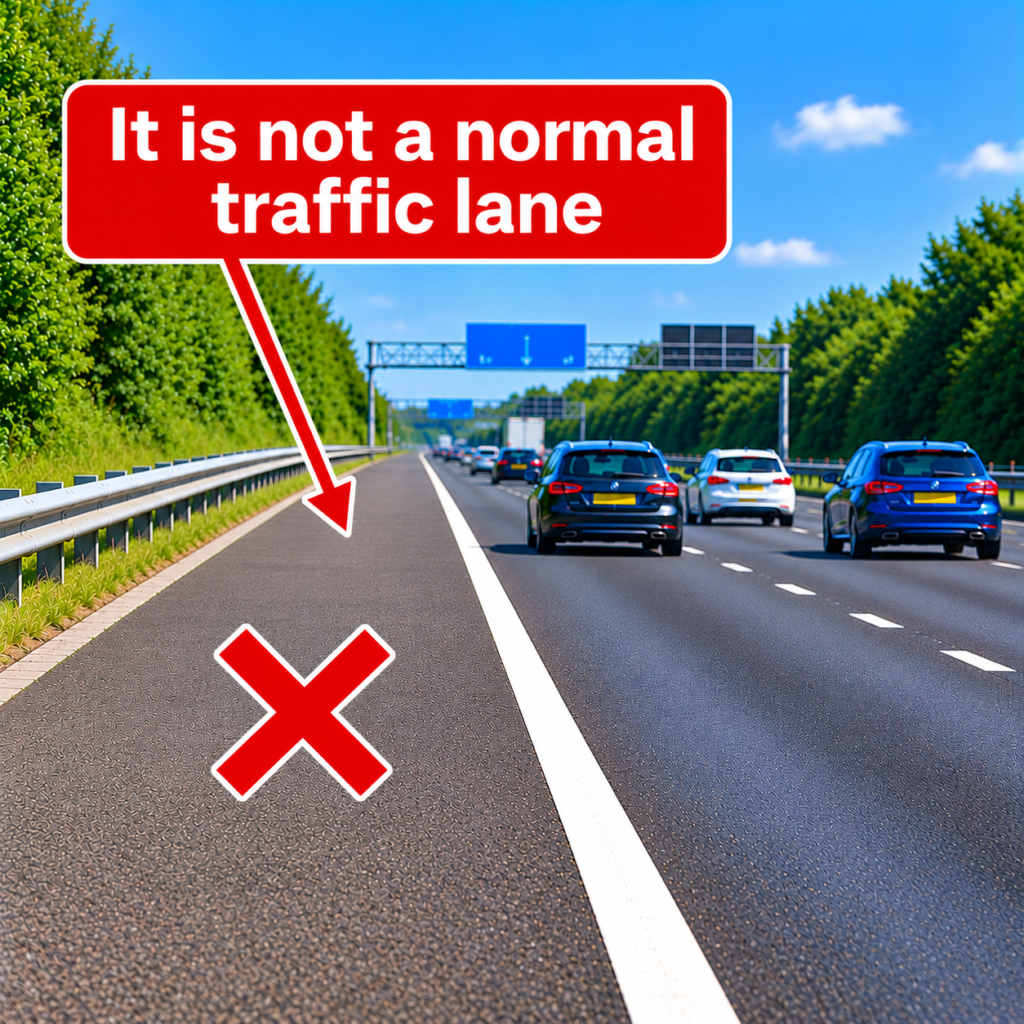
The hard shoulder is not normally a traffic lane and should be kept clear for emergencies. It is vital that all drivers understand this rule to maintain safety on the motorways. Using the hard shoulder improperly can lead to dangerous situations and significant accidents.
It’s also important to note that the hard shoulder may vary in width depending on the section of the motorway you are traveling on. Therefore, always be alert to your surroundings.
You must not use it simply to avoid congestion or get ahead of other traffic. It may be used if your vehicle breaks down or you have a genuine emergency. Police, traffic officers, or motorway signs may also direct you to use it. Following these instructions is crucial for ensuring safety for all road users.
Additionally, being aware of the circumstances that allow you to use the hard shoulder can help you act swiftly in critical situations.
Never drive on the hard shoulder unless there is a valid reason or you are instructed to do so. This rule is in place to protect you and other motorists. Familiarizing yourself with the proper use of the hard shoulder is essential to prevent making dangerous errors while driving on a motorway.
motorways have a hard shoulder that can be used for emergencies or when signs tell you to