Motorway Studs – What Colour Are the Reflective Studs Between a Motorway and Its Slip Road?
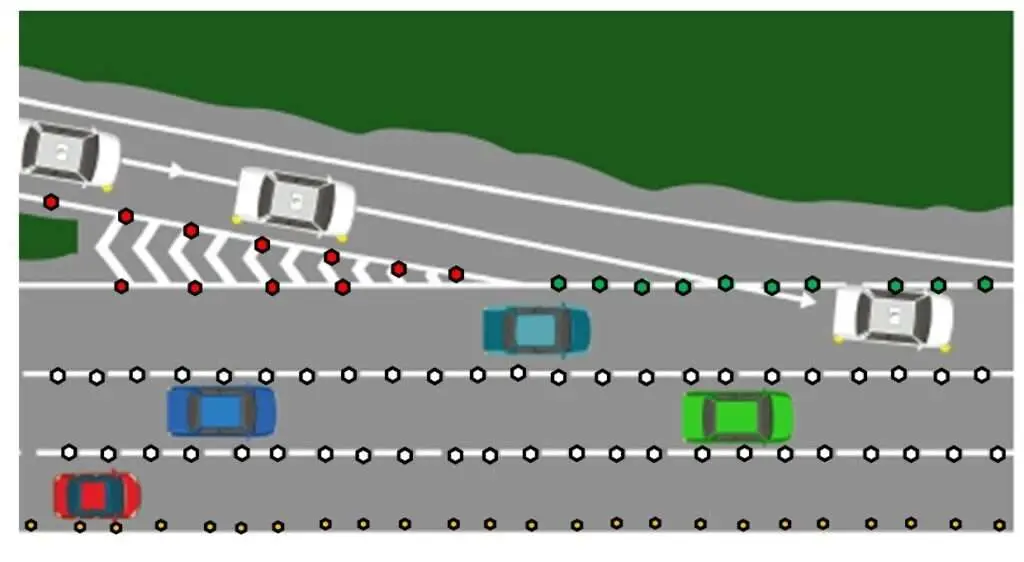
Motorway reflective studs colours – (Cats eyes) If you’ve ever driven along a UK motorway at night, you’ll know the feeling: the road darkens, the weather closes in, and suddenly those reflective studs become your most loyal guides. These tiny cat’s eyes have been part of British road design for generations, and although they’re simple, they play a huge role in safety.
One question learners and newly qualified drivers ask again and again is:
What colour are the reflective studs between the motorway and its slip road?
The answer is green.
And the reasoning behind it is worth understanding properly.
In this article, we’ll break down what these studs do, why they matter, and how they help you stay safe — especially when merging, exiting, or joining a motorway.
What Do Green Reflective Studs Mean?
Green studs mark areas where you can enter or leave the motorway. They sit between the main carriageway and the slip road, acting as a visual cue that the road layout is changing.
They serve three key purposes:
- Highlighting the start and end of a slip road
- Helping drivers judge when to adjust speed and positioning
- Giving a clear, reliable reference point in poor visibility
This colour coding has been part of UK motorway design for decades. It’s a system that works just as well today as it did when motorways were first built.
Why Green Studs Are So Important for Road Safety
Slip roads are some of the busiest and most stressful sections of a motorway. They’re the places where speed, judgment, and awareness must come together. Green studs support drivers by providing clarity exactly when you need it most.
1. They give clear merging and exiting guidance
A well-timed merge depends on you knowing precisely where the slip lane begins. The studs show this boundary even when painted markings fade or become hidden by rain.
2. They prevent dangerous last-second manoeuvres
Missed exits often cause sudden cut-across movements. With green studs marking the zone clearly, drivers are less likely to panic or make rash decisions.
3. They boost confidence at night and in bad weather
Rain, spray, fog, and glare can turn road markings into blurred white streaks. Studs reflect your headlights cleanly, giving you a solid, dependable reference point.
These small markers don’t rely on sensors, satellites, or digital mapping. They’re mechanical, direct, and remarkably effective, proving that sometimes the older systems remain the most reliable.
Other Reflective Stud Colours on UK Motorways
To understand green studs fully, it helps to know the rest of the motorway colour code:
- White – separates lanes on the main carriageway
- Red – marks the left edge of the motorway
- Amber – marks the central reservation
- Green – marks slip roads and authorised access points
- Fluorescent Yellow-Green – occasionally used at roadworks
When learners understand these colours, their motorway driving becomes safer, calmer, and much more predictable.
Why Every UK Driver Should Know This
Motorway driving is one of the most important skills tested under the wider umbrella of the Highway Code and DVSA driving standards. Reflective studs might seem like a tiny detail, but they’re essential for:
- hazard perception
- lane discipline
- safe merging
- confident night-time driving
If you’re training drivers or helping learners prepare for theory and practical tests, teaching the meaning of reflective studs pays dividends. Confidence comes from clarity, and these studs are there to give exactly that.
Motorway Roads Studs – Reflective stud colours and their meaning
Green reflective studs between a motorway and its slip road are more than coloured dots in the tarmac. They’re long-proven safety tools that guide drivers through the busiest and most complex parts of fast-moving roads.
Whether you’re a learner, an ADI, or a seasoned driver brushing up on knowledge, understanding these markers is a small change that can make a big difference on the road.
What colour are the reflective lights studs between a motorway and its slip road, and why are they important?
The reflective light studs between a motorway and its slip road are green. They are important because they mark the start and end of slip roads, help drivers judge when to adjust speed and positioning, and provide reliable visual cues in poor visibility conditions, thus enhancing road safety.
What do green reflective studs indicate on UK motorways?
Green reflective studs indicate areas where you can enter or leave the motorway, specifically marking slip roads and access points between the main carriageway and the slip road.
Why are green studs crucial for motorway safety, especially when merging or exiting?
Green studs are crucial because they give clear guidance for merging and exiting, help prevent last-minute dangerous maneuvers, and offer dependable visual cues at night or in bad weather, which are essential for safe driving.
What are the other colours of reflective studs on UK motorways and their purposes?
White studs separate lanes on the main carriageway, red studs mark the left edge of the motorway, amber studs indicate the central reservation, green studs mark slip roads, and fluorescent yellow-green is sometimes used in roadworks.
Why is it important for drivers to understand the meaning of different coloured reflective studs?
Understanding the colours helps drivers improve hazard perception, lane discipline, safe merging, and confident night-time driving, contributing to overall motorway safety.