Motorway Reflective Studs (Cat’s Eyes)
Category: Motorway Rules — UK Driving Theory Test
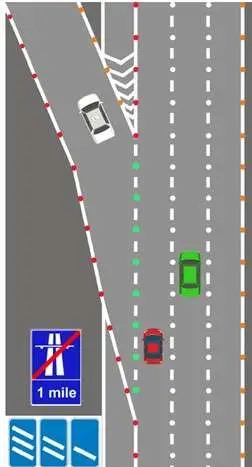
What Are Reflective Studs?
Motorway Reflective studs, often known as cat’s eyes, are small markers that help drivers see lane boundaries in low light or poor weather. They reflect light from headlights, guiding drivers safely at night or in fog.
They’re fitted on:
- Motorways
- Dual carriageways
- A and B roads
- Junctions and roundabouts
- Lay-bys and temporary road layouts
Why Are Reflective Studs Important?
Reflective studs help drivers:
- Keep to their lane in the dark
- Identify slip roads, hard shoulders, and central reservations
- React earlier to bends or changes in the road layout
- Drive safely in mist, rain, and snow
They’re especially useful on fast roads, where visibility can change quickly.
Reflective Stud Colours and Their Meanings (for the Theory Test)
| Stud Colour | Position on the Road | Meaning |
|---|---|---|
| Green | Between the motorway and slip roads | Marks the start or end of a slip road; also used at lay-bys or temporary lanes |
| Red | Along the left-hand edge of the carriageway | Shows the boundary with the hard shoulder — do not cross |
| Amber | Along the right-hand edge of the carriageway | Marks the line next to the central reservation |
| White | Between motorway lanes | Divides lanes of traffic moving in the same direction |
| Fluorescent Green/Yellow | Temporary positions on the motorway | Indicates roadworks or changes to the normal layout |
Theory Test Tip:
A common question asks “What do amber reflective studs on the motorway indicate?”
The correct answer is: They mark the central reservation (right-hand edge) of the carriageway.
Motorway Reflective Studs Remember:
- Green = slip roads and lay-bys
- Red = hard shoulder
- Amber = central reservation
- White = lane dividers
- Green/Yellow = roadworks
Motorway Reflective Studs
Reflective studs are there to keep you safe — guiding, warning, and informing you as you drive.
Understanding them isn’t just about passing your theory test — it’s about becoming a more observant, confident, and responsible driver on every journey.
What are motorway reflective studs and what purpose do they serve?
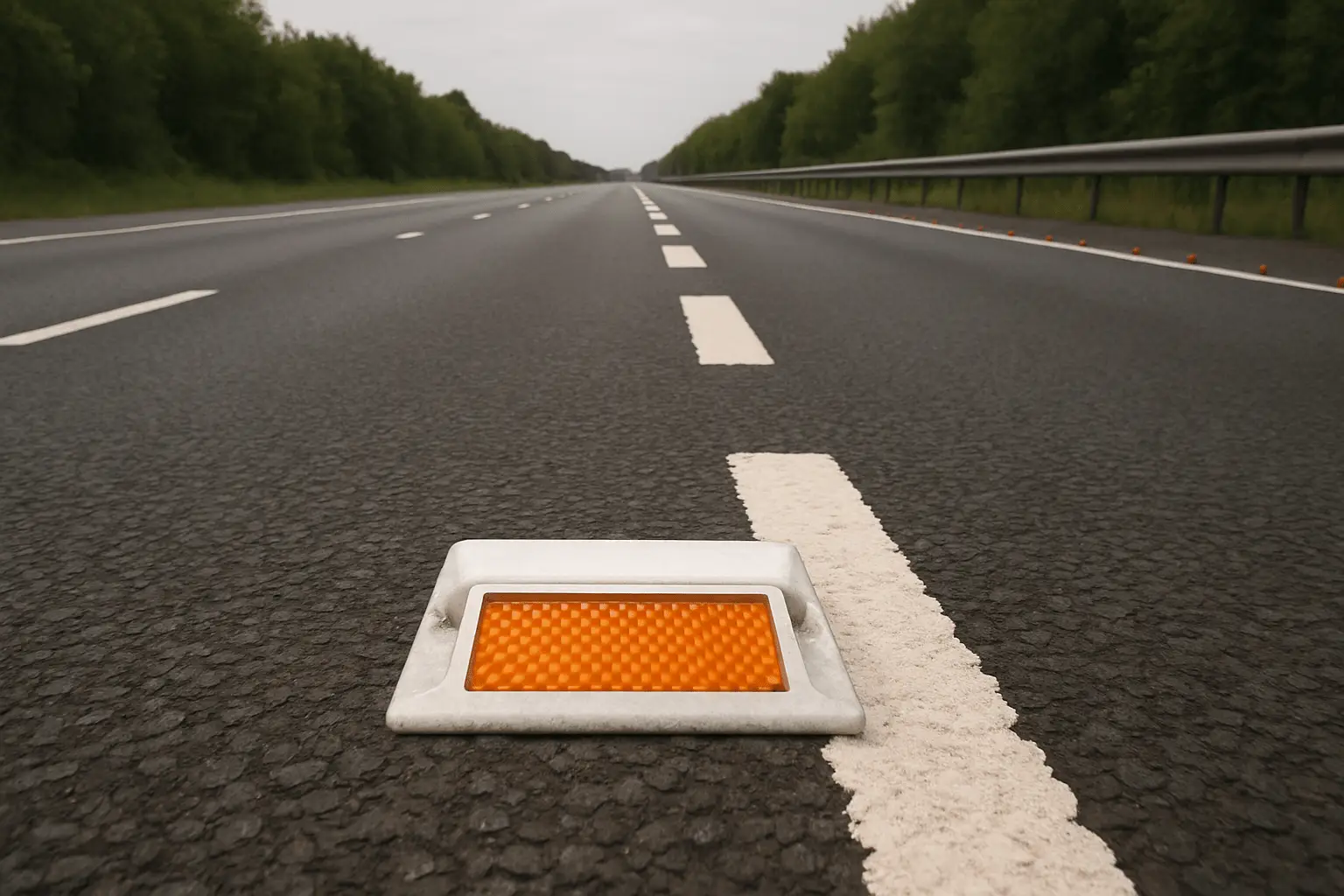
Motorway reflective studs, also known as cat’s eyes, are small markers placed along roads to help drivers see lane boundaries in low light or poor weather conditions by reflecting headlights, thereby guiding them safely.
Where are reflective studs typically located on the roads?
Reflective studs are usually fitted on motorways, dual carriageways, A and B roads, junctions, roundabouts, lay-bys, and temporary road layouts.
Why are reflective studs important for drivers?
Reflective studs help drivers stay in their lane during darkness, identify slip roads, hard shoulders, and central reservations, and react earlier to bends or changes in the road layout, especially in mist, rain, or snow.
What do the different colours of motorway studs mean?
Green studs indicate slip roads and lay-bys, red studs mark the boundary with the hard shoulder, amber studs indicate the central reservation, white studs divide lanes moving in the same direction, and fluorescent green/yellow studs are used for roadworks or layout changes.
What is the specific meaning of amber reflective studs on the motorway?
Amber reflective studs on the motorway mark the line next to the central reservation, indicating the boundary that should not be crossed.