Top 10 Reasons People Fail the UK Driving Theory Test
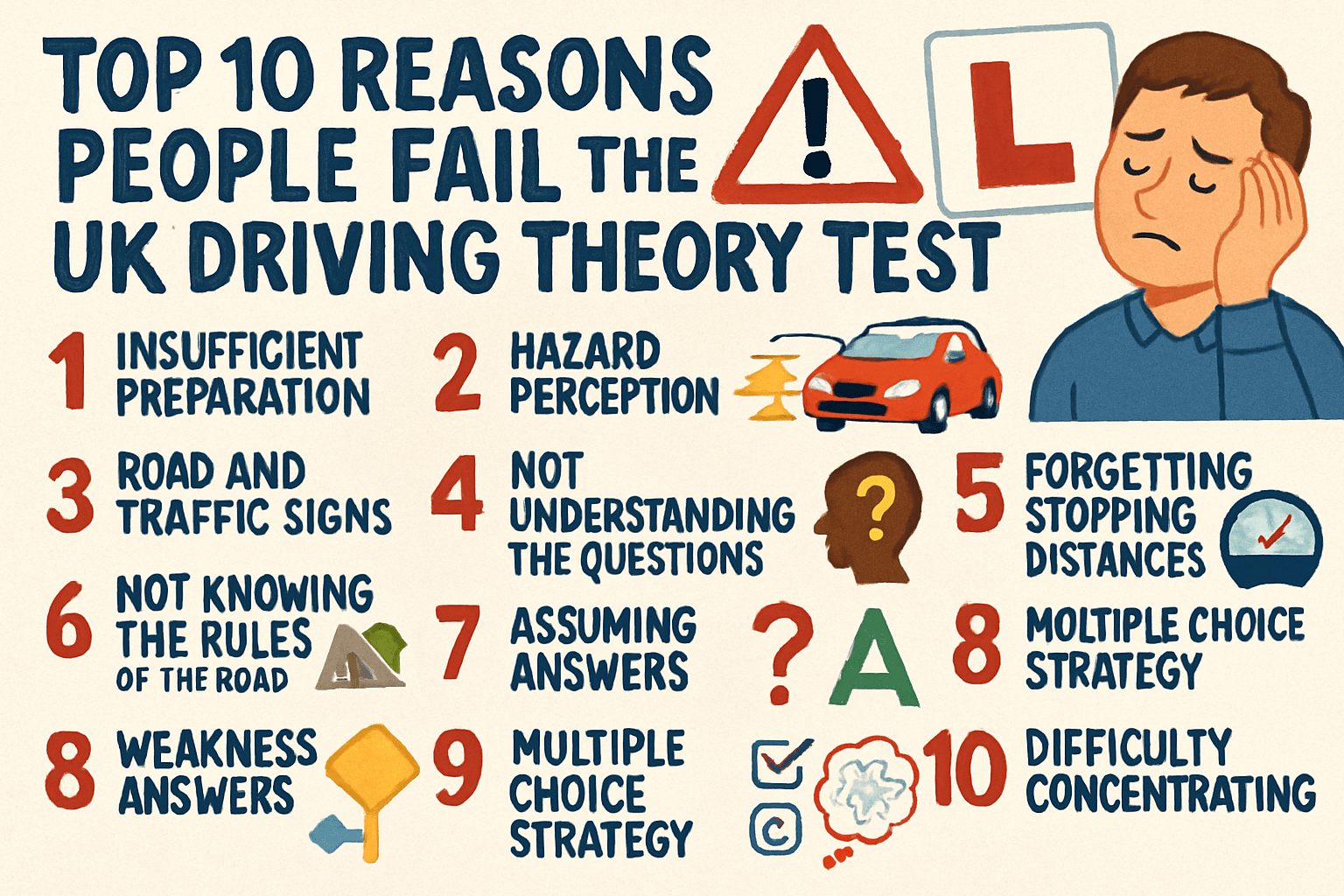
Top 10 Reasons People Fail the Theory Test
Top 10 reasons for failing the theory test – Failing the theory test is rarely about intelligence. It’s about preparation, habits, and underestimating a test that quietly demands respect. The rules of the road haven’t changed much over the years — but the way people approach learning them has.
Top 10 reasons for failing the theory test
Here are the ten most common reasons candidates fail, year after year.
1. Treating the Theory Test as “Common Sense”
This is the biggest mistake of all.
The Highway Code is not a set of opinions — it’s a rule book. Many questions hinge on specific wording, legal duties, or priority rules. Guessing based on what “feels right” is a fast route to failure.
Good drivers know the rules. Great drivers respect them
2. Not Studying the Highway Code Properly
Apps are useful, but they’re not a replacement for the Highway Code.
Candidates who skip reading it miss vital details:
- Legal requirements (MUST vs SHOULD)
- Pedestrian and cyclist priorities
- Junction and lane discipline rules
The theory test rewards those who’ve done their homework the traditional way.
Top 10 reasons for failing the theory test
3. Over-Practising Questions, Under-Understanding Answers
Doing hundreds of mock questions doesn’t help if you’re memorising answers rather than learning why they’re correct.
The DVSA regularly rephrases questions. If your knowledge is shallow, unfamiliar wording will catch you out.
Understanding beats repetition — every time.
4. Ignoring Hazard Perception Until the Last Minute
Many candidates focus heavily on the multiple-choice section and assume hazard perception is “easy marks”.
It isn’t.
Click too early, too late, or in a pattern — and the system marks you down. Hazard perception requires timing, anticipation, and restraint. Just like real driving.
5. Clicking Too Much in Hazard Perception
More clicks do not mean more points.
Excessive or rhythmic clicking triggers the anti-cheating system, scoring you zero for that clip. This single mistake alone has caused thousands of otherwise good candidates to fail.
Calm, measured clicks win the day.
6. Weak Knowledge of Road Signs and Markings
Road signs are a favourite testing ground for the DVSA — because they matter.
Common problem areas include:
- Warning signs vs regulatory signs
- Temporary roadwork signs
- Road markings at junctions and crossings
If you can’t instantly recognise signs, you’re leaving marks on the table.
7. Poor Time Management in the Test
Rushing leads to careless mistakes. Dwelling too long creates panic.
Some candidates:
- Spend too long on early questions
- Don’t flag tricky questions to return to
- Let nerves speed them up unnecessarily
The test is generous on time — but only if you stay composed.
8. Learning Out-of-Date or Unreliable Information
Old books, unofficial websites, and hearsay from friends can do real damage.
Rules change. The DVSA updates questions. Using approved, current materials isn’t optional — it’s essential.
Trust proper sources, not social media shortcuts.
9. Letting Nerves Take Control
Knowledge disappears quickly under pressure if confidence hasn’t been built properly.
Many failures come from:
- Second-guessing correct answers
- Changing answers unnecessarily
- Rushing hazard perception clips
Steady preparation builds calm confidence. There’s no substitute for it.
10. Booking the Test Too Soon
Perhaps the most avoidable reason of all.
Candidates often book because:
- “Everyone else has passed”
- “I’ve done a few mock tests”
- “I just want it over with”
The theory test isn’t something to get through. It’s something to be ready for.
Theory Test Success
The theory test rewards the same values that make safe drivers:
- Patience
- Discipline
- Respect for the rules
Pass rates improve dramatically when learners slow down, study properly, and prepare the old-fashioned way.
Get the foundations right — and the pass will follow.
What is the most common mistake candidates make when approaching the UK driving theory test?
The most common mistake is treating the Theory Test as ‘Common Sense’, which leads to guessing instead of understanding the rules, potentially resulting in failure.
Why is studying the Highway Code thoroughly important for passing the theory test?
Studying the Highway Code properly is essential because it contains vital legal requirements, priority rules, and understanding of road signs that are crucial for answering questions correctly.
How can over-practising mock questions harm my chances of passing?
Over-practising mock questions without understanding why answers are correct can lead to memorising responses rather than true understanding, and new question phrasing by DVSA may catch you out if your knowledge isn’t solid.
In what ways can nerves affect your performance during the test?
Nerves can cause you to second-guess correct answers, change answers unnecessarily, or rush through hazard perception clips, all of which can lead to failure if not managed through proper preparation.
Why is it advisable not to book the test too soon?
Booking the test too early can be a mistake because candidates might not be fully prepared, relying instead on hearsay or mock test success, rather than ensuring they are truly ready to pass.