Urban Clearway: Meaning, Rules and Theory Test Guide
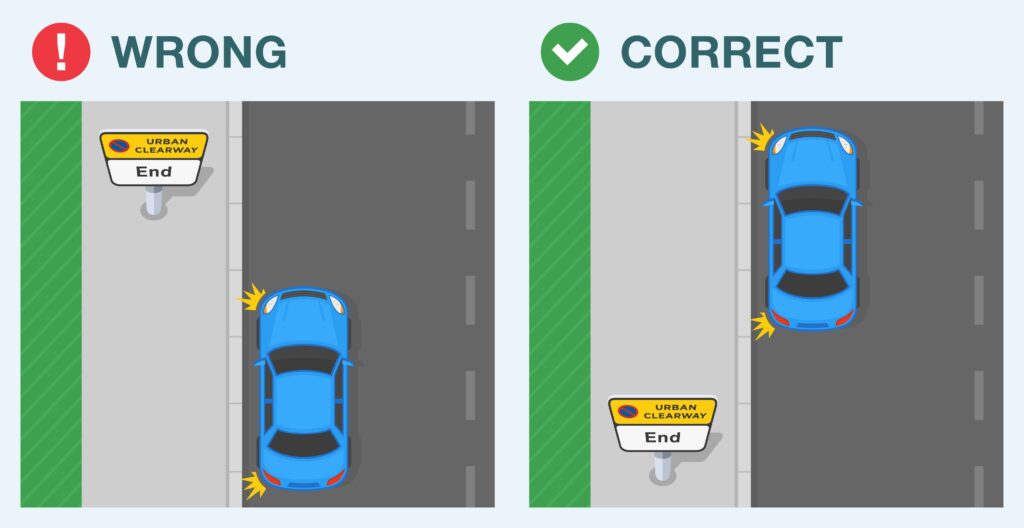
If you’re revising for your UK driving theory test, one road sign you need to understand is the urban clearway. Many learner drivers confuse it with yellow lines, but the rules are different.
An urban clearway is designed to keep traffic moving during busy periods by preventing vehicles from stopping on the road, except for one important exception.
What is an Urban Clearway?
An urban clearway is a road where stopping is prohibited during the times shown on the sign, unless you’re stopping briefly to pick up or set down passengers. There are usually no yellow lines or special road markings, so you must rely on the roadside signs. The signs are repeated after junctions to remind drivers the restriction is still in force.
What does the Urban Clearway sign mean?
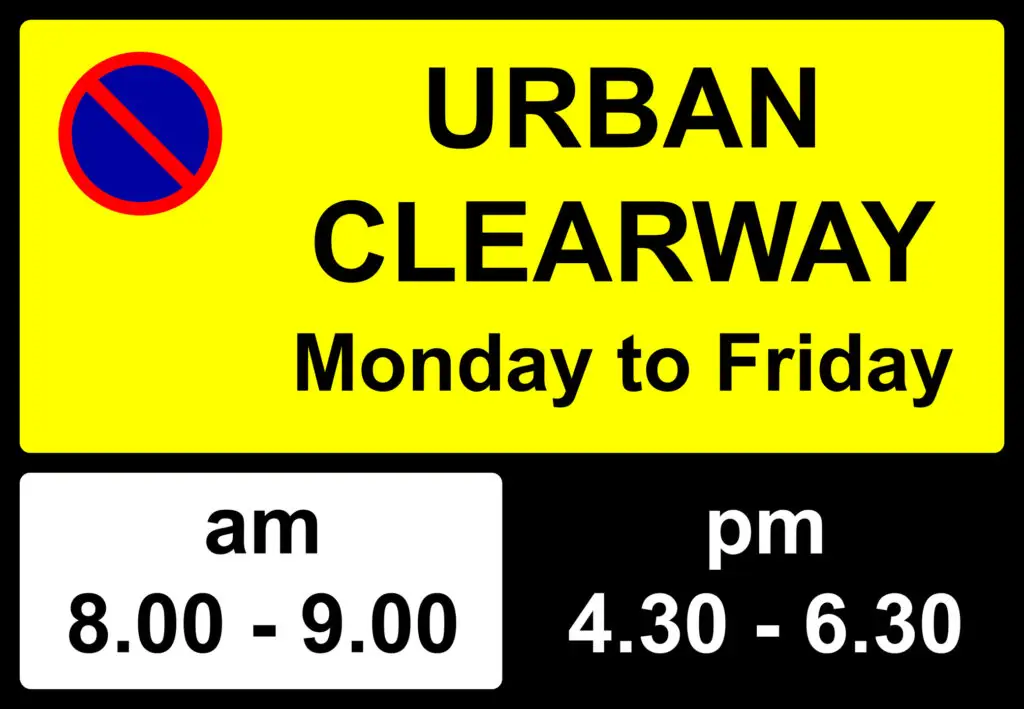
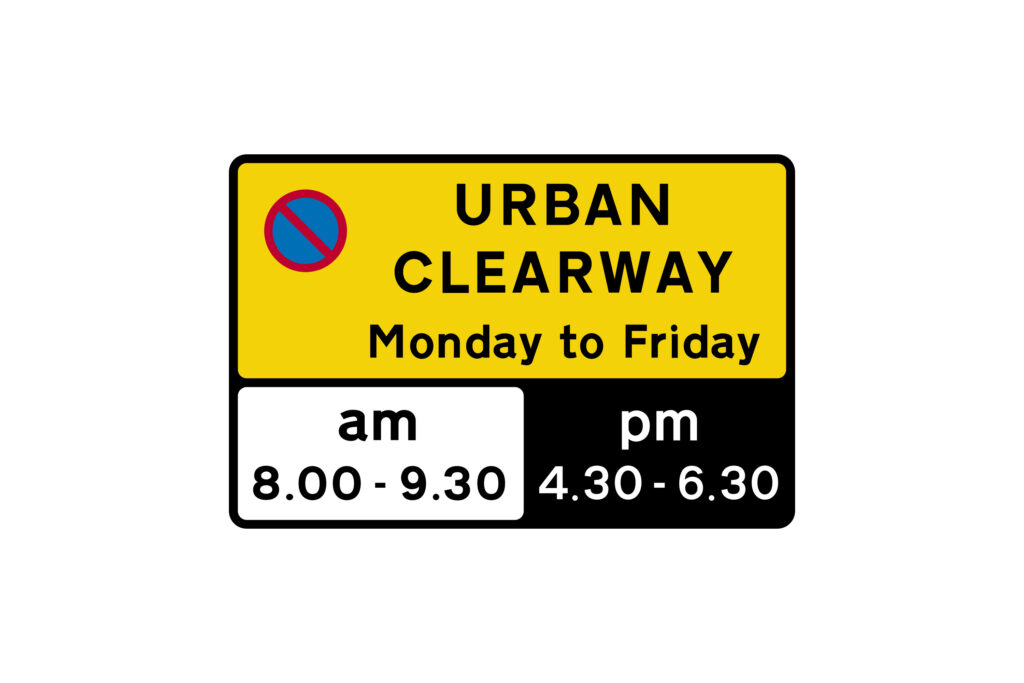
The sign displays:
- The Urban Clearway symbol.
- The days and times the restriction applies.
- Sometimes the words “Urban Clearway”.
For example:
Mon–Fri 7:30 am – 9:30 am and 4:00 pm – 6:30 pm
This means you must not stop during those times unless you’re picking up or dropping off passengers.
Outside those hours, you may stop if there are no other parking or waiting restrictions in place.
This means you must not stop during those times unless you’re picking up or dropping off passengers.
Yes, but only in limited circumstances.
You can:
- Pick up passengers.
- Drop off passengers.
- Stop if traffic conditions force you to.
You cannot:
- Wait for someone.
- Park your vehicle.
- Load or unload goods.
- Stop to make a phone call.
- Leave your vehicle unattended.
The Highway Code states that you must not stop or park on an urban clearway during its hours of operation, except to pick up or set down passengers.
Why are urban clearways used?
Urban Clearways are commonly found on busy routes into towns where parked vehicles would reduce traffic flow.
Their purpose is to:
- Reduce congestion.
- Improve traffic flow.
- Keep bus routes moving.
- Reduce delays during peak travel times.
- Improve road safety.
Urban Clearway vs Clearway
Many learners confuse these two signs.
Many learners confuse these two signs.
Urban Clearway and the Highway Code
According to Highway Code Rule 240, you must not stop or park on an urban clearway during its hours of operation except to pick up or set down passengers.
Theory Test Tip
If you see an Urban Clearway sign in your theory test, remember this simple phrase:
urban clearway = No stopping during the stated times, except for passengers.
This is one of the most common theory test questions because many learners mistakenly believe they can stop briefly to check directions or load shopping.
This is one of the most common theory test questions because many learners mistakenly believe they can stop briefly to check directions.
Learner drivers often think they can:
- Stop for a quick phone call.
- Wait for someone to arrive.
- Load or unload shopping.
- Park if there are no yellow lines.
All of these are incorrect during the Urban Clearway operating times.
Quick Summary
- An Urban Clearway prevents stopping during the times shown.
- You may only stop briefly to pick up or drop off passengers.
- There are usually no yellow lines.
- Always check the roadside signs for the operating times.
- Outside the displayed times, normal parking rules apply unless other restrictions are in place.
Understanding the urban clearway sign is essential for passing your UK driving theory test and for driving safely on busy urban roads. If you remember that it’s designed to keep traffic moving and only allows brief passenger pick-up or drop-off during its operating hours, you’ll be well prepared for both the theory test and real-world driving.