The Hidden Dip sign is a triangular warning sign used in the UK to warn drivers that the road drops away ahead, but the dip cannot be seen clearly until you are very close to it.
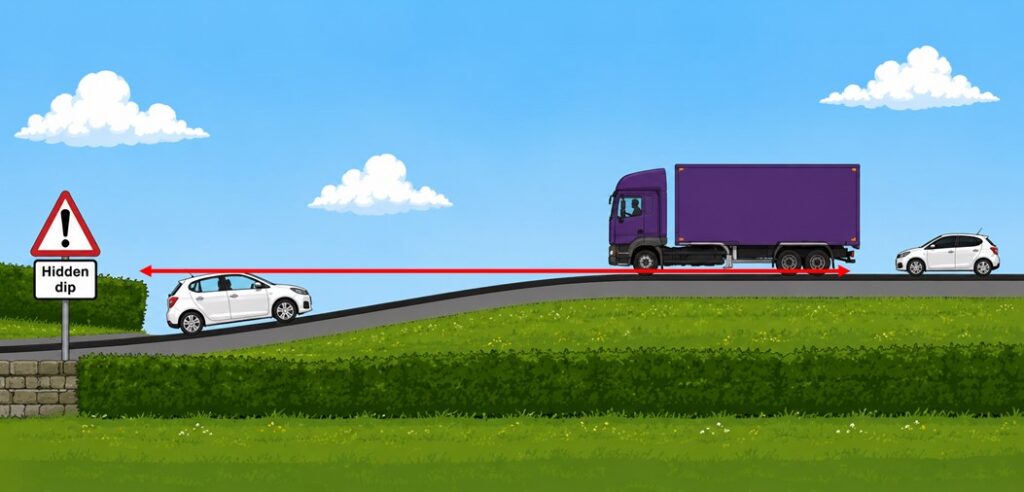
The Hidden Dip sign is a triangular warning sign used in the UK to warn drivers that the road drops away ahead, but the dip cannot be seen clearly until you are very close to it. This sign is crucial for ensuring drivers remain vigilant and adjust their driving behaviour in potentially hazardous conditions. When approaching areas with a hidden dip sign, it’s essential to be aware of your surroundings and understand the implications of the sign to avoid accidents.
Interpreting the Hidden Dip Sign: The hidden dip sign serves as a warning for drivers to anticipate changes in road conditions. This is particularly vital in areas where the terrain is undulating, as visibility can be significantly compromised. The warning alerts you to slow down and prepare for any sudden changes, like a steep descent or the presence of other road users. Remember that the sign not only indicates a dip but also suggests that the road may not be as straightforward as it appears.
What it means:
- The road falls into a depression or valley.
- Vehicles approaching from the opposite direction may be hidden from view.
- The dip can reduce your ability to see hazards ahead.
- The road may be steeper than it first appears.
Why Hidden Dips Are Dangerous: Hidden dips can create a false sense of security, especially for inexperienced drivers. They may not realise the potential hazards until it’s too late. In these areas, the risk of accidents increases significantly. For instance, a driver might misjudge the speed of an approaching vehicle or fail to see cyclists or pedestrians who could be obscured by the dip. Understanding the implications of the hidden dip sign can prevent dangerous situations from arising.
Proper education about hidden dips should include real-life examples, illustrating how these dips have contributed to accidents. For instance, consider a case where a large vehicle was unable to stop in time when approaching a hidden dip, leading to a serious collision. Such examples can reinforce the importance of adhering to the warnings provided by signs.
Why is it dangerous?
A hidden dip can:
- Conceal oncoming vehicles.
- Hide cyclists, horses, pedestrians, or slow-moving traffic.
- Cause drivers to misjudge overtaking opportunities.
- Reduce visibility significantly, especially at higher speeds.

What should a learner driver do?
Advice for Learner Drivers
For learner drivers, recognising the hidden dip sign is just the beginning. They must learn to apply the MSPSGL Approach effectively:
MSPSGL Approach
Additionally, learners should practice these principles in a safe environment, such as during driving lessons, where they can receive guidance and feedback from their instructor.
Key Teaching Points
Instructors should emphasise the following points:
✅ Learners should treat hidden dips similarly to blind summits, always approaching with caution.
✅ If visibility is limited, learners should refrain from overtaking and wait until they can see the road clearly.
✅ It’s essential to expect that hazards may emerge unexpectedly from the hidden area that the dip obscures.
Discussion Points for ADIs
- Mirrors – Check behind.
- Position – Maintain a safe road position.
- Speed – Reduce speed if visibility is restricted.
- Gears – Select an appropriate gear.
- Look – Look as far ahead as possible and scan for clues.
During driver instruction, ADIs can facilitate discussions around:
Teaching Points for Learners
Memorable Phrase for Drivers
In conclusion, the hidden dip sign is an essential warning that should not be ignored. By understanding its significance and applying the knowledge gained, drivers will be better equipped to handle the challenges posed by hidden dips and enhance overall road safety.
In summary, recognising the hidden dip sign is crucial for safe driving. By understanding its meaning and implications, drivers can make informed decisions to navigate these potentially hazardous areas. Always remember to approach hidden dips with caution and prepare for potential dangers. Emphasising the importance of the hidden dip sign in driving education can help create safer roads for everyone.
“If the road disappears, expect something to reappear.” This phrase serves as a reminder for drivers to remain cautious when approaching a hidden dip sign. It emphasises the need to reduce speed and be prepared for any unexpected hazards that may be hidden within the dip.
✅ Treat it like a blind summit, but the road goes down instead of up.
✅ If you can’t see that it’s clear, don’t overtake.
✅ Expect a hazard to appear from the hidden area.
✅ Be prepared to stop within the distance you can see to be clear.
✅ Learners should be prepared to stop within the distance they can see to be clear, ensuring they have sufficient reaction time.
Typical ADI Part 2 & Part 3 Discussion
A hidden dip is often used to assess:
- Hazard perception.
- Planning and anticipation.
- Speed adjustment.
- Use of the limit point of vision.
- Whether the pupil can drive safely when visibility is restricted.
Easy Way to Remember
“If the road disappears, expect something to reappear.”
The sign is warning that the road ahead drops out of sight, so you should reduce speed and be prepared for hazards that may be hidden within the dip.