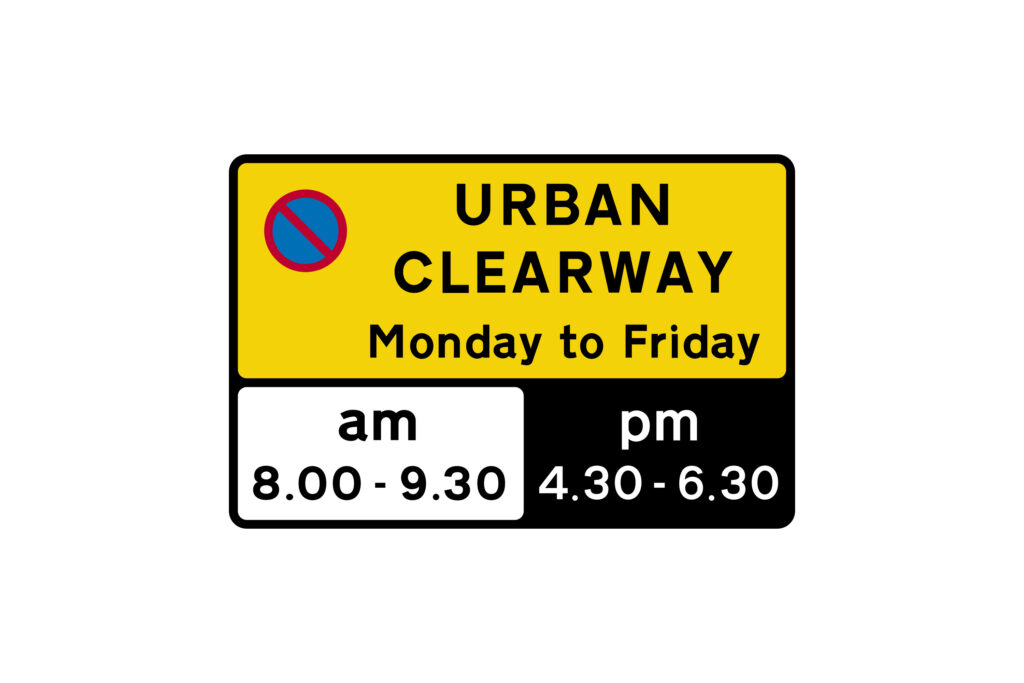
How to understand what an Urban Clearway is: Meaning, Rules and Theory Test Tips
How to understand what an Urban Clearway is – If you’ve ever seen an Urban Clearway sign and wondered what does this mean, you’re not alone. It’s one of the most misunderstood road signs in the UK. To truly understand what an Urban Clearway is, we need to explore its significance on the roads.
The good news is that it’s actually very simple once you understand what a Clearway is first.
In this guide, we’ll explain the difference between a Clearway and an Urban Clearway, show you when you can stop, and share an easy way to remember the rules for your theory test.
What is a Clearway?
How to Understand What an Urban Clearway Is
The clue is in the name.
A Clearway is a road that must be kept clear of stopped vehicles.
These roads are usually found on faster roads, dual carriageways and busy routes, where stopping could cause congestion or create a dangerous situation.
The rule is simple: To understand what an Urban Clearway is, imagine a bustling city street where stopping could lead to chaos. That’s why these clearways are essential for urban traffic management.
Clearway = Don’t stop.
Unlike parking restrictions, a Clearway is about preventing vehicles from stopping altogether. The only time you should stop on a Clearway is if:
Traffic forces you to stop.
A police officer directs you to stop.
There’s an emergency.
Traffic lights or roadworks require you to stop.
Otherwise, you should keep moving.
What is an Urban Clearway?
Now let’s add the word urban.
Urban simply means a town or city.
An Urban Clearway has the same purpose as a Clearway—to keep traffic moving—but because it’s on busy town and city roads, the rules are slightly different.
Instead of operating all day, an Urban Clearway usually only applies during the times shown on the sign.
For example:
Monday to Friday 7:30 am – 9:30 am 4:00 pm – 6:30 pm
These are usually the busiest times of the day, often known as rush hour.
When we talk about how to understand what an Urban Clearway is, it’s key to recognize that it functions similarly to other types of clearways, with a focus on urban environments.
Outside these times, the Urban Clearway restrictions no longer apply unless another restriction is in place.
What’s the Difference Between a Clearway and an Urban Clearway?
This is where many learner drivers get confused.
Understanding what an Urban Clearway is will help you navigate busy streets with confidence.
Clearway
Urban Clearway
Usually operates all day unless otherwise signed.
Only operates during the times shown on the sign.
Stopping is generally prohibited except in emergencies or when directed.
You may stop briefly to pick up or drop off passengers.
Common on faster roads.
Common in towns and cities.
The biggest difference is that an Urban Clearway allows passenger pick-up and drop-off, while a standard Clearway generally does not.
Can You Stop on an Urban Clearway?
Yes—but only for one reason.
You can stop briefly to:
Pick up passengers.
Drop off passengers.
However, you cannot stop to:
Park.
Wait for someone.
Load or unload shopping.
Make a delivery.
Check your phone.
Program your sat nav.
Leave your vehicle unattended.
The stop should only last long enough for passengers to get in or out safely.
Why Are Urban Clearways Used?
Urban Clearways help reduce congestion during busy periods.
If vehicles stopped along busy commuter routes, traffic would quickly build up, causing delays for everyone.
Urban Clearways help:
Keep traffic flowing.
Reduce queues.
Improve road safety.
Help buses stay on schedule.
Reduce congestion during rush hour.
Theory Test Tip
One of the easiest ways to remember the difference is this:
Clearway
Don’t stop.
Urban Clearway
Don’t stop during the times shown… except to pick up or drop off passengers.
If you remember those two simple rules, you’ll answer most Urban Clearway questions correctly.
Common Theory Test Mistakes
Many learner drivers incorrectly think they can stop to:
Wait for a friend.
Collect a takeaway.
Unload shopping.
Answer a phone call.
Check directions.
These are not allowed while an Urban Clearway restriction is in force.
Remember, the only permitted stop is for passengers to get in or out.
How to Spot an Urban Clearway
Unlike waiting restrictions, an Urban Clearway often has:
No yellow lines.
No parking bays.
No kerb markings.
Instead, the restriction is shown on roadside signs displaying the days and times it applies.Always read the sign carefully before stopping.
A Clearway keeps the road clear by preventing vehicles from stopping.
An Urban Clearway works in the same way but only during the times shown on the sign.
On an Urban Clearway, you may stop briefly to pick up or drop off passengers.
You cannot park, wait, load, unload or stop for any other reason during the restricted times.
Always check the times displayed on the sign before stopping.
Final Thoughts
Understanding the difference between a Clearway and an Urban Clearway is much easier once you know the purpose behind each one. Both are designed to keep traffic moving, but an Urban Clearway recognises that people still need to be picked up and dropped off in busy towns and cities.
For your theory test, remember this simple phrase:
Clearway = Don’t stop. Urban Clearway = Don’t stop during the times shown, except to pick up or drop off passengers.
It’s a straightforward rule that will help you answer theory test questions correctly and avoid unnecessary fines once you’re out on the road.
Understanding what an Urban Clearway is can greatly enhance your driving skills in urban settings.
Every city has its own way of marking these areas, so to better understand what an Urban Clearway is, make sure to observe local regulations.
To help you understand what an Urban Clearway is, remember that it serves the purpose of keeping major routes clear during peak times.
By learning how to understand what an Urban Clearway is, you can avoid common pitfalls that lead to fines.
So, now that you know how to understand what an Urban Clearway is, you’re better equipped to navigate urban traffic safely.
To sum it up, understanding what an Urban Clearway is leads to safer driving and less confusion on the road.
Urban Clearway: Meaning, Rules and Theory Test Guide If you’re revising for your UK driving theory test, one road sign you need to understand is the urban clearway. Many learner drivers confuse it with yellow lines, but the rules are different. An urban clearway is designed to keep traffic moving during busy periods by preventing vehicles from stopping on the road, except for one important exception. What is an Urban Clearway? An urban clearway is a road where stopping is prohibited during the times shown on the sign, unless you’re stopping briefly to pick up or set down passengers. There are usually no yellow lines or special road markings, so you must rely on the roadside signs. The signs are repeated after junctions to remind drivers the restriction is still in force. What does the Urban Clearway sign mean? The sign displays: For example: Mon–Fri 7:30 am – 9:30 am and 4:00 pm – 6:30 pm This means you must not stop during those times unless you’re picking up or dropping off passengers. Outside those hours, you may stop if there are no other parking or waiting restrictions in place. This means you must not stop during those times unless you’re picking up or dropping off passengers. Yes, but only in limited circumstances. You can: You cannot: The Highway Code states that you must not stop or park on an urban clearway during its hours of operation, except to pick up or set down passengers. Why are urban clearways used? Urban Clearways are commonly found on busy routes into towns where parked vehicles would reduce traffic flow. Their purpose is to: Urban Clearway vs Clearway Many learners confuse these two signs. Many learners confuse these two signs. Urban Clearway and the Highway Code According to Highway Code Rule 240, you must not stop or park on an urban clearway during its hours of operation except to pick up or set down passengers. Theory Test Tip If you see an Urban Clearway sign in your theory test, remember this simple phrase: urban clearway = No stopping during the stated times, except for passengers. This is one of the most common theory test questions because many learners mistakenly believe they can stop briefly to check directions or load shopping. This is one of the most common theory test questions because many learners mistakenly believe they can stop briefly to check directions. Learner drivers often think they can: All of these are incorrect during the Urban Clearway operating times. Quick Summary Understanding the urban clearway sign is essential for passing your UK driving theory test and for driving safely on busy urban roads. If you remember that it’s designed to keep traffic moving and only allows brief passenger pick-up or drop-off during its operating hours, you’ll be well prepared for both the theory test and real-world driving.
Traffic Merges from Left Sign Explained – ADI Part 1 Theory Guide If you’re preparing for the ADI Part 1 Theory Test, understanding UK road signs is one of the most important parts of your revision. Every sign has a purpose, and knowing what each one means will help you answer theory test questions correctly while becoming a safer and more confident driver. In this guide, we’ll explain the Traffic Merges from Left sign, what it means, how you should react when you see it, and why it’s important for anyone training to become an Approved Driving Instructor (ADI). SEE THE VIDEO What Is the Traffic Merges from Left Sign? The Traffic Merges from Left sign is a triangular warning sign. Like all warning signs in the UK, it has a red border and is designed to alert drivers to a potential hazard ahead. The symbol shows a smaller lane joining the main carriageway from the left. It tells drivers that vehicles will soon be merging into the lane they are travelling in. The sign does not mean you have to stop. Instead, it warns you to stay alert, observe the traffic around you, and be prepared to adjust your driving if necessary. Why Is This Sign Important? Traffic merging is a normal part of everyday driving, particularly on dual carriageways, motorways and busy urban roads. Drivers joining from the left need to find a safe gap in the traffic. At the same time, drivers already on the main road should be aware that merging traffic may need space. Good observation and planning help traffic flow smoothly and reduce the risk of collisions. What Should You Do When You See This Sign? When approaching a Traffic Merges from Left sign, follow these simple steps: Remember, your priority is always to drive safely and anticipate the actions of other road users. Common ADI Part 1 Theory Questions During the ADI Part 1 Theory Test, you may be asked questions such as: These questions test not only your knowledge of road signs but also your understanding of safe driving principles. Common Mistakes Drivers Make Many drivers misunderstand this sign or react incorrectly. Some common mistakes include: Professional drivers plan ahead, remain patient and keep traffic moving safely. ADI Part 1 Revision Tip Don’t just memorise the appearance of road signs. Learn: This approach will help you answer theory questions with confidence and improve your practical driving skills. The Traffic Merges from Left sign is a straightforward warning, but it highlights an important aspect of defensive driving—anticipation. By recognising the sign early, checking your mirrors, maintaining a safe speed and allowing traffic to merge when appropriate, you’ll help keep the road safe for everyone. If you’re revising for the ADI Part 1 Theory Test, make road signs part of your daily study routine. Understanding the reason behind each sign—not just its name—will make you a better driver today and a better driving instructor in the future. Frequently Asked Questions What does the Traffic Merges from Left sign mean? It warns that traffic will be joining your lane from the left ahead. Stay alert, observe the road, and be prepared to adjust your speed or position safely. Is the Traffic Merges from Left sign a warning sign? Yes. It is a UK warning sign and is shown as a red-bordered triangle. Will this sign appear in the ADI Part 1 Theory Test? Questions on UK road signs are a key part of the ADI Part 1 Theory Test, so understanding the meaning and correct response to this sign is important. How should I respond to traffic merging from the left? Check your mirrors, maintain a safe distance, avoid sudden braking, and if conditions allow, create a safe gap for vehicles joining the road. Keywords: Traffic Merges from Left sign, ADI Part 1 Theory, ADI theory test, UK road signs, driving instructor training, Highway Code, traffic signs UK, driving theory revision, warning road signs, learner driver, road safety.
What Is the Stopping Distance at 50 mph? Direct Answer The stopping distance at 50 mph is 53 metres (175 feet). Understanding the concept of What Is the Stopping Distance at 50 mph is crucial for safe driving. When driving at higher speeds, understanding and calculating the stopping distance becomes even more critical. For example, at 50 mph, a driver may not have sufficient time to react to sudden obstacles. Research shows that the average driver takes around one second to react, which at 50 mph translates to a significant distance travelled before the brakes are even applied. This highlights the importance of maintaining a safe following distance and being aware of the road conditions. This figure comes from the UK Highway Code and is made up of: See our full guide Follow us on Youtube – Books – Online Courses What Does a Stopping Distance of 53 Metres Mean? A stopping distance of 53 metres means that after spotting a hazard, a vehicle travelling at 50 mph will typically travel 53 metres before coming to a complete stop. This includes the distance travelled while the driver reacts to the hazard and the distance travelled while the brakes are slowing the vehicle. What is the Stopping Distance at 50 mph The total distance, known as What Is the Stopping Distance at 50 mph, is vital for all drivers. Distance Type Distance Thinking Distance 15 metres Braking Distance 38 metres Total Stopping Distance 53 metres How Far Is 53 Metres? Moreover, factors such as weather conditions, road surfaces, and vehicle type can affect stopping distance. For instance, wet or icy roads can significantly increase both thinking and braking distances. It’s advisable for drivers to adjust their speed accordingly and allow extra stopping time during adverse weather conditions. Additionally, the condition of the vehicle’s brakes and tyres also plays a vital role in how quickly a car can stop, making regular maintenance crucial. Many drivers underestimate how far 53 metres is. Understanding how to measure and visualise stopping distances can help drivers in practical scenarios. One effective exercise is to practice marking out distances in a safe area, such as an empty car park. By measuring out 53 metres, drivers can gain a better understanding of how far this distance is in real terms. This could involve using cones or other markers to simulate stopping distances while driving at 50 mph in controlled conditions. Fifty-three metres is approximately: Even at 50 mph, a vehicle cannot stop instantly. Why Is the Stopping Distance at 50 mph Important? Understanding the stopping distance at 50 mph helps drivers appreciate how much road space is needed to stop safely. Fifty miles per hour is a common speed limit on rural roads, single carriageways and some dual carriageways, making it important for drivers to understand how far a vehicle will travel before stopping. Theory Test Question Another crucial aspect is educating new drivers about the importance of anticipating hazards. Defensive driving techniques can significantly reduce the risk of accidents. For instance, being aware of the surroundings and having a clear view of the road ahead allows drivers to react more effectively to potential dangers, thereby reducing their actual stopping distance in critical situations. Furthermore, studies indicate that many accidents occur due to misjudging stopping distances in emergency situations. Drivers may panic or overestimate their ability to stop quickly, which can lead to collisions. Therefore, regular training and refresher courses on understanding stopping distances can be beneficial, especially for inexperienced drivers or those who have not driven for an extended period. What is the typical stopping distance at 50 mph? A) 36 metres Recognising What Is the Stopping Distance at 50 mph is essential during the Theory Test. B) 53 metres ✅ C) 73 metres D) 96 metres Explanation According to the Highway Code, the total stopping distance at 50 mph is 53 metres. This consists of 15 metres of thinking distance and 38 metres of braking distance. Frequently Asked Questions What is the stopping distance at 50 mph? The stopping distance at 50 mph is 53 metres. What is the thinking distance at 50 mph? Multiple questions relate to What Is the Stopping Distance at 50 mph within the exam. The thinking distance at 50 mph is 15 metres. What is the braking distance at 50 mph? The braking distance at 50 mph is 38 metres. Is 53 metres the total stopping distance at 50 mph? Yes. The Highway Code gives a total stopping distance of 53 metres at 50 mph. Summary The stopping distance at 50 mph is 53 metres (175 feet). This consists of 15 metres of thinking distance and 38 metres of braking distance. These figures are taken from the UK Highway Code and are important for both the Theory Test and safe everyday driving. In summary, What Is the Stopping Distance at 50 mph is a key factor in road safety. In conclusion, being aware of What Is the Stopping Distance at 50 mph encompasses not just knowing the figures but applying this knowledge in real-life driving. By understanding various factors affecting stopping distance, practising safe driving behaviours, and remaining vigilant, drivers can enhance their road safety and reduce the likelihood of accidents. Therefore, it is imperative for every driver to internalise these concepts and apply them consistently.